
Custom Stand-Up Coffee Bags with Degassing Valve
Custom stand-up coffee bags are flexible gusseted pouches made for branded roasted-coffee packaging, with a degassing valve designed to release gas generated by freshly roasted coffee while limiting the entry of outside air. They are relevant to coffee roasters, private-label brands, distributors, wholesalers, importers, infused-coffee businesses, and multi-SKU buyers that need retail presentation, efficient storage, and specifications matched to their filling process.
The valve is the defining functional feature, but it does not determine the bag’s complete performance. Aroma retention, moisture resistance, oxygen protection, stiffness, puncture resistance, and seal reliability depend on the selected laminate, valve installation, zipper configuration, and heat-sealed closure. These details should be confirmed before production rather than inferred from the pouch’s appearance.
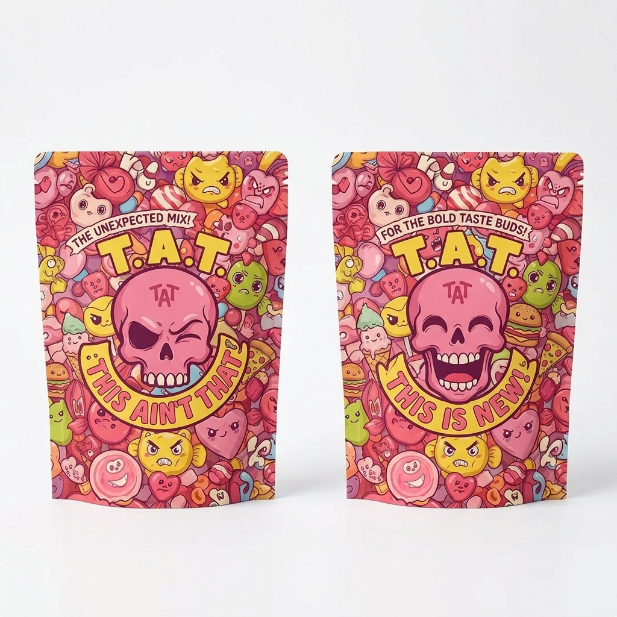
Product Specifications
| Specification | Product Detail |
|---|---|
| Packaging type | Custom flexible stand-up pouch |
| Defining feature | Degassing valve for roasted-coffee packaging |
| Intended contents | Roasted coffee; suitability for whole beans, ground coffee, or infused coffee must be confirmed |
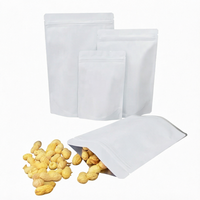
| Pouch structure | Bottom-gusseted format designed to stand when properly filled |
| Material | Flexible laminate to be selected according to required barrier, sealing, stiffness, and appearance |
| Closure | Heat-sealed top required for the final pack; a resealable zipper may be configured if specified |
| Dimensions and capacity | Not fixed; confirm from fill weight, coffee density, headspace, and filling equipment |
| Printing | Custom printing; artwork coverage, print method, colors, and version count require confirmation |
| Finish | To be specified; visual finish does not establish barrier performance |
| Compliance | Material, labeling, and testing requirements must be confirmed for the contents and destination market |
How the Degassing Valve Supports Roasted Coffee
Roasted coffee can continue releasing carbon dioxide after roasting. A coffee pouch with degassing valve is designed to let internal gas vent through the valve instead of allowing pressure to build inside a sealed pouch. Valve selection and placement should account for the coffee format, expected gas release, pouch dimensions, fill level, and equipment used during packing.
A valve is not a substitute for an appropriate laminate or a sound top seal. It also does not make an open zipper airtight. The protective system consists of the complete pouch structure, valve, seals, and closure working together. Buyers should identify the interval between roasting and packing because that process detail can affect the required headspace and valve specification.
Laminate and Barrier Decisions
High-barrier laminated coffee pouches can be configured with layers selected to help manage oxygen, moisture, aroma, light, puncture resistance, stiffness, printing, and heat sealability. The actual layer composition must be chosen during specification. A metallic appearance, matte finish, kraft-style surface, or glossy print does not by itself confirm what barrier layer is inside the pouch.
Barrier selection should reflect the coffee’s expected shelf life, distribution environment, exposure to humidity and light, and whether the product is whole bean or ground. Ground coffee has more exposed surface area and may require a different evaluation from whole beans. No oxygen- or moisture-transmission performance should be assumed without a defined laminate and supporting test data.
There is also a practical trade-off between visibility and protection. A clear window may help customers see the roast, but transparent areas generally provide less light protection than an opaque construction. A stiffer laminate can improve shelf presentation and handling, while a more flexible structure may use less storage space before filling. The correct balance depends on the brand’s merchandising and distribution priorities.
Size, Gusset, Headspace, and Filling Behavior
A stated coffee weight does not establish one universal pouch size. Roast profile, bean size, grind, bulk density, and desired headspace all affect usable volume. Buyers should provide the intended fill weight and, ideally, a representative product sample or measured bulk-density information before dimensions are finalized.
The bottom gusset expands as the bag is filled, creating the base that supports the stand-up format. Gusset depth affects capacity and shelf stability, while the valve and zipper positions reduce the usable area near the top. Excessive headspace can make the pack look underfilled; insufficient headspace can interfere with filling, zipper cleaning, and heat sealing. Manual, semi-automatic, and automated filling methods may also require different pouch openings and seal margins.
Zipper, Heat Seal, and Opening Features
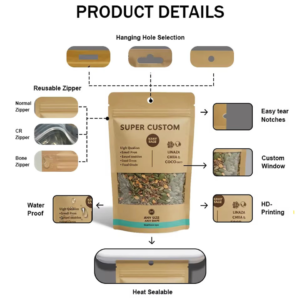
A resealable zipper may be added to help consumers close the bag between uses, but the zipper is normally a convenience closure rather than the package’s initial tamper-evident seal. The filled pouch should be heat sealed above the zipper when that configuration is selected. A tear notch may be positioned to support opening without cutting through the zipper or compromising the intended seal area.
An ordinary press-to-close zipper is not the same as a tested child-resistant closure. If these bags will contain infused coffee or another regulated cannabis-related product, the buyer must specify whether child-resistant packaging is required and identify the applicable destination-market rules. No child-resistant status should be assumed from the presence of a zipper.
Custom Printing and Multi-SKU Control
Custom printed coffee packaging can carry brand graphics, roast names, origin information, preparation instructions, variable SKU identifiers, warnings, and required product labeling. Final artwork should be prepared on the approved dieline so critical text stays outside seals, folds, the gusset, valve clearance, zipper area, and tear path.
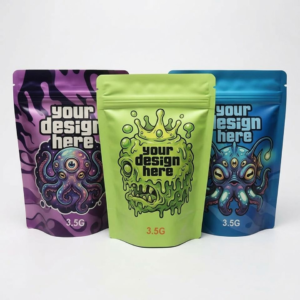
Print method, color handling, surface finish, white ink, metallic effects, and artwork coverage are subject to the selected substrate and production specification. For private label coffee bags for multi-SKU brands, use a controlled master layout with consistent logo placement, information hierarchy, and technical dimensions. Different colors or graphics can distinguish roast profiles, origins, flavors, or strains while preserving family-wide recognition.
Destination-Market and Content Review
Packaging requirements depend on what is packed and where it will be sold. Conventional coffee, food products containing cannabinoids, and other infused products may be subject to different material, warning, symbol, tamper-evidence, child-resistance, and labeling rules. Buyers should confirm food-contact requirements, ink and adhesive suitability, migration documentation, and any destination-specific cannabis obligations before approving production. The pouch supplier should receive the complete intended-use statement rather than only an artwork file.
Frequently Asked Questions
What does the degassing valve do?
The degassing valve is designed to release gas produced by roasted coffee while limiting outside air entry. Its performance depends on the valve specification, installation, laminate, seals, and packing conditions.
Does the valve make the coffee bag airtight?
No. The valve is one component of the package. Aroma and barrier performance depend on the complete laminate, valve installation, zipper, and properly applied heat seals.
How should the correct coffee bag size be selected?
Select dimensions using fill weight, bean or grind density, required headspace, gusset expansion, valve position, and filling equipment. Fill weight alone is not enough to define a universal size.
Is a resealable zipper child-resistant?
Not automatically. A standard resealable zipper is a convenience feature. A child-resistant closure requires a specific tested system and must be requested when applicable.
What information is needed for a quotation?
Provide the coffee format, fill weight, desired dimensions, order quantity, artwork versions, laminate or barrier requirements, valve and zipper needs, finish, filling method, destination market, and applicable compliance requirements.
Request a B2B Coffee Pouch Quotation
To obtain a specification-based quotation from a wholesale coffee bag manufacturer, submit the intended contents, whole-bean or ground format, fill weight, target pouch dimensions, quantity, number of artwork versions, preferred barrier or material structure, valve requirement, zipper and tear-notch needs, finish, filling method, destination market, and compliance documentation required. These inputs allow the supplier to evaluate capacity, headspace, valve placement, print layout, and sealing requirements before an RFQ is finalized.

Reviews
There are no reviews yet.