
Custom Smell-Proof Stand-Up Pouches for Cannabis Packaging
Custom smell-proof stand-up pouches are flexible barrier bags made to help contain cannabis aroma and limit moisture transfer when the selected laminate and heat-sealing system are appropriate for the product. Their bottom gusset creates a standing retail format, while the heat-seal area enables tamper-evident final closure after filling. They are relevant to cannabis brands, distributors, wholesalers, private-label programs, importers, and buyers managing multiple strains or SKUs.
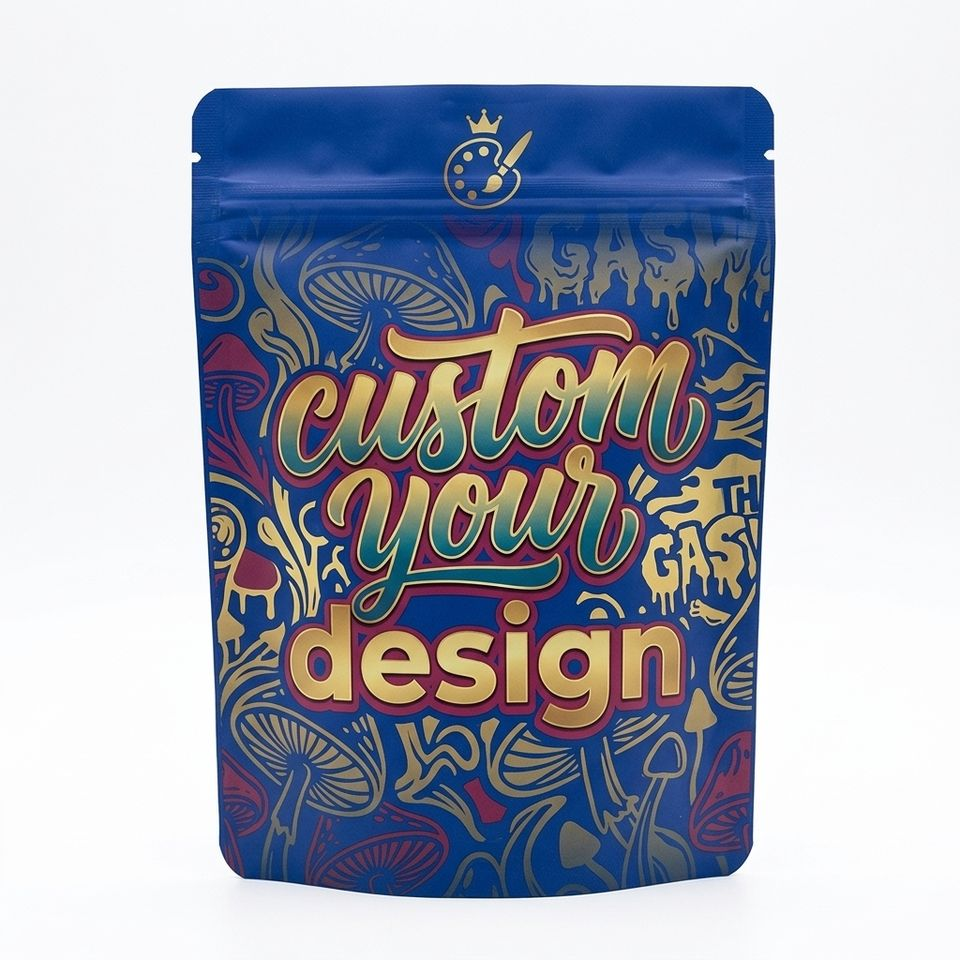
Product Specifications
| Specification | Product Detail |
|---|---|
| Packaging format | Flexible stand-up pouch with a bottom gusset |
| Confirmed functions | Moisture-proof and smell-proof product positioning; actual protection depends on the complete laminate, seals, storage conditions, and handling |
| Final closure | Heat-seal closure |
| Intended applications | Cannabis products, subject to product compatibility and destination-market requirements |
| Material structure | Flexible barrier laminate to be selected and confirmed during specification |
| Dimensions and capacity | Custom; buyer must confirm pouch dimensions, fill weight, product density, headspace, and usable volume |
| Printing | Custom printing can be configured subject to artwork, substrate, finish, and production requirements |
| Optional features | Resealable zipper, tear notch, finish, and other features may be specified if required and technically compatible |
| Compliance status | Must be evaluated for the packaged product and destination market; no certification or approval is implied |
How the Barrier Structure Controls Aroma and Moisture
The commercial term “smell-proof” describes the intended odor-control function, not a permanent guarantee. These pouches help contain aroma when the laminate has suitable gas-barrier properties and every seal remains intact. Barrier performance depends on the complete structure rather than the appearance or thickness of one layer.
High-barrier cannabis pouches may use multilayer structures configured to balance aroma retention, moisture control, oxygen resistance, light protection, puncture resistance, stiffness, and heat sealability. The exact layers must be confirmed for the contents and filling process. Matte, metallic, holographic, or kraft-style graphics do not independently establish barrier performance.
Buyers sourcing moisture-resistant weed bags should identify whether the contents are flower, pre-rolls, edibles, concentrates, or another format. Each has different moisture, grease, oxygen, light, and physical-protection requirements. Product compatibility and target barrier data should be reviewed before production rather than inferred from the pouch name.
Gusset, Fill Volume, and Headspace
The expanding bottom gusset gives the pouch a broader base for shelf presentation and filling. Its ability to stand depends on pouch dimensions, gusset geometry, laminate stiffness, fill distribution, and product weight. A pouch that stands well with dense contents may behave differently with lightweight cannabis flower.
Fill weight alone cannot determine pouch size. Flower density varies by strain, trim, moisture condition, and handling, so two products with the same labeled weight may require different usable volumes. Buyers should test representative contents and leave enough headspace for clean heat sealing without trapping flower or residue in the seal area.
Heat Seal, Zipper, and Child-Resistant Requirements
The confirmed closure is a heat seal, which provides the final sealed boundary after filling. Seal temperature, dwell time, pressure, seal width, and contamination at the sealing surface can affect integrity. The pouch should therefore be matched to the intended manual or automated sealing equipment.
A resealable zipper may be added conditionally for repeated access, but an ordinary zipper must not be treated as child resistant. If child-resistant packaging is required, specify a tested closure system and request documentation relevant to the destination market. A tear notch may improve opening convenience, although its position must be coordinated with the top seal and any zipper.
Custom Printing and Multi-SKU Programs
Custom printed marijuana packaging can provide space for branding, strain identification, product facts, warnings, variable information, and legally required statements. The printable area, color behavior, registration tolerances, white ink, finish, and barcode placement depend on the chosen substrate and printing process. Final artwork should follow the approved die line and preserve seal, gusset, and opening zones.
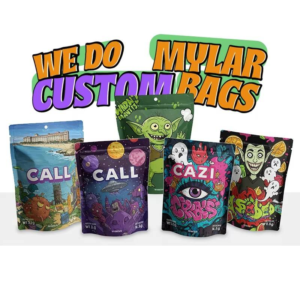
For private-label multi-SKU cannabis bags, buyers should define which design elements remain consistent and which change by strain, flavor, potency, or market. A shared pouch structure can simplify filling and presentation, but every artwork version still requires accurate identification and approval. Color alone should not be the only control used to distinguish similar SKUs.
Important Product Trade-Offs
A stronger barrier structure can improve aroma, moisture, oxygen, and light protection, but it may also increase stiffness, material complexity, or cost. A clear window improves product visibility while reducing light protection in that area. A larger pouch offers more headspace and easier filling, but excessive empty space can weaken shelf presentation and increase package volume. The best specification balances protection, machinability, display, and disposal requirements.
Compliance and RFQ Review
Cannabis packaging rules vary by product category and destination. Buyers may need to address child resistance, tamper evidence, warning panels, opacity, food-contact suitability for edibles, labeling, and restricted graphics. These requirements should be confirmed with qualified compliance advisers. When comparing a wholesale cannabis pouch supplier, request a specification that clearly identifies the laminate, dimensions, closure, printing, and intended use rather than relying only on marketing terms.
Frequently Asked Questions
Are these pouches guaranteed to block every cannabis odor?
No. They are designed to help contain aroma when an appropriate barrier laminate is selected and the pouch is properly heat sealed. Odor control also depends on seal integrity, storage, handling, and the packaged product.
What pouch size is suitable for a specific flower weight?
There is no universal size based only on flower weight. Provide the actual product, target fill weight, bulk density, desired headspace, and preferred pouch dimensions so usable volume and filling behavior can be evaluated.
Does the heat-seal closure make the pouch child resistant?
Not automatically. A heat seal provides a final sealed boundary, while child resistance is a separate requirement involving a suitable tested package or closure system. State the destination market and applicable child-resistant needs in the RFQ.
Can a zipper and tear notch be added?
They may be configured if compatible with the pouch dimensions, laminate, top seal, and opening sequence. A standard resealable zipper should not be represented as child resistant unless the complete package has appropriate supporting documentation.
Can multiple strain designs use the same pouch specification?
Yes, a multi-SKU program can use a common size, laminate, closure, and finish while changing approved artwork by strain or product. Buyers should provide the number of versions and clearly identify shared and variable design elements.
Request a Product-Specific B2B Quotation
For an accurate RFQ, provide the intended contents, fill weight or actual product dimensions, preferred pouch width and height, gusset requirements, order quantity, number of artwork versions, desired barrier level, heat-seal and optional zipper requirements, finish, filling method, destination market, and applicable compliance needs. Representative product samples or density information are especially useful when sizing pouches for cannabis flower or other irregular contents.

Reviews
There are no reviews yet.