
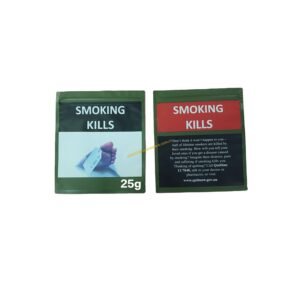
Custom Rolling Tobacco Pouches with Full Color Warning Panels
Custom rolling tobacco pouches are flexible printed bags for loose rolling tobacco, herbal smoking blends, or cannabis-adjacent products that require a clear branded face and a full color warning panel. This product is suited to B2B buyers managing private-label lines, distributor programs, wholesale SKUs, or OEM packaging projects where pouch artwork, labeling space, resealability, and market-specific warnings must be planned before quotation.
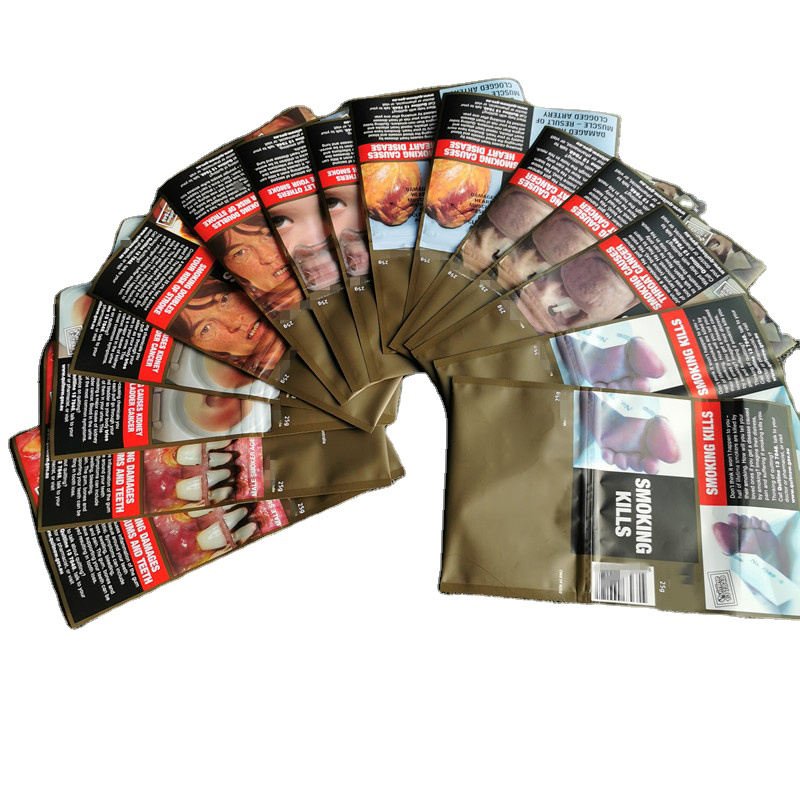
Product Specifications
| Product type | Custom printed flexible pouch for rolling tobacco or similar loose-fill products |
|---|---|
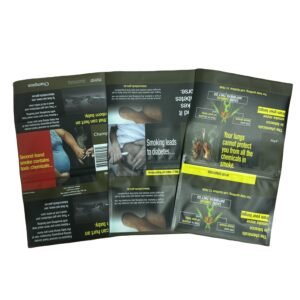
| Confirmed defining feature | Full color warning panels integrated into the pouch artwork |
| Material structure | To be confirmed; may be configured with PET, PE, PP, metallized film, foil laminate, or other selected barrier structures depending on the product requirement |
| Pouch style | To be confirmed by buyer; may be specified as flat pouch, stand-up pouch, or gusseted format depending on fill weight and display method |
| Closure | To be confirmed; may include a resealable zipper, heat seal area, tear notch, or other opening system based on the final specification |
| Printing | Custom full color printing for branding, regulatory text, warning panels, flavor or strain differentiation, and batch information zones |
| Finish | To be selected; matte, gloss, soft-touch, metallic, or kraft-style appearances may be possible depending on substrate and artwork |
| Compliance status | Destination-market labeling, warning, and packaging rules must be confirmed by the buyer before production approval |
What this pouch is designed to solve
This product is not a generic blank bag. It is printed tobacco pouch packaging where the warning panel is part of the commercial design requirement. For rolling tobacco, loose herbal blends, or regulated cannabis products, the package must provide usable fill volume, enough artwork area for branding, and reserved space for warnings, age statements, ingredients, batch data, or market-specific caution language. Buyers should confirm whether the warning panel must appear on the front, back, side, or multiple panels, and whether color, size, symbol, contrast, or wording is mandated in the destination market.
For cannabis brands using similar pouch formats for flower, trim, shake, or infused herbal blends, the same pouch decision affects aroma control, shelf presentation, resealability, and compliance artwork. If the buyer requires tested child-resistant operation, that must be specified separately; an ordinary resealable zipper improves repeated opening and closing but is not the same as a child-resistant closure.
Material and barrier choices for loose-fill products
Barrier performance depends on the complete laminate, seal geometry, zipper selection, and filling method. A pouch can be configured to help contain aroma, reduce moisture exchange, improve puncture resistance, or limit light exposure, but those outcomes depend on the selected structure and whether the pouch is properly sealed after filling. Buyers comparing films can review packaging material options before deciding whether a clear, metallized, foil, kraft-laminated, or high-barrier construction is appropriate.
A metallized or foil-based structure may improve light and oxygen barrier compared with many clear films, but it usually removes product visibility. A clear window can help customers see the cut and color of the loose product, yet it may reduce light protection and requires careful placement so the warning panel remains legible. Kraft-style appearances can support a natural brand position, but kraft appearance alone does not confirm barrier level; the inner film and adhesive laminate structure matter.
Pouch format, fill behavior, and headspace
Rolling tobacco and loose plant material do not pack like liquid or uniform pellets. Cut length, moisture level, bulk density, and compaction affect the usable volume. A stated fill weight does not automatically determine one universal pouch size. Buyers should provide the target fill weight, actual product density if known, preferred headspace, and whether the pouch will be hand-filled, semi-automatically filled, or run on a packing line.
Flat pouches can be efficient for compact fill weights and mailing cartons, while stand-up or bottom-gusset pouches improve shelf presence and filling stability. Wider pouches may provide better warning-panel readability and easier filling, but can create excessive headspace if the contents are light. Narrow pouches may feel compact in the hand, but may limit artwork area and make warning labels crowded. This is a key product-specific trade-off for full color warning panels: the pouch must look branded without reducing mandatory caution text to a hard-to-read area.
Closures, seals, and tamper evidence
Common options may include a top heat seal for first-opening integrity, a tear notch for controlled opening, and a press-to-close zipper for repeated use after opening. For regulated cannabis or tobacco markets, a tamper-evident feature may be requested so buyers can distinguish an unopened retail unit from a previously accessed pouch. If that is part of your specification, define the required seal position and opening experience early; you can also compare related options for tamper evident packaging.
If a child-resistant pouch is required, it should be requested as a tested closure system and reviewed against the destination market rules. A normal zipper is convenient but should not be described as child-resistant unless the selected construction and documentation support that claim.
Custom printing and multi-SKU control
Full color printing allows one pouch family to carry brand graphics, warning panels, flavor names, blend types, cannabinoid or nicotine-related statements where applicable, and SKU-specific accents. For private label rolling tobacco bags, the most efficient artwork system often uses a shared dieline with controlled variable zones for flavor, strength, strain, batch text, or market language. This keeps the product line visually consistent while reducing the risk that warning panels move, shrink, or lose contrast between SKUs.
Before artwork approval, confirm the dieline, seal area, zipper location, gusset folds, hang hole if any, barcode quiet zone, and panel orientation after filling. A beautiful flat artwork file can become difficult to read if critical warning text crosses a fold, lands too close to a heat seal, or sits in a high-distortion gusset area. For broader brand programs, private label packaging planning helps align pouch structure, artwork hierarchy, and repeated SKU launches.
Destination-market and labeling considerations
Full color warning panels are often driven by local rules for tobacco, cannabis, hemp, or smoking-accessory products. The buyer is responsible for confirming the required statement wording, language, minimum type size, color contrast, symbol use, age restrictions, health warnings, excise marks, and any restrictions on flavor or imagery. Packaging can be produced to an approved buyer-supplied layout, but the final compliance position depends on the product contents and destination market.
For importers and distributors, it is useful to separate fixed artwork from market-specific artwork. A master pouch design may need alternate warning blocks for different regions. Multi-market planning at the dieline stage can reduce redesign work later, especially when one brand sells through cannabis dispensaries, tobacco wholesalers, and general smoke-shop channels.
Custom development process
- Requirement review: Confirm contents, fill weight, intended pouch style, warning-panel rules, closure needs, finish preference, and destination market.
- Specification confirmation: Select the laminate direction, pouch dimensions, seal layout, zipper or opening system, print method, and artwork zones for branding and warnings.
- Sample review: Review physical or pre-production samples as applicable for pouch feel, fill behavior, panel readability, seal position, and closure usability.
- Bulk-production approval: Approve final artwork, dieline, material, and functional specification before bulk manufacturing begins.
FAQ
Can these pouches be used for cannabis flower or shake as well as rolling tobacco?
They can be specified for loose plant-based products, including cannabis flower, shake, or herbal blends, if the pouch size, barrier structure, closure, labeling, and destination-market requirements are confirmed for that product.
Does the full color warning panel make the pouch compliant?
No. The pouch can include full color warning panels, but the buyer must confirm the required wording, size, placement, language, and regulatory format for the destination market before approval.
Are these pouches smell proof?
They can be configured as smell resistant packaging that helps contain aroma when the laminate, zipper, and heat seal are properly specified and sealed. Absolute odor-proof performance should not be assumed without defined testing and documentation.
Can I use one pouch structure for multiple flavors or strains?
Yes, a shared structure and dieline can support multiple artwork versions, provided the fill weight, product density, warning text, barcode space, and SKU identification remain suitable for each version.
What should be confirmed before requesting a quotation?
Confirm the contents, target fill weight or product dimensions, preferred pouch dimensions, quantity, artwork versions, material or barrier expectation, closure type, finish, filling method, destination market, and warning or compliance needs.
Request a B2B RFQ
For an accurate quotation, provide the loose product type, fill weight, target pouch size, preferred pouch style, desired laminate or barrier function, zipper or heat-seal needs, warning-panel requirements, number of artwork versions, finish preference, filling method, order quantity, destination market, and any compliance documents your procurement team requires.
Reviews
There are no reviews yet.