
Custom Resealable Stand-Up Pouches for Food Powders and Spices
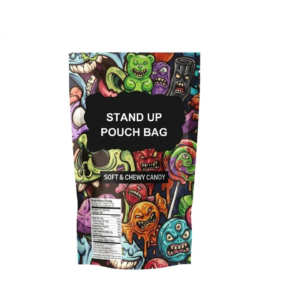
Custom resealable stand-up pouches are flexible packaging bags designed to stand on a bottom gusset and provide repeated access to dry food powders, spices, seasonings, and similar products. They are relevant to food and cannabis brands, private-label programs, distributors, wholesalers, importers, and multi-SKU buyers that need the pouch dimensions, barrier structure, closure, and graphics matched to a specific dry product.
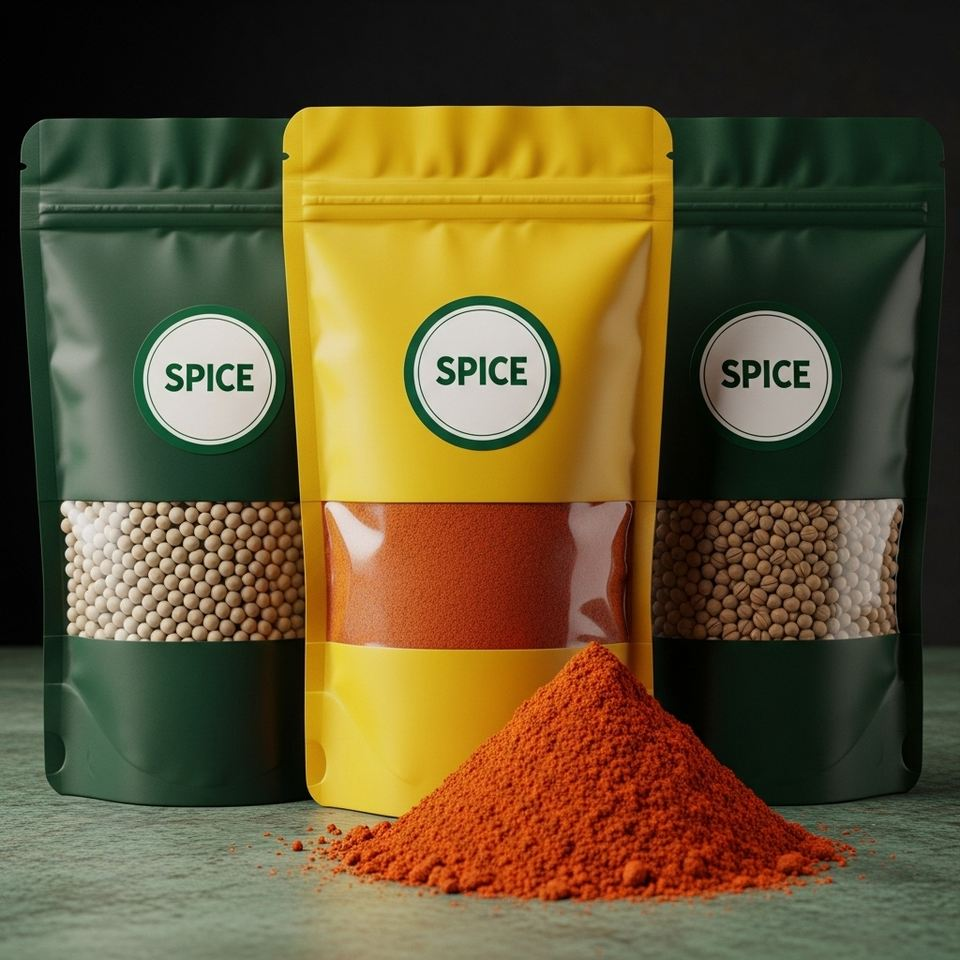
Product Specifications
| Specification | Product Detail |
|---|---|
| Packaging type | Resealable flexible pouch |
| Pouch style | Stand-up pouch with bottom gusset |
| Intended contents | Food powders, spices, seasonings, and comparable dry products |
| Closure | Resealable closure; exact zipper design and any child-resistant requirement must be confirmed |
| Material structure | Flexible laminate configuration subject to the required moisture, oxygen, aroma, light, stiffness, and seal performance |
| Dimensions and capacity | To be specified using fill weight, product bulk density, headspace, and filling requirements |
| Printing and finish | May be configured for custom graphics and selected finish, subject to substrate and print-process limits |
| Final top seal | Heat-seal requirements should be confirmed according to the filling process and selected laminate |
| Compliance | Buyer must identify the destination market, food-contact requirements, labeling rules, and any cannabis-specific obligations |
Product Fit and Intended Contents
These resealable powder packaging bags are intended for dry products that benefit from upright shelf presentation and repeated opening. Potential contents include ground spices, seasoning blends, powdered food ingredients, drink mixes, culinary powders, and, where lawful, cannabis-infused powder or seasoning products. Suitability depends on the actual formulation rather than the product name alone.
Fine particles can collect around the zipper or heat-seal area, while coarse spices may create different puncture and fill-flow demands. Buyers should disclose whether the product is dusty, abrasive, oily, hygroscopic, strongly aromatic, or sensitive to oxygen or light. Those characteristics influence the laminate, sealant layer, pouch opening, and filling controls.
Laminate and Barrier Selection
Flexible laminate pouches for spices can be configured with multiple functional layers. Depending on the selected structure, an outer layer can support printing and scuff resistance, a barrier layer can help limit moisture, oxygen, aroma, or light transmission, and an inner sealant layer can support pouch formation and final heat sealing. The exact polymers, films, foils, or coatings must be agreed during specification.
Barrier performance comes from the complete laminate and sealing system, not from appearance alone. A metallic, matte, glossy, kraft-look, or holographic surface does not establish a particular barrier level. Likewise, a clear window improves product visibility but generally reduces light protection in the window area. For aromatic spices or cannabis-related powders, an appropriate structure and properly closed zipper can help contain aroma, but this should not be treated as a permanent smell-proof guarantee.
A heavier or stiffer structure may improve handling, puncture resistance, and shelf presence, but it can increase material use and may be less flexible during filling. A high-barrier structure may provide better product protection than a simpler laminate, yet it should be selected from actual shelf-life and distribution needs rather than from appearance alone.
Sizing, Gusset, Density, and Headspace
A stated fill weight does not determine one universal pouch size. Two powders with the same net weight can occupy different volumes because particle size, aeration, settling, and bulk density vary. The correct pouch should be evaluated with the actual product or reliable density data.
The bottom gusset creates the standing base and expands as the pouch is filled. Gusset depth affects usable volume, filling behavior, and shelf stability. The specification should also reserve enough headspace above the product for zipper operation and heat sealing. Too little headspace can allow powder to contaminate the seal zone; excessive headspace can produce an underfilled appearance and inefficient case packing.
For manual or automated filling, buyers should identify the filling equipment, preferred opening width, fill temperature, and seal method. Powder control is especially important because dust in the top-seal area can weaken seal consistency.
Zipper, Heat Seal, and Opening Features
The resealable closure supports repeated consumer access after opening. It does not replace the need for an initial heat seal when tamper evidence or stronger distribution security is required. Tear notches may be added, depending on the final design, to guide opening above the zipper.
An ordinary press-to-close zipper is not automatically child-resistant. If the pouch will hold regulated cannabis products, the buyer must request an appropriate child-resistant format and confirm the required testing, documentation, use instructions, and destination-market rules. The zipper, top seal, tear notch, and opening sequence should be evaluated as one system.
Custom Printing and Multi-SKU Control
Custom printed spice pouches may be configured with brand graphics, flavor or strain identifiers, preparation directions, ingredient information, warnings, lot-coding space, and required regulatory panels. Available artwork area depends on the die line, gusset folds, zipper position, seal widths, and any window. Critical text and barcodes should remain outside seals, folds, and distorted areas.
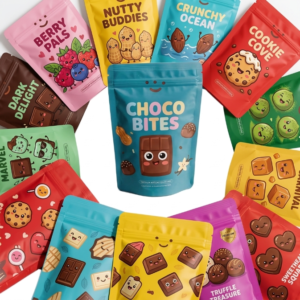
Private label multi-SKU powder pouches can share a common pouch size and brand architecture while using different colors, product names, flavor graphics, or strain details. Before production, buyers should confirm whether each artwork version is a separate SKU, how variable information will be applied, and whether all versions use the same laminate, finish, and closure. Standardizing those structural elements may simplify filling and inventory, while excessive variation can create avoidable procurement complexity.
Food and Cannabis Market Requirements
The destination market determines which food-contact, labeling, warning, child-resistant, tamper-evident, recycling, and cannabis packaging rules may apply. These obligations can differ by country, state, province, product category, and sales channel. A pouch should not be assumed compliant solely because it is resealable or intended for food powders.
Buyers should provide the intended contents, jurisdiction, expected storage conditions, shelf-life objective, and applicable packaging standard before approving the structure. Any required migration documentation, testing, declarations, or child-resistant evidence must be identified and verified through the procurement process.
Information Needed for an Accurate Quotation
- Exact product type and whether it is dusty, oily, aromatic, hygroscopic, abrasive, or light-sensitive
- Target fill weight, bulk density, and preferred finished pouch dimensions
- Required barrier functions and expected storage or distribution conditions
- Zipper type, top heat seal, tear notch, and any child-resistant requirement
- Filling method, opening-width needs, fill temperature, and sealing equipment
- Print artwork, number of SKUs, finish, window request, and coding area
- Order quantity and quantity allocation across artwork versions
- Destination market and applicable food or cannabis packaging requirements
Frequently Asked Questions
How do I select the pouch size for a food powder or spice?
Start with the target fill weight, actual bulk density, settling behavior, and required headspace. A fit test using the real product is preferable because powders with the same weight can occupy substantially different volumes.
Does the resealable zipper make the pouch child-resistant?
No. A standard resealable zipper is not automatically child-resistant. A regulated cannabis application may require a specifically designed closure, applicable testing, documentation, and confirmation against destination-market rules.
Can the pouch help preserve spice aroma?
It can help contain aroma when the selected laminate provides suitable barrier properties and the zipper and heat seals are properly closed. Performance depends on the complete structure, sealing quality, storage conditions, and product formulation.
Can one pouch format support several flavors or strains?
Yes, multiple artwork versions may use a common pouch format when their fill volumes, barrier needs, closure, and filling requirements are compatible. Each SKU and artwork version should still be identified in the quotation.
What must be confirmed before production?
Confirm the contents, fill weight, density, pouch dimensions, laminate, barrier needs, closure, finish, artwork versions, filling method, destination market, and applicable food or cannabis packaging requirements.
Request a Product-Specific B2B Quote
For an RFQ from a wholesale stand-up pouch supplier, provide the contents, target fill weight, bulk density or sample volume, desired pouch dimensions, quantity, number of artwork versions, required laminate or barrier functions, zipper and heat-seal needs, finish, filling method, destination market, and compliance requirements. These inputs allow the pouch structure and gusseted format to be reviewed against the actual powder or spice application.
Reviews
There are no reviews yet.