
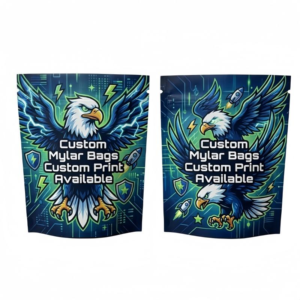
Custom Printed Matte Stand-Up Mylar Bags with Zipper
Custom printed matte stand-up Mylar bags are gusseted flexible pouches combining branded print, a non-glossy appearance and a resealable zipper. They can be specified for cannabis flower and other compatible dry products, making them relevant to cannabis brands, distributors, wholesalers, private-label programs and buyers managing multiple strains or SKUs. Final suitability depends on the selected laminate, pouch dimensions, filling process, sealing system and destination-market requirements.
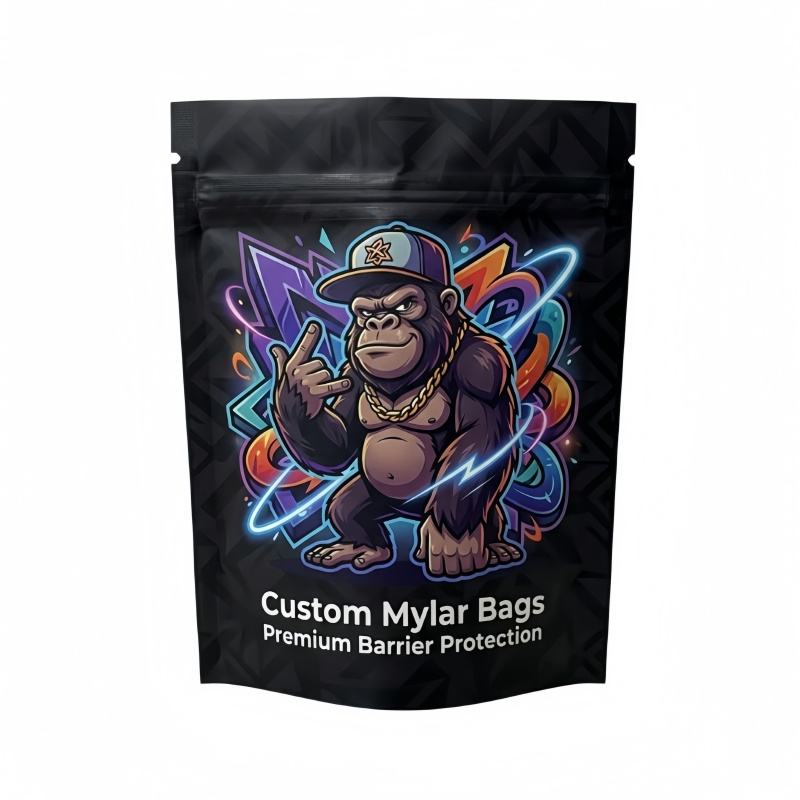
Product Specifications
| Attribute | Product specification |
|---|---|
| Packaging type | Flexible stand-up pouch |
| Material description | Mylar bag; the complete laminate structure must be selected and confirmed |
| Finish | Matte |
| Closure | Resealable zipper; child-resistant performance is not established by an ordinary zipper |
| Printing | Custom printed; printing method, colors and artwork coverage are subject to final specification |
| Base format | Stand-up gusset |
| Dimensions and capacity | Buyer confirmation required based on contents, fill weight, density and headspace |
| Barrier performance | Depends on the complete laminate, seals, zipper and storage conditions |
| Intended use | Can be configured for cannabis flower and other compatible dry cannabis products |
| Compliance status | Must be evaluated for the product category and destination market |
How the Pouch Format Works
These matte Mylar stand-up zipper pouches use an expanding bottom gusset to create usable internal volume and help the package stand when its dimensions, gusset and fill are properly matched. The upright format provides front and back panels for branding, product identification, warnings and other required information. Actual shelf stability depends on pouch geometry, product distribution and fill level rather than the stand-up label alone.
For cannabis flower, fill weight does not determine a universal bag size. Bud density, flower structure and the amount of protective headspace can produce different volume requirements at the same nominal weight. An undersized pouch may compress the contents or interfere with zipper and top-seal areas. An oversized pouch uses more material, may allow excess movement and can make the filled package look inconsistent.
Laminate, Aroma and Product Protection
“Mylar” is commonly used in packaging searches, but the term and the matte surface do not define the entire laminate. A finished pouch may be configured with multiple flexible layers selected for printability, stiffness, puncture resistance, heat sealability and barrier needs. Buyers should request the proposed structure rather than assuming that every Mylar pouch performs identically.
Depending on that structure, the pouch can help limit exposure to moisture, oxygen and light while helping contain aroma when properly closed and heat sealed. Barrier performance is created by the complete laminate and sealing system, not by the matte coating alone. Any required oxygen-transmission, moisture-transmission or odor-control target should be stated in the RFQ and verified through appropriate documentation or testing rather than inferred from appearance.
A useful trade-off is stiffness versus handling flexibility. A stiffer laminate can improve shelf presentation and panel flatness, but it may feel less flexible and can affect gusset opening during filling. A lighter, more flexible construction may be easier to handle, yet it may provide less body or puncture resistance. Product texture, filling equipment, distribution conditions and desired presentation should guide the decision.
Zipper, Heat Seal and Opening Features
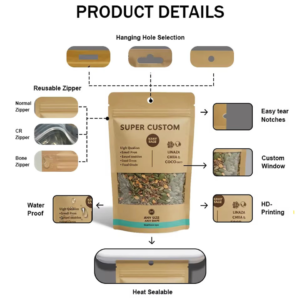
The zipper allows consumers to reopen and reclose the pouch, making the format suitable for resealable cannabis flower bags. For initial tamper evidence and stronger package integrity, the area above the zipper may be heat sealed after filling when the selected pouch structure and operation support it. Seal temperature, pressure and dwell time must be established for the final laminate and filling equipment.
A standard press-to-close zipper must not be represented as child resistant. If child-resistant packaging is required, buyers need to specify a suitable closure system and confirm the applicable testing, documentation, labeling and market rules. Tear notches may also be requested conditionally, but their location must coordinate with the top seal, zipper and intended opening path.
Custom Printing and Multi-SKU Artwork
Custom printed weed packaging pouches can carry strain names, cannabinoid or product identifiers, brand graphics, variable visual systems, warning areas and other market-required content. The selected printing process, ink system, color targets, matte treatment and laminate will influence fine text, gradients, metallic effects and color consistency. A production dieline should govern artwork placement, including seals, gusset folds, zipper clearance and trim tolerances.
For private-label multi-SKU cannabis bags, buyers should distinguish shared design elements from version-specific information. Standardizing pouch dimensions, structure, finish and common artwork zones can improve visual consistency across strains while reducing avoidable specification changes. Each artwork version still requires separate review for names, colors, regulatory text, barcodes supplied by the buyer and other variable content.
Filling and Specification Decisions
- Contents: Identify flower, another dry cannabis format or a different compatible product.
- Physical sample data: Provide actual product dimensions or representative bulk density where relevant.
- Fill and headspace: State target fill weight and the space needed to protect contents and keep the zipper clean.
- Pouch geometry: Confirm width, height, gusset and usable internal area through samples or fit testing.
- Sealing: Describe manual or automated filling, zipper use and any post-fill heat-seal requirement.
- Artwork: Supply version count, print files, color references and required information zones.
- Market requirements: Identify the destination jurisdiction and any child-resistant, tamper-evident, labeling or material documentation needs.
Buyers comparing a wholesale cannabis pouch manufacturer or supplier should request a written specification that identifies the proposed laminate, dimensions, tolerances, closure, print method and finish. Samples should be evaluated with the actual contents and intended filling process before a production decision.
Frequently Asked Questions
Are these bags automatically smell proof?
No. They may help contain cannabis aroma when properly sealed, but odor resistance depends on the complete laminate, zipper, heat seal, workmanship and storage conditions. “Smell proof” should not be treated as a permanent guarantee.
Does the zipper make the pouch child resistant?
No. An ordinary resealable zipper is not automatically child resistant. If child resistance is required, specify an appropriate closure and confirm applicable testing, documentation and destination-market requirements.
How should the correct pouch size be selected for cannabis flower?
Use the target fill weight together with actual flower density, bud structure, desired headspace and sealing clearance. Fit testing with representative contents is more reliable than choosing dimensions from weight alone.
Does the matte finish determine barrier performance?
No. Matte describes the surface appearance. Moisture, oxygen, light and aroma protection depend on the full laminate structure and the integrity of the zipper and heat seals.
Can one pouch specification support multiple strains or SKUs?
Yes, when the products have compatible volume, barrier and compliance needs. Buyers can standardize structure and dimensions while preparing separate artwork versions for strain names, colors and required product information.
Request a Product-Specific B2B Quote
For an RFQ for custom printed matte stand-up Mylar bags, provide the intended contents, target fill weight or actual product dimensions, desired pouch dimensions, estimated quantity, number of artwork versions, preferred barrier or laminate requirements, zipper and heat-seal needs, matte finish expectations, filling method, destination market and applicable compliance requirements. These inputs allow the pouch construction, dieline and quotation scope to be evaluated without relying on unsupported assumptions.
Reviews
There are no reviews yet.