
Custom Printed Matte Smell-Proof Cali Mylar Bags for B2B Cannabis Packaging
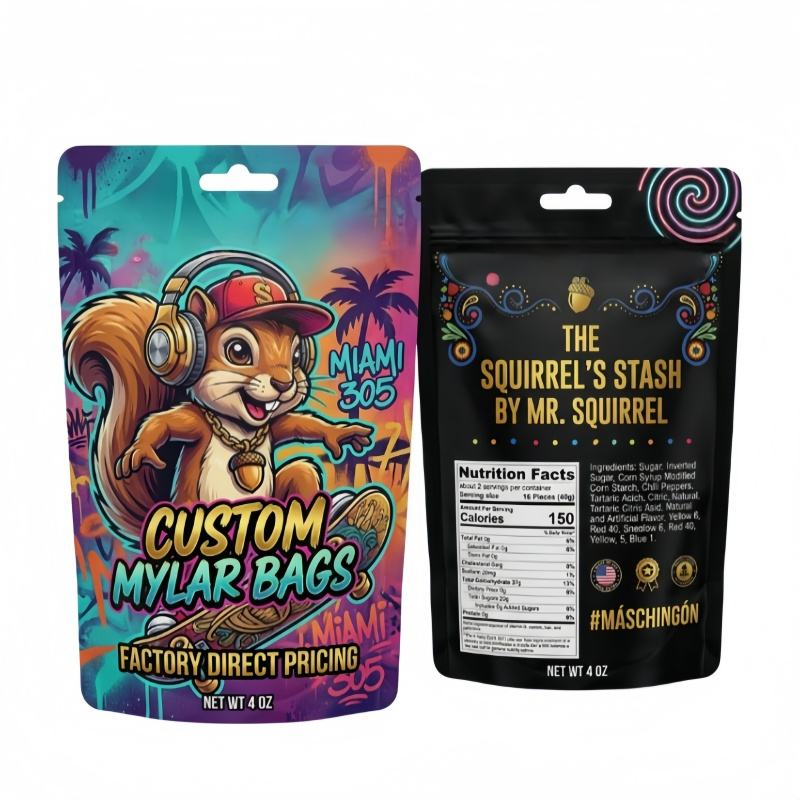
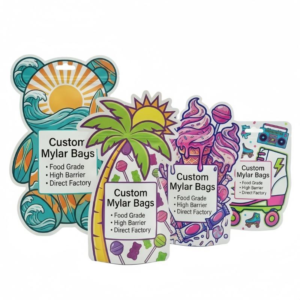
Custom printed matte smell-proof Cali Mylar bags are flexible cannabis packaging bags for brands, distributors, wholesalers, and private-label buyers that need a Cali-style appearance with custom artwork and a smell-resistant packaging concept. The matte exterior supports a subdued, premium visual presentation, while the complete Mylar laminate and sealing system determine the bag’s actual barrier, aroma-containment, moisture, oxygen, light, and puncture-resistance characteristics. These bags can be evaluated for flower, pre-rolls, edibles, or other compatible cannabis products after the contents, dimensions, closure, and destination-market requirements are confirmed.
Product Specifications
| Product type | Custom printed matte Cali Mylar bags |
|---|---|
| Primary use | Cannabis product packaging; intended contents and fill weight require confirmation |
| Appearance | Matte exterior with custom printed artwork |
| Odor function | Smell-resistant design concept; actual aroma containment depends on the laminate, seals, and closure |
| Material structure | Mylar-based flexible packaging; exact laminate layers and barrier specification require confirmation |
| Bag dimensions | Not specified; confirm finished dimensions, usable area, gusset, and seal geometry |
| Closure | Not specified; confirm zipper, heat seal, tear notch, or other selected configuration |
| Printing | Custom printing; confirm artwork versions, print area, color requirements, and substrate limitations |
| Finish | Matte appearance stated; confirm whether the matte effect is part of the film, coating, or selected finish |
Barrier Structure and Smell-Resistant Performance
“Mylar” and “smell-proof” describe useful product-search language, but neither term alone establishes a complete technical specification. Aroma containment depends on the entire package system: the selected laminate, film thickness, seal width, zipper or other closure, tear area, and filling process. A properly specified and sealed structure may help contain cannabis aroma. Ask for the proposed material construction and sealing method before treating the bag as suitable for a strong-aroma product.
The laminate also influences moisture and oxygen transmission, light protection, stiffness, puncture resistance, and heat sealability. A more protective barrier may improve product protection but can affect cost, appearance, stiffness, folding behavior, and printing limitations. Matte appearance does not by itself prove the barrier structure. If flower requires aroma and light protection, or edibles require moisture and grease resistance, the material should be selected around those risks rather than around appearance alone.
Match the Bag to the Product and Fill Behavior
A stated fill weight does not establish one universal bag size. Cannabis flower density varies by cultivar, grind, moisture condition, and how the product is filled. Confirm the actual product volume, target fill weight, desired headspace, and whether the contents need room to settle without excessive movement. Too little headspace can interfere with filling and sealing; too much can increase movement and affect presentation.
For pre-rolls, provide the count, individual length, diameter, orientation, and crush-risk concerns. For edibles, identify whether the contents are oily, sticky, moisture-sensitive, or individually wrapped. These details affect the required internal dimensions, barrier priorities, seal area, and whether a resealable closure is useful. A transparent window may improve product visibility, but it can reduce light protection in the viewing area and should be assessed against the selected laminate.
Pouch Style, Closure, and Seal Decisions
Confirm whether the required format is flat, stand-up, gusseted, or shaped. A gusset can improve standing and filling behavior, but it changes usable volume, artwork geometry, and the amount of material around the bottom and side seals. Flat or shaped bags require careful review of the die line, opening position, corner radius, and clear seal zones.
Closure selection should be stated precisely in the RFQ. An ordinary zipper can support repeated opening and closing, while a heat seal can provide a separate tamper-evident or aroma-containment step when properly specified. A tear notch may improve opening convenience. None of these features should be treated as a tested child-resistant closure unless the selected configuration has been separately specified and assessed for the destination market. If child-resistant packaging is required, request the applicable closure design and supporting documentation rather than assuming that a zipper provides that function.
Custom Printing, Matte Finish, and Multi-SKU Control
Custom printing allows a cannabis brand to organize strain, product, flavor, potency, warning, and batch-specific information across a coordinated packaging range. Before artwork approval, confirm the printable area, seal exclusion zones, opening position, gusset folds, barcode placement, and any areas that may distort around corners. Matte finishes can reduce glare and create a softer visual effect, but they may change color perception and the contrast of small text. Review a production-relevant proof before approving multiple SKUs.
For private-label and OEM purchasing, create a SKU matrix that separates shared structural specifications from variable artwork. List each version, product name, fill weight, color references, regulatory text, barcode, language, and quantity. This reduces the risk of mixing strain artwork or applying one dimension to products with different densities. Multi-SKU consistency also depends on confirming the same laminate, print treatment, closure position, and seal geometry across the range.
Destination-Market and Compliance Review
Packaging requirements vary by destination, product category, contents, labeling rules, child-resistance expectations, food-contact considerations, and disposal or recycling requirements. The visible matte finish and Cali style do not establish compliance. The buyer should identify the destination market, intended contents, required warning or statutory text, language, label area, and any requested test or documentation package. If the bag will contact edibles, confirm the required food-contact specification for the selected structure. Compliance review should be completed by the responsible brand, importer, or market expert before production approval.
What to Confirm Before Requesting a Quote
- Product contents, actual fill weight, dimensions, density, count, and expected headspace.
- Required finished bag dimensions, flat or stand-up format, gusset, opening position, and seal geometry.
- Desired laminate or barrier priorities for aroma, moisture, oxygen, light, stiffness, and puncture resistance.
- Closure preference, including zipper, heat seal, tear notch, or a separately specified child-resistant option.
- Artwork files, number of SKU versions, print area, matte treatment, color references, and barcode or variable-data needs.
- Filling method, destination market, compliance requirements, requested documentation, quantity, and packaging language.
Frequently Asked Questions
Are these bags suitable for cannabis flower?
They can be evaluated for cannabis flower, but suitability depends on the flower’s density, fill weight, aroma strength, required headspace, dimensions, and the selected laminate and closure. Confirm those details before production.
Does the matte finish make the bag smell-proof?
No. The matte appearance describes the visual finish. Aroma containment depends on the complete laminate, seals, closure, and filling process. The selected system may help contain aroma when properly specified and sealed.
Can the bags be used for pre-rolls or edibles?
Potentially, subject to product dimensions and material requirements. Pre-rolls need adequate length, diameter, movement control, and crush protection. Edibles may require moisture, grease, resealability, and food-contact considerations.
Is the zipper child-resistant?
Do not assume that an ordinary zipper is child-resistant. Confirm the exact closure and request any destination-market documentation needed for a child-resistant packaging requirement.
What artwork information is needed for a multi-SKU order?
Provide the SKU list, artwork versions, product and strain names, variable text, barcodes, language, warning space, color references, and the approved print area. Confirm common structural specifications separately from SKU-specific artwork.
Request a B2B Specification Review
For an RFQ on these custom printed matte smell-proof Cali Mylar bags, send the contents, fill weight or actual product dimensions, desired bag dimensions, quantity, artwork version count, material or barrier priorities, closure, matte finish expectations, filling method, destination market, and compliance needs. Those inputs allow the packaging specification to be reviewed around product fit, seal performance, artwork control, and multi-SKU purchasing requirements.
Reviews
There are no reviews yet.