
Custom Printed Holographic Stand-Up Pouches for Candy Packaging
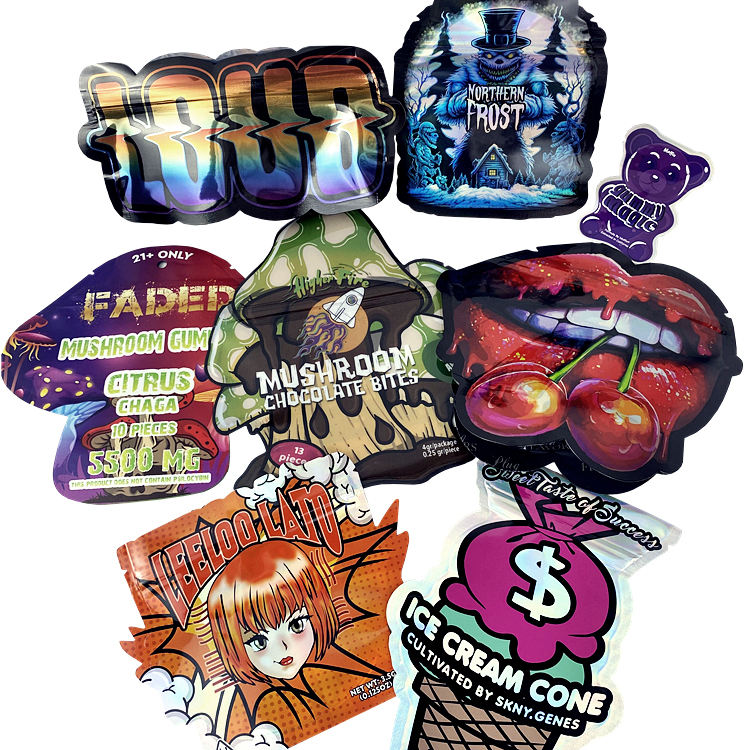
Custom printed holographic stand-up pouches are flexible candy packages that combine an upright gusseted format with custom graphics and a light-reflective holographic appearance. They are relevant to candy brands, cannabis-edible companies, private-label programs, distributors, wholesalers, and multi-SKU buyers that need shelf-visible packaging. The final laminate, dimensions, closure, barrier properties, and regulatory features must be specified for the candy, filling process, and destination market.
Product Specifications
| Specification | Product Detail |
|---|---|
| Product type | Custom printed flexible pouch |
| Pouch format | Stand-up pouch with a bottom gusset |
| Appearance | Holographic |
| Intended contents | Candy; suitability for cannabis-infused candy depends on the selected specification and destination-market requirements |
| Printing | Custom printing; artwork method, color requirements, coverage, and print limits require confirmation |
| Material | Flexible laminate structure to be confirmed for the required appearance, barrier, stiffness, and sealing performance |
| Closure | Not established by the product name; zipper, tear-notch, and heat-seal requirements should be specified |
| Dimensions and capacity | Buyer confirmation required based on candy size, fill weight, density, headspace, and filling method |
| Barrier performance | Depends on the complete laminate, seals, closure, storage conditions, and handling |
| Child resistance | Not established; must be separately specified and supported for the intended market where required |
Fit for Candy and Cannabis-Edible Programs
These stand-up pouches for candy packaging can be specified for gummies, hard candies, chews, coated pieces, or similar products. Cannabis-infused candy introduces additional considerations, including child-resistant functionality where required, warning and symbol space, serving information, lot coding, and food-contact requirements. The buyer should provide the exact product type because oily, acidic, sugar-coated, or moisture-sensitive candies can require different contact layers and barrier priorities.
A stated fill weight does not determine one universal pouch size. Ten grams of a dense hard candy occupies a different volume from ten grams of aerated or individually wrapped pieces. Samples or accurate product dimensions help establish usable volume, headspace, zipper clearance, and the risk of candy interfering with the top seal.
Laminate, Barrier, and Holographic Appearance
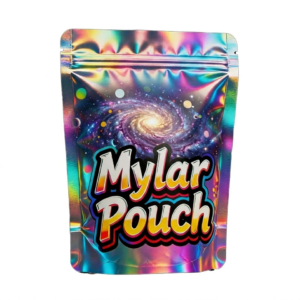
The holographic look describes the visible effect, not the complete barrier structure. Depending on the selected construction, holographic flexible packaging pouches may use a holographic film, an effect layer, or another compatible decorative substrate within a laminate. The exact layer sequence must be confirmed before production.
Barrier performance comes from the combined laminate and sealing system. A suitable structure can help limit moisture or oxygen exposure, contain aroma when properly sealed, provide puncture resistance, and create enough stiffness for an upright presentation. Heat-seal layer compatibility affects seal formation and package integrity. Buyers should identify whether their priority is moisture control, aroma retention, grease resistance, light protection, puncture resistance, or a balance of these properties rather than treating the holographic effect as proof of performance.
Gusset, Filling, and Headspace Decisions
The bottom gusset opens as the pouch is filled, creating the base that allows it to stand. Its geometry influences usable volume, shelf stability, packing efficiency, and the width available for front and back artwork. A pouch that is too narrow may fill inefficiently, while excessive headspace can make a small candy portion look undersized.
Manual and automated filling operations may need different mouth opening, stiffness, seal area, and tolerance requirements. The final pouch should leave a clean top-seal zone above the contents. Buyers should provide the filling method and confirm whether the package will be supplied pre-made for filling and sealing.
Custom Printing and Multi-SKU Artwork
Custom holographic candy bags can allocate visible holographic areas while using printed color, white ink, or opaque design elements to control where the reflective effect appears, depending on the printing process and substrate. Without an appropriate white or opaque layer, some colors may shift visually because the holographic background interacts with the ink.
This creates a real trade-off: greater holographic exposure can increase shelf impact, but it may reduce text contrast and barcode readability. More opaque coverage improves control over brand colors and mandatory information but conceals more of the holographic surface. Artwork review should therefore identify holographic reveal areas, white-ink layers, barcodes, small text, registration tolerances, seal zones, gusset panels, and any variable regulatory content.
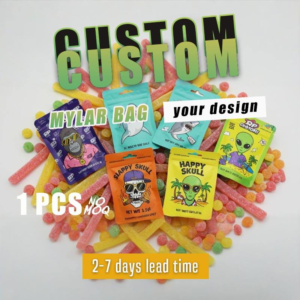
For private label multi-SKU candy pouches, use a shared die line and controlled brand elements where the pouch size and construction remain the same. Separate artwork versions can differentiate flavors, potency levels, markets, or product variants. Buyers should list every artwork version and quantity rather than submitting only an aggregate order quantity.
Zippers, Heat Seals, and Child-Resistant Requirements
A resealable zipper may be configured when repeated access is needed, but an ordinary zipper must not be represented as child-resistant. A child-resistant package requires an appropriate closure system and supporting evidence for the applicable destination market. These requirements should be established before tooling, sampling, or artwork approval.
A producer-applied heat seal above the zipper can provide initial closure and may support tamper-evident package design, depending on the complete specification. Tear notches can assist opening but must be positioned in relation to the zipper and top seal. Closure selection should account for candy size, consumer access, filling speed, seal contamination risk, and local cannabis or food-packaging rules.
RFQ Information for Accurate Supplier Comparison
- Candy type, ingredients relevant to packaging, fill weight, and approximate piece dimensions
- Desired pouch width, height, bottom gusset, and required headspace, if already established
- Total quantity plus the quantity for each flavor, strain, potency, or artwork version
- Required moisture, oxygen, aroma, grease, light, and puncture protection priorities
- Preferred holographic exposure, print coverage, finish, color targets, and barcode requirements
- Zipper, heat seal, tear notch, hanging feature, or child-resistant closure requirements
- Manual or automated filling method and relevant sealing conditions
- Destination market, intended cannabis or conventional candy use, and applicable compliance needs
When evaluating a wholesale holographic pouch manufacturer or supplier, compare quotations against the same dimensions, laminate, closure, printing scope, number of artwork versions, and performance requirements. A lower quotation based on a different structure or simplified artwork scope is not a like-for-like comparison.
Frequently Asked Questions
Are holographic stand-up pouches automatically high barrier?
No. Holographic appearance does not establish oxygen, moisture, aroma, or light-barrier performance. Those properties depend on the complete laminate, seals, closure, and storage conditions.
What pouch size is needed for a specific candy weight?
Fill weight alone is insufficient. Candy density, piece dimensions, product shape, required headspace, bottom-gusset geometry, zipper clearance, and filling method must also be evaluated.
Can a standard resealable zipper be called child-resistant?
No. An ordinary resealable zipper is not automatically child-resistant. A suitable child-resistant closure and supporting evidence must be specified when required for the intended product and destination market.
How should artwork be prepared for the holographic effect?
Artwork should distinguish holographic reveal areas from opaque printed areas and identify white-ink requirements, barcodes, small text, seal zones, gusset panels, and mandatory information. Final requirements depend on the selected substrate and printing process.
What information is required for a custom pouch RFQ?
Provide the contents, fill weight, candy dimensions, desired pouch dimensions, quantity by artwork version, barrier priorities, closure, finish, filling method, destination market, and relevant compliance requirements.
Request a Product-Specific B2B Quotation
For a comparable RFQ, submit your candy type, fill weight, product dimensions, desired pouch dimensions, order quantity, artwork-version breakdown, laminate or barrier needs, closure, holographic and print coverage, filling method, destination market, and compliance requirements. These inputs allow the pouch structure and quotation scope to be reviewed without assuming an unsuitable size, closure, or barrier level.
Reviews
There are no reviews yet.