
Custom Printed Holographic Edible Bags for B2B Packaging
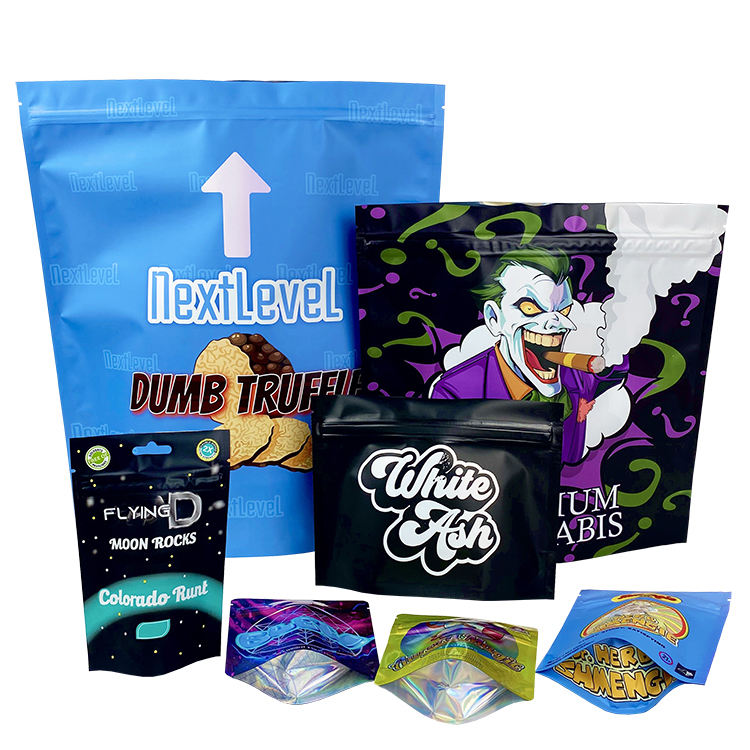
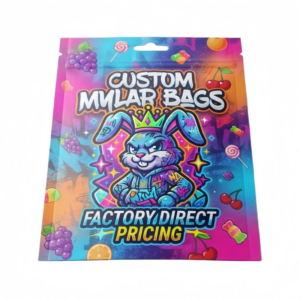
Custom printed holographic edible bags are flexible packages that combine brand-specific graphics with a reflective holographic appearance for confectionery, gummies, baked products, and other packaged edibles. They are intended for cannabis brands, edible manufacturers, distributors, private-label buyers, and multi-SKU purchasers seeking distinctive shelf presentation. The pouch dimensions, laminate, barrier level, closure, seal geometry, and regulatory artwork area must be confirmed for the actual edible and destination market.
Product Specifications
| Product type | Custom printed holographic bags for edible packaging |
|---|---|
| Intended contents | Edibles such as gummies, confectionery, or baked products, subject to product compatibility |
| Packaging material | Flexible laminate with a holographic visual effect; layer composition requires confirmation |
| Printing | Custom printing based on approved artwork and the selected print specification |
| Pouch style | To be selected according to display, filling, sealing, and usable-volume requirements |
| Closure | Zipper, heat-seal area, tear notch, or other features may be configured subject to specification |
| Barrier performance | Depends on the complete laminate, seals, closure, and storage conditions |
| Size and capacity | Buyer confirmation required using the edible’s dimensions, density, fill weight, and headspace |
| Customization | Artwork, color, finish treatment, pouch format, and multi-SKU versions may be specified |
What This Holographic Package Is Designed to Do
The holographic surface creates a changing reflective effect that can differentiate an edible line from conventional matte, clear, or metallic-looking packaging. It does not, by itself, establish the package’s oxygen, moisture, grease, aroma, or light barrier. Those functions come from the complete flexible laminate and the integrity of its seals.
For cannabis edibles, the package must also provide enough printable area for branding, flavor or product identification, serving information, warnings, symbols, and other market-specific content. Artwork space should therefore be evaluated alongside seal margins, zipper position, tear notch, gusset, and any required coding area.
Laminate and Barrier Decisions
These holographic flexible packaging bags can be configured with a laminate selected for the edible’s sensitivity. A suitable structure may help limit moisture or oxygen transfer, contain aroma, resist grease, provide puncture resistance, and support reliable heat sealing. The required combination differs between soft gummies, oily confectionery, brittle pieces, and baked products.
Barrier claims should be based on the final layer structure rather than visual appearance. A highly reflective pouch may reduce some direct light exposure, but protection still depends on substrate opacity, seams, closure, and storage. If quantified barrier performance is required, buyers should request the proposed structure and relevant test data for that exact construction rather than assume performance from the holographic finish.
Size, Headspace, and Filling Behavior
A stated fill weight does not identify one universal pouch size. Edibles with the same weight can differ substantially in piece dimensions, bulk density, shape, coating, and susceptibility to compression. The bag must provide usable internal volume without creating excessive empty space or forcing the product against the zipper and seal area.
For an RFQ, provide the fill weight, number of pieces, representative product dimensions, preferred headspace, and filling method. If a stand-up format is considered, the bottom gusset affects expansion, shelf stability, and filling behavior. A flat format may simplify presentation but can provide less usable depth for bulky or irregular pieces.
Zippers, Heat Seals, and Child-Resistant Requirements
A resealable zipper may improve convenience for multi-serving edibles, while a heat-seal area can provide an initial sealed boundary when correctly specified and processed. Tear notches may make the outer seal easier to open. Each feature changes the available artwork area and must be positioned around the filling process.
An ordinary press-to-close zipper is not automatically a child-resistant closure. If child-resistant packaging is required, identify the destination market and request a closure system and finished package supported by the applicable testing and documentation. Compliance cannot be inferred from the presence of a zipper, holographic film, or cannabis-oriented artwork.
Custom Printing and Multi-SKU Control
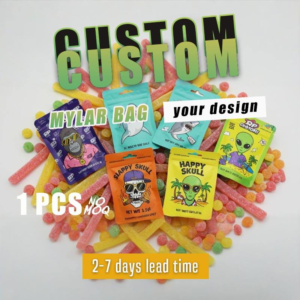
Custom holographic edible packaging requires artwork prepared for the selected die line and substrate. Holographic reflections can interact with inks, white layers, transparent areas, and fine text. A white underprint may be used selectively, depending on the printing process, to control where the holographic effect remains visible and where colors need greater opacity.
For OEM multi-SKU edible pouches, establish common rules for logo placement, warning panels, flavor names, color coding, lot or date areas, and variable regulatory content. Consistent die lines can simplify artwork management, but different edible volumes may require more than one pouch size. Buyers should review proofs for text legibility, barcode contrast where applicable, and the effect of seal or fold areas on mandatory information.
Appearance Versus Technical Performance
The main trade-off is visual impact versus artwork control. Exposing more holographic substrate can create stronger shelf movement, but it may reduce contrast behind small text or detailed graphics. Adding more opaque ink can improve readability while covering the reflective effect. The print plan should deliberately assign holographic and opaque zones rather than treating the entire surface as equivalent.
A second trade-off concerns stiffness and handling. A thicker or stiffer laminate may improve shape retention and puncture resistance, but it can change opening feel, gusset expansion, and sealing parameters. Final choices should reflect the edible, packing equipment, distribution conditions, and desired consumer experience.
Food-Contact and Destination-Market Review
Edible packaging may be subject to food-contact requirements as well as cannabis-specific labeling, child-resistant, tamper-evident, opacity, and warning rules. Requirements vary by jurisdiction and product category. Buyers should identify the sales market, intended use, contact layer, closure requirement, and required documentation before approving production. Printed graphics must also leave sufficient space for all applicable information.
Frequently Asked Questions
Does a holographic appearance mean the bag has a high barrier?
No. Holographic appearance describes the visual effect, not a verified barrier level. Buyers should specify the required laminate, product sensitivity, storage conditions, and any test-data needs.
Can these bags include a zipper and an initial heat seal?
They can be configured with closure and sealing features subject to the selected pouch design. The zipper position, heat-seal area, tear notch, and filling process should be confirmed together.
Is a standard resealable zipper child-resistant?
No. An ordinary resealable zipper is not automatically child-resistant. A required child-resistant function must be addressed through the specified closure, finished-package design, applicable testing, and destination-market review.
How should the correct bag size be selected for edibles?
Base the size on fill weight, piece count, actual product dimensions, bulk density, headspace, closure position, and filling method. Product trials or representative samples can help assess usable volume.
What artwork information is needed for a holographic print project?
Provide the artwork versions, desired holographic exposure, opaque or white-ink areas, required warnings, flavor or SKU changes, coding areas, and destination-market content. Final files should follow the approved die line.
Request a Product-Specific B2B Quotation
To request pricing from a wholesale holographic bag manufacturer or supplier, submit the edible type, fill weight, piece dimensions, desired pouch dimensions, quantity, number of artwork versions, preferred pouch style, barrier or laminate needs, closure, finish, filling method, and destination market. Also identify any child-resistant, food-contact, labeling, testing, or documentation requirements that must be evaluated. These inputs allow the package structure and quotation to be developed around the actual product instead of an assumed standard bag.
Reviews
There are no reviews yet.