
Custom Printed 3.5g Holographic Herb Mylar Bags for Flower Packaging
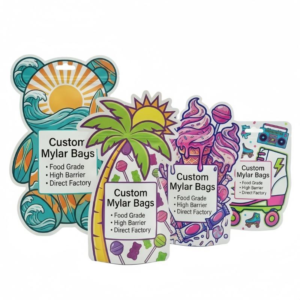
Custom printed 3.5g holographic herb Mylar bags are die-cut flexible pouches for brands packaging approximately 3.5g of dried herb or cannabis flower. Their holographic appearance creates a distinctive shelf and brand presentation, while the custom-printing format supports strain, cultivar, private-label, and multi-SKU artwork. Cannabis brands, distributors, wholesalers, and OEM or ODM buyers should confirm the final pouch dimensions, laminate structure, closure, sealing method, and destination-market requirements before requesting a quotation.
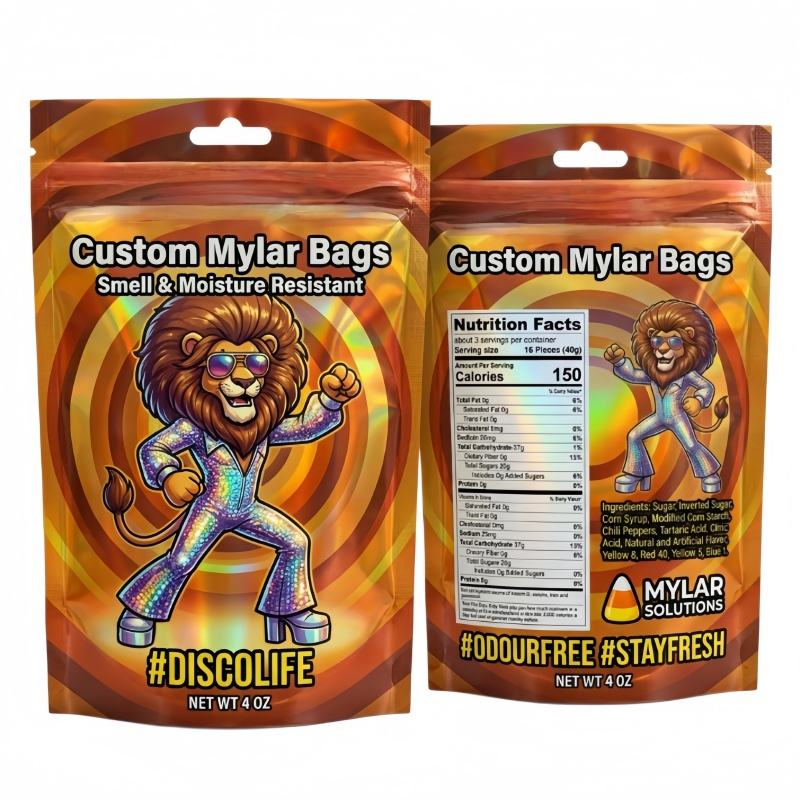
Product Specifications
| Product type | Die-cut flexible herb Mylar bag |
|---|---|
| Nominal fill reference | 3.5g; actual fit depends on flower density, particle size, pouch dimensions, and headspace |
| Appearance | Holographic finish or holographic visual effect, subject to the selected construction |
| Printing | Custom printed; artwork method, colors, print area, and registration require confirmation |
| Material structure | Mylar-based flexible packaging; exact laminate and barrier layers require confirmation |
| Closure | Not specified in the product input; zipper, heat seal, tear notch, or another configuration must be confirmed |
| Intended contents | Dried herb or cannabis flower, subject to product, market, and packaging requirements |
| Commercial use | B2B cannabis brands, private-label programs, distributors, wholesalers, and multi-SKU packaging |
How the 3.5g Format Should Be Sized
A stated 3.5g fill weight does not identify one universal bag size. Dense flower may occupy less space than airy flower, and trimmed material, humidity, particle size, and handling can change the required usable volume. Buyers should provide the actual product dimensions or representative samples, not only the target weight. The supplier can then assess pouch width, height, opening position, seal area, and practical headspace.
Headspace affects filling speed, presentation, and movement inside the package. Too little space can make filling and heat sealing inconsistent or put pressure on the seal. Excessive space may allow the flower to move, increase apparent underfill, or create a less controlled retail presentation. For a die-cut format, the usable interior is also affected by the contour and by the perimeter seal, so the nominal outside dimensions are not the same as the fillable area.
Barrier Structure, Aroma, and Product Protection
The holographic appearance does not by itself define the bag’s barrier performance. Odor retention, moisture control, oxygen resistance, light protection, puncture resistance, stiffness, and heat sealability depend on the complete laminate, layer thicknesses, seal design, and production settings. The exact structure should therefore be specified for the intended flower, storage conditions, filling process, and destination market.
A suitable flexible barrier structure can help contain aroma and reduce exposure to moisture, oxygen, and light when the bag is properly sealed. However, “smell resistant” should be treated as a specification target rather than an absolute performance guarantee. Buyers should request the applicable material description and, where needed, test information for the selected structure rather than assuming that a holographic outer appearance provides a particular OTR or MVTR value.
There is a practical trade-off between a highly reflective holographic presentation and straightforward print control. The visual effect can influence color appearance, fine detail, contrast, and barcode readability. Artwork should be reviewed against the selected substrate, print sequence, registration tolerances, and any reserved opaque or clear areas before mass production.
Die-Cut Shape, Opening, and Seal Decisions
A die-cut pouch can use a shaped perimeter or customized silhouette instead of a simple rectangular outline. This supports brand differentiation, but the die line must leave adequate room for the product cavity, opening, zipper if selected, and reliable top and side seals. Tight curves, narrow corners, or artwork close to the perimeter may reduce usable print area or complicate filling and sealing.
An ordinary resealable zipper may support repeated access, while a heat seal can provide a separate tamper-evident barrier after filling. A tear notch can improve opening convenience. These features are not interchangeable, and a standard zipper should not be described as a tested child-resistant closure. If the destination market requires child-resistant packaging, the buyer must identify that requirement and confirm the appropriate closure design, testing, and documentation separately.
Custom Printing for Strains and Private-Label Programs
Custom printed cannabis bags are useful when one packaging format must carry several strain names, product variants, weights, compliance panels, or private-label identities. Before artwork approval, define the finished bag dimensions, front and back panels, seal exclusion zones, zipper or tear-notch location, barcode area, variable-data fields, and required warning or regulatory space. The available artwork area may be smaller than the overall die-cut surface.
For multi-SKU purchasing, keep the shared brand elements consistent and control the variable content through a documented artwork matrix. Confirm whether each version needs a separate file, proof, color target, or approval cycle. This helps reduce errors involving strain names, batch fields, net weight, mandated symbols, or destination-market language. It is also useful to clarify whether the holographic treatment covers the full bag or is limited to selected areas.
Filling and Quality-Control Considerations
Test the selected bag with the actual flower or a representative production sample. Check whether the product reaches the intended fill level, whether the opening accepts the filling equipment, and whether the die-cut edges interfere with handling. For automated or semi-automated packing, confirm the bag’s feeding orientation, stiffness, opening behavior, and seal temperature window with the equipment operator.
Inspection criteria should be agreed before production. Relevant checks may include die-cut alignment, print registration, artwork version, seal integrity, zipper engagement if used, tear-notch position, surface appearance, and legibility of variable information. Barrier expectations, closure performance, and destination-market documentation should be linked to the final material and closure specification rather than inferred from the product name.
Buyer Questions Before an RFQ
Can these bags hold exactly 3.5g of flower?
The product is referenced for a 3.5g fill, but exact fit depends on flower density, product dimensions, headspace, and the usable interior created by the die-cut and seals. Provide a representative sample or actual product measurements for sizing confirmation.
Does the holographic finish guarantee odor or moisture protection?
No. The holographic appearance does not establish a specific barrier level. Odor, moisture, oxygen, light, and heat-seal performance depend on the complete laminate and sealing system, which must be confirmed for the selected specification.
Can the bags be made with a zipper or child-resistant closure?
A closure is not specified in the product input. A zipper, heat seal, tear notch, or other configuration may be available depending on the design, but an ordinary zipper is not the same as a tested child-resistant closure. State the required closure and market documentation in the RFQ.
Are these suitable for several cannabis strains or private-label SKUs?
Yes, the custom-printed format can be planned for multiple artwork versions, strain identities, or private-label programs. Confirm the number of versions, shared and variable artwork, print areas, barcode fields, and approval requirements before production.
What information should a wholesale buyer provide for a quotation?
Provide the contents, target fill weight, actual product dimensions or sample, desired pouch dimensions, quantity, artwork versions, material and barrier needs, closure, finish, filling method, destination market, and compliance requirements.
Request a Product-Specific RFQ
For a quotation on these holographic die-cut herb bags, send the intended contents, 3.5g target or actual product dimensions, desired pouch dimensions, order quantity, number of artwork versions, required barrier or laminate, closure preference, finish coverage, filling method, destination market, and applicable compliance needs. Those details allow the supplier to confirm fit, usable print area, sealing configuration, and the most appropriate specification for your cannabis packaging program.
Reviews
There are no reviews yet.