
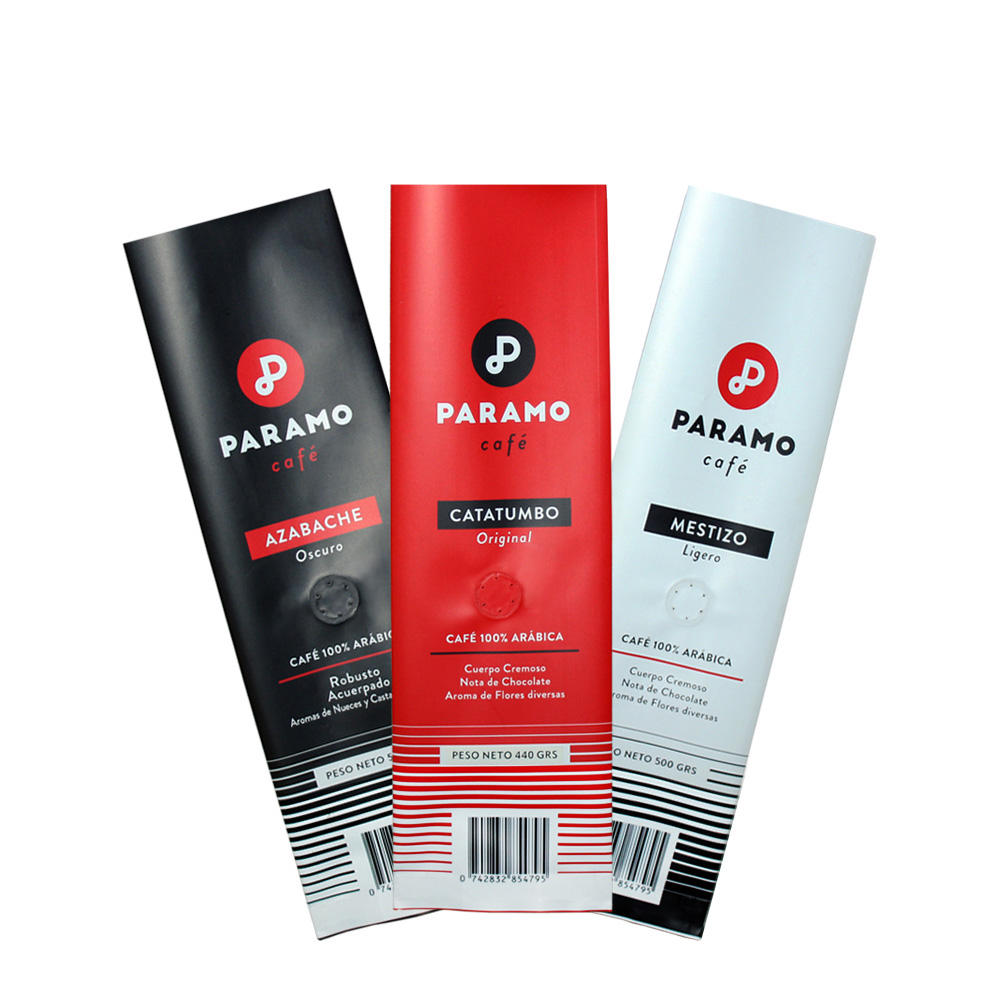
Custom Matte Tin-Tie Coffee Bags with Foil Side Gussets
Custom matte tin-tie coffee bags are flexible aluminum foil packaging bags made for coffee brands, roasters, distributors, wholesalers, and private-label programs. Their defining features are expandable side gussets, a matte exterior, and a tin-tie closure that allows the open top to be rolled or folded down and held in place. Buyers should confirm the complete laminate, dimensions, filling method, sealing requirements, and artwork specifications before requesting production.
Product Specifications
| Specification | Product detail |
|---|---|
| Packaging type | Flexible coffee bag |
| Pouch format | Side-gusset bag |
| Material | Aluminum foil; the complete laminate structure must be confirmed |
| Exterior appearance | Matte |
| Closure | Tin tie for folding or rolling the top closed |
| Intended contents | Coffee; buyers should identify whole bean, ground coffee, or another format |
| Customization | Custom configuration; printing, colors, dimensions, and artwork requirements are subject to final specification |
| Dimensions and capacity | Not specified; determine from coffee density, fill weight, headspace, and filling equipment |
| Heat sealing | Compatibility and seal area must be confirmed for the selected laminate and packing process |
| Degassing valve | Not stated; may be requested for evaluation when appropriate for the coffee and packing process |
Foil Barrier and Matte Surface
Aluminum foil is used in coffee packaging because it can contribute to protection from oxygen, moisture, aroma transfer, and light. Actual barrier performance depends on the entire laminate, including every film layer, adhesive, sealant layer, and finished seam. A foil description alone does not establish a specific oxygen transmission rate, moisture vapor transmission rate, shelf life, or puncture resistance.
The matte appearance concerns the outside presentation of the bag. It does not independently prove the composition or barrier performance of the internal structure. Buyers sourcing aluminum foil side-gusset coffee pouches should therefore approve both the visual finish and the technical laminate rather than treating them as the same specification.
A stronger or thicker structure may improve stiffness and handling, but it can also make the folded top bulkier and affect how neatly the tin tie closes. A lighter structure may fold more easily while providing different puncture, seal, and barrier characteristics. This is a product-specific trade-off to review with filled samples.
Side Gussets, Filling, and Pack Shape
The two side gussets expand as coffee enters the bag, increasing usable internal volume while retaining a relatively narrow front and back panel. This format is commonly considered when buyers want a traditional block-style coffee pack or need broad front and rear surfaces for branding and product information.
A stated coffee weight does not determine one universal bag size. Whole beans, ground coffee, roast profile, grind size, settling, and required headspace can all change the volume needed for the same nominal weight. The usable volume is also affected by the gusset depth, top fold allowance, bottom and side seals, valve placement if selected, and the area reserved for any production seal.
For an RFQ, provide the target fill weight and either the product bulk density or a representative filled-bag sample. Buyers using automated or semi-automated equipment should also identify the filling opening, bag support method, and maximum acceptable dimensions. These details help determine whether the side gussets open consistently and whether the finished pack presents as intended.
How the Tin-Tie Closure Works
A tin tie is typically used after the bag top has been folded or rolled. It supports repeated manual opening and reclosing, making these bags suitable for coffee that may be consumed over multiple occasions. Tin-tie performance depends on its length, position, attachment, bag stiffness, and the number of folds made by the user.
A tin tie is not the same as a press-to-close zipper, and it should not be represented as an airtight or child-resistant closure. If the initial pack requires a production heat seal, the buyer must specify the seal location and confirm that enough material remains above the product for sealing, opening, and later folding. The selected inner sealant layer must also suit the intended sealing temperature, dwell time, and equipment.
Coffee Aroma, Freshness, and Degassing Decisions
When properly sealed, an appropriate foil laminate can help contain coffee aroma and limit exposure to environmental moisture and oxygen. This supports the intended function of aroma barrier bags for roasted coffee, but no permanent freshness or smell-proof claim should be assumed without the final structure, seal testing, and storage conditions.
Freshly roasted coffee may release carbon dioxide. A one-way degassing valve may be considered depending on roast timing, packing schedule, distribution period, and whether the product is whole bean or ground. A valve is not confirmed for this product input and should be listed separately in the RFQ if needed. Its location must avoid artwork, folds, seals, and interference with filling equipment.
Custom Printing and Multi-SKU Control
These bags are identified as custom, while the exact decoration method is not stated. Custom printed matte coffee packaging can be configured subject to the chosen substrate, print process, color requirements, order profile, and supplier capability. Buyers should submit a final die line rather than assuming the full flat panel or gusset is printable. Seams, tin-tie attachment areas, folds, registration tolerances, and any valve location can reduce usable artwork space.
For private-label multi-SKU coffee bags, define which elements remain consistent across roast, origin, grind, flavor, or pack-size versions. A shared layout can support brand consistency, while controlled changes in color, text, barcodes, and regulatory information help distinguish individual products. Each artwork version should be identified in the quotation request so the supplier can evaluate the production configuration without assuming quantities or specifications.
Labeling and Destination-Market Review
Coffee-contact suitability, labeling, recycling statements, language, net-content presentation, traceability marks, and other requirements vary by destination market and sales channel. The buyer or qualified compliance adviser should review the final laminate, inks, adhesives, and finished package for the intended use. Do not infer certification, approval, or legal compliance from the foil material, matte finish, or pouch style alone.
Frequently Asked Questions
Are these bags suitable for both whole bean and ground coffee?
They are intended for coffee, but the buyer must specify the coffee format. Whole beans and ground coffee can have different density, headspace, degassing, filling, and seal requirements.
Does the aluminum foil make the bag completely airtight?
No absolute airtight claim can be made from the material name alone. Protection depends on the complete laminate, seam quality, top seal, tin-tie use, optional components, handling, and storage conditions.
Can the tin-tie bag also be heat sealed?
It may be configured for an initial heat seal if the selected laminate has a suitable sealant layer and the bag provides enough top-seal and fold-down space. Confirm this requirement with the filling equipment and sealing parameters.
How should the correct bag size be selected?
Use the target fill weight together with coffee density, product format, required headspace, gusset expansion, seal allowance, top folds, and filling equipment limits. A filled sample is more reliable than choosing dimensions from weight alone.
Can custom artwork extend onto the side gussets?
It may be possible, depending on the print process, die line, seam position, gusset folds, and registration limits. Request an approved artwork template before placing critical text or graphics in these areas.
Request a B2B Quotation
To obtain a comparable quotation from a wholesale tin-tie coffee bag supplier, provide the coffee format, target fill weight, bulk density or filled sample, desired bag dimensions, order quantity, number of artwork versions, preferred laminate or barrier requirements, matte finish details, tin-tie position, initial heat-seal requirement, optional valve request, filling method, destination market, and applicable food-contact or labeling needs. These inputs allow the bag structure, gusset, closure, print layout, and usable volume to be evaluated before production.

Reviews
There are no reviews yet.