
Blue Printed Tobacco Pouches with Fold Over Flaps
Blue printed tobacco pouches are flexible printed pouches with a fold over flap format for tobacco, herbal blends, hemp flower, cannabis-adjacent products, and private-label smoking accessory lines. The defining features confirmed for this product are the blue printed appearance and fold over flap pouch style. For B2B buyers, the main procurement question is not only how the pouch looks, but whether the final laminate, seal geometry, closure approach, artwork layout, and destination-market labeling space match the product being packed.
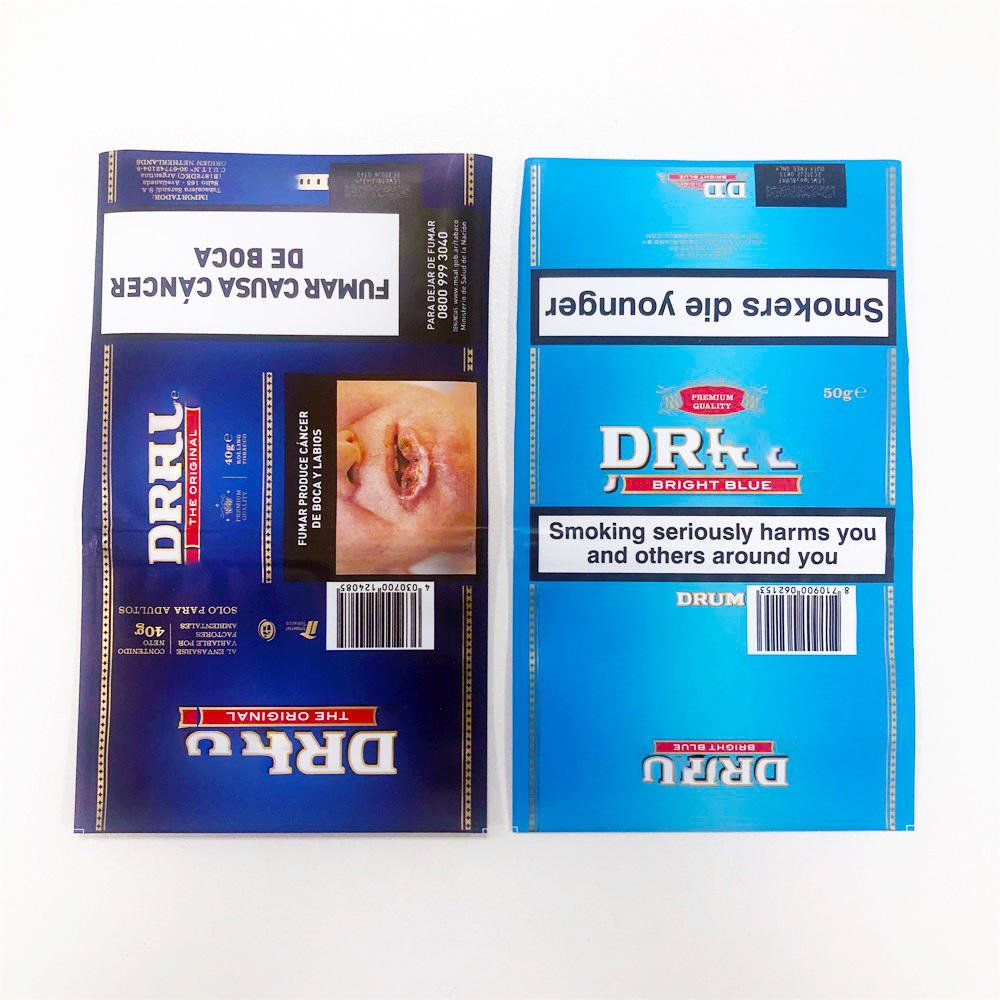
Product Specifications
| Product type | Printed flexible tobacco pouch with fold over flap |
|---|---|
| Confirmed appearance | Blue printed exterior |
| Pouch style | Fold over flap pouch; final seal geometry and opening position should be confirmed from dieline or sample |
| Intended contents | Tobacco, herbal blends, hemp flower, cannabis-adjacent dry goods, or similar products, subject to buyer specification |
| Material structure | To be confirmed; may be configured with paper, PET, PE, PP, metallized film, foil, or other laminates depending on barrier and appearance requirements |
| Closure | Fold over flap confirmed; resealability, adhesive, zipper, heat seal, or tamper-evident features are optional specification items if required |
| Printing | Custom printed artwork can be specified; color matching, finish, ink system, and proofing should be confirmed before production |
| Dimensions and capacity | Not stated; buyer should confirm pouch width, height, flap depth, product fill weight, usable volume, and headspace |
| Compliance status | Not assumed; warnings, age statements, symbols, nutrition or ingredient information, and child-resistant requirements depend on destination market and product type |
Where This Fold Over Flap Format Fits
Fold over flap tobacco bags are often selected when a brand wants a soft, compact pouch with a recognizable smoking-product presentation rather than a rigid jar or standard stand-up pouch. The flap can provide a broad front-facing print area and a traditional opening experience. For loose tobacco, herbal material, or small dry cannabis-related goods, the buyer should verify whether the pouch will be filled by hand, semi-automatic equipment, or a packing line because the flap position and mouth width affect filling speed and product loss.
This format is different from a zipper stand-up pouch. A fold over flap can create a clean retail face and convenient fold-down presentation, but it does not automatically equal a tested child-resistant package or a permanent aroma barrier. If the product requires stronger resealability, added tamper evidence, or child-resistant functionality, those requirements must be specified rather than assumed from the flap design.
Material and Barrier Decisions
The blue printed exterior describes the visual style, not the barrier structure. Barrier performance depends on the complete laminate, the sealant layer, the flap closure, and how the filled pouch is sealed. A paper-forward structure may create a tactile, traditional tobacco feel, while film laminates can improve stiffness, print sharpness, moisture resistance, or heat sealability. Metallized or foil-containing laminates may be considered when stronger light, oxygen, or aroma retention is required, subject to the final specification.
For buyers comparing barrier choices, the key cause-and-effect relationship is simple: denser, higher-barrier laminates generally help contain aroma and slow moisture or oxygen exchange when properly sealed, but they may increase stiffness, reduce a natural paper feel, and affect recycling options. If aroma containment is a major purchase driver, review the available smell resistant packaging structures and confirm the exact laminate and sealing system before approving a bulk order.
Artwork, Blue Printing, and Multi-SKU Consistency
Custom printed tobacco pouches need more than an attractive blue background. Procurement teams should confirm the dieline, bleed, flap fold line, seal zones, warning panels, barcode location, batch or lot code area, and any required THC, CBD, tobacco, or nicotine-related statements where applicable. Artwork that looks correct on a flat proof may change visually once the flap is folded, especially near creases or heat-sealed edges.
For multi-SKU programs, keep the pouch structure consistent across strains, blends, flavors, or private-label customer versions whenever possible. A shared base structure can help maintain filling behavior, shelf presentation, and carton packing efficiency. Variable elements such as strain name, flavor color band, terpene callout, or distributor panel can then be managed through separate artwork versions. Buyers planning several SKUs can review custom printed packaging bag options before finalizing the print system and artwork family.
Size, Headspace, and Filling Behavior
No universal pouch size can be inferred from the product name. Loose tobacco, shredded herbal blends, and cannabis flower vary in density, particle size, compressibility, and sensitivity to crushing. A pouch that fits one gram of dense material may not fit the same labeled weight of airy flower with adequate headspace. Buyers should test the actual contents, not only a nominal fill weight.
Headspace also affects the fold over flap. Too little headspace can make folding difficult, distort the printed panel, or stress the seal area. Too much headspace can make the pouch feel underfilled and allow contents to move during shipping. For pre-packed retail display, confirm whether the pouch must lie flat, stand in a tray, hang from a peg, or pack into master cartons.
Closure, Seal, and Compliance Distinctions
The confirmed closure style is a fold over flap. Depending on the selected structure, the pouch may be configured with heat sealing, pressure-sensitive adhesive, label closure, or other closure elements. These options should be discussed early because each one changes the consumer opening experience and the production process.
A standard fold or resealable feature should not be treated as child resistant unless the final package has been designed and tested for the applicable requirement. Cannabis, hemp, tobacco, and herbal products may face different labeling, opacity, warning, and access-prevention rules depending on the destination market. If your program requires specific documentation, align the pouch specification with cannabis packaging compliance considerations before artwork approval.
Visible Custom Development Process
- Requirements review: Share the contents, target fill weight or actual product dimensions, expected retail channel, destination market, and whether the pouch is for tobacco, hemp, cannabis flower, or another dry product.
- Specification confirmation: Confirm pouch dimensions, flap depth, laminate, barrier target, closure method, finish, print coverage, artwork versions, and filling method.
- Sample and artwork review: Review the dieline, printed appearance, folding behavior, seal zones, headspace, and any warning or information panels before bulk approval.
- Bulk production approval: Approve final artwork, material specification, color expectations, packing details, and quality checkpoints before production release.
Product-Specific Trade-Off to Consider
The main trade-off for blue printed tobacco pouches with fold over flaps is between tactile presentation and protective performance. A softer, paper-like pouch may feel familiar and premium for tobacco-style goods, but it may need additional film or barrier layers if aroma, moisture control, puncture resistance, or light protection are priorities. A stronger high-barrier laminate may protect the contents better when properly sealed, but it can feel less traditional and may require different folding, sealing, and disposal guidance.
FAQ
Are these blue printed tobacco pouches suitable for cannabis flower?
They may be suitable for cannabis flower or hemp flower if the pouch size, headspace, laminate barrier, seal, labeling area, and destination-market requirements are confirmed for the actual product.
Does the fold over flap make the pouch child resistant?
No. A fold over flap is a pouch style, not proof of child-resistant performance. Child-resistant requirements must be specified, designed, and verified separately where required.
Can the pouch be made smell resistant?
It can be configured to help contain aroma depending on the laminate, sealant, closure method, and filling process. Aroma control should be treated as a specification item, not assumed from the printed exterior.
What information is needed to confirm the correct size?
Provide the product type, target fill weight, actual product density or dimensions, preferred pouch width and height, flap depth, filling method, and required headspace.
Can multiple flavors, strains, or private-label designs use the same pouch structure?
Yes, a shared structure can often support multiple artwork versions, but each SKU should be checked for regulatory text, barcode placement, warning space, and color consistency.
RFQ Inputs for B2B Buyers
For an accurate quotation, provide the contents, fill weight or actual product dimensions, desired pouch dimensions, flap depth, quantity, number of artwork versions, blue color target, finish preference, material or barrier expectations, closure method, filling process, destination market, and any tobacco, hemp, cannabis, or food-contact compliance needs. If the specification is still open, request guidance on laminate and closure options before locking the artwork.

Reviews
There are no reviews yet.