
3.5g Holographic Stand-Up Mylar Pouches for Private-Label Cannabis Packaging
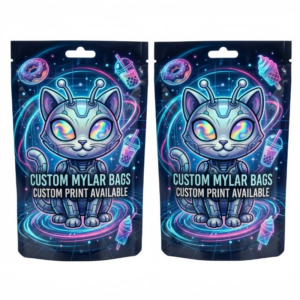
These 3.5g holographic stand-up Mylar pouches are flexible cannabis packaging bags for brands, distributors, wholesalers, and private-label buyers that need a distinctive shelf-facing format for a nominal 3.5g product presentation. The pouch combines a stand-up format with a holographic appearance and can be evaluated for cannabis flower or another product that fits the confirmed internal volume. A stated 3.5g fill weight does not define one universal pouch size, because product density, particle size, headspace, closure requirements, and filling equipment all affect the correct specification.
Use the information below to establish a practical RFQ brief. The final pouch dimensions, complete laminate, barrier performance, closure system, printing method, and destination-market requirements should be confirmed before production.
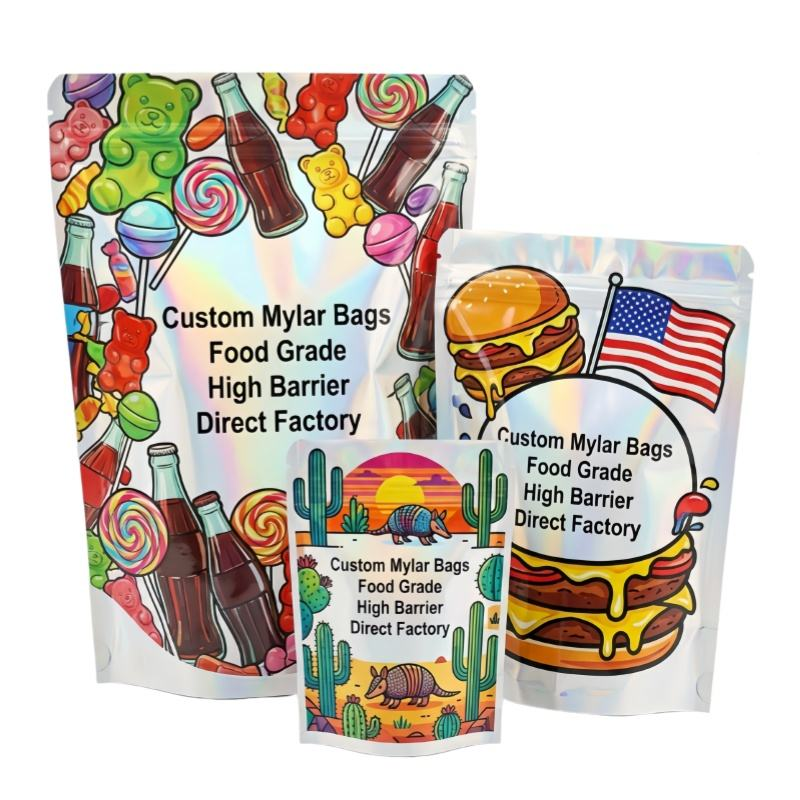
Product Specifications
| Product type | Stand-up flexible pouch |
|---|---|
| Nominal fill reference | 3.5g; actual usable volume depends on the packed product |
| Appearance | Holographic finish or holographic visual effect, as specified for the final construction |
| Stated material | Mylar pouch; the complete laminate and layer structure require confirmation |
| Private-label use | Suitable for private-label, OEM, ODM, distributor, and multi-SKU discussions |
| Dimensions | Not provided; confirm flat dimensions, gusset, seal area, and usable fill space |
| Closure | Not provided; confirm zipper, heat seal, tear notch, or another selected configuration |
| Printing | Not provided; confirm artwork process, printable area, color requirements, and finish |
How the Stand-Up Format Affects Filling and Presentation
The bottom gusset allows the pouch to stand when filled, which can improve display orientation and make manual handling easier. It also affects the pouch’s usable volume and the way product settles during filling. For a 3.5g cannabis flower application, compare the packed flower’s density, bud size, moisture condition, and expected headspace rather than selecting dimensions from fill weight alone. Too little headspace can make filling and closure more difficult; excessive headspace can increase movement inside the pouch and reduce presentation consistency.
Ask for a dimensional recommendation based on the actual product and filling method. A buyer should confirm the target flat width, body height, bottom gusset, top seal zone, opening position, and any tolerance that matters to automated or semi-automated equipment. Sample testing with the intended product is the most useful way to assess standing stability, fill speed, headspace, and appearance after sealing.
Mylar Structure, Aroma, and Barrier Decisions
“Mylar” identifies the stated pouch material terminology, but the appearance alone does not reveal the complete laminate structure. A holographic outer effect is not, by itself, proof of a particular oxygen transmission rate, moisture vapor transmission rate, puncture resistance, or odor-control result. Barrier performance depends on the full film construction, layer selection, seal design, and sealing conditions.
For cannabis flower, the selected structure may be configured to help contain aroma and protect the packed product from environmental exposure when properly sealed. Buyers should request confirmation of the intended resistance to aroma transfer, moisture, oxygen, light, and handling puncture for the selected construction. If aroma retention is a priority, evaluate the actual finished pouch after filling and sealing rather than treating “smell proof” as an absolute performance guarantee.
There is a practical trade-off between visual impact and technical specification. A strong holographic effect can support brand differentiation, but it may influence color reproduction, fine artwork visibility, or the appearance of small text. The holographic layer also does not automatically establish light-barrier performance. Confirm whether the selected structure provides the light protection required for the product and destination market.
Closure, Seal, and Opening Configuration
The input does not specify a closure, so the zipper, heat seal, tear notch, and any child-resistant feature must be selected and confirmed. An ordinary resealable zipper can support repeated opening and closing, but it should not be described as a tested child-resistant closure. If the destination market or product category requires child-resistant packaging, request the applicable closure design, testing documentation, and market-specific requirements before approval.
A heat seal can provide a tamper-evident presentation when the seal system and process are correctly specified, while a tear notch can make the initial opening easier. These functions may be combined, but the top seal width, zipper position, notch location, and sealing temperature must work with the filling line and the chosen film. Ask for samples that are filled, sealed, opened, and resealed using the intended workflow.
Private-Label Printing and Holographic Artwork
These custom printed private-label cannabis pouches can be evaluated for brand, strain, product, and regulatory artwork across multiple SKUs. Printing capability, color system, registration tolerance, artwork area, and substrate limits are not stated and should be confirmed with the supplier. Provide the final dieline or request one based on the approved pouch dimensions before preparing production artwork.
For holographic packaging, ask how the visual effect interacts with opaque white ink, transparent areas, metallic-looking elements, fine text, barcodes, warning panels, and variable SKU information. A proof or physical sample can reveal contrast issues that are not obvious on a flat digital mockup. Keep required information in a high-contrast area and confirm whether the holographic effect is incorporated into the material, applied as a finish, or achieved through another approved construction.
Multi-SKU and Wholesale Procurement Considerations
For distributors, wholesalers, and multi-SKU cannabis brands, consistency is as important as appearance. Confirm whether all strain or product versions will use one pouch size and closure configuration or whether separate dimensions are needed. A shared format can simplify filling, storage, and procurement, while different fill densities or artwork requirements may justify more than one size.
Prepare a version-controlled artwork list covering each SKU, flavor or strain name, net weight statement, barcode, required warnings, and destination-market language. Also clarify whether the holographic appearance should remain consistent across every printed version. Before issuing a purchase order, align the approved sample, artwork proof, material specification, closure, packing method, and inspection criteria. MOQ, pricing, production timing, inventory, and shipping terms are not provided and must be quoted for the actual program.
Destination-Market and Compliance Review
Packaging obligations vary by destination, product category, and jurisdiction. Before selecting the final pouch, confirm applicable rules for cannabis labeling, net contents, warnings, child resistance, tamper evidence, recycling statements, barcode placement, language, and contact or traceability information. Do not assume that a holographic cannabis bag is compliant merely because it can display required artwork.
Where food-contact, product-contact, or other material documentation is needed, request the documents relevant to the selected laminate, inks, coatings, and closure. The buyer should identify the destination market and intended contents early so the supplier can respond to the correct specification rather than a generic cannabis packaging request.
Frequently Asked Questions
Are these pouches sized specifically for 3.5g of cannabis flower?
The product is presented as a 3.5g format, but fill weight alone does not establish one universal size. Confirm the product’s density, physical dimensions, desired headspace, and filling method before approving pouch dimensions.
Does the holographic finish prove that the pouch is lightproof or odorproof?
No. Holographic appearance does not establish the complete laminate or barrier performance. Confirm the selected structure and evaluate aroma, moisture, oxygen, and light requirements for the finished, properly sealed pouch.
Can I use a regular zipper as a child-resistant closure?
No. An ordinary resealable zipper should be distinguished from a tested child-resistant closure. If child resistance is required, confirm the appropriate design and documentation for the destination market.
Can the pouches carry private-label artwork for multiple strains or SKUs?
They can be evaluated for private-label and multi-SKU programs, but printing process, artwork area, color performance, substrate limits, and version quantities require confirmation for the selected construction.
What should I send for a quotation?
Send the contents, actual fill weight or product dimensions, desired pouch dimensions, quantity, number of artwork versions, material or barrier preference, closure, finish, filling method, destination market, and compliance needs.
Request a B2B Specification Review
For an accurate RFQ, provide the intended contents, actual fill weight or product dimensions, desired pouch dimensions, order quantity, artwork version count, material or barrier requirements, closure preference, holographic finish expectations, filling method, destination market, and compliance documentation needs. The supplier can then confirm the construction, samples, print method, and commercial terms for your private-label program.
Reviews
There are no reviews yet.