
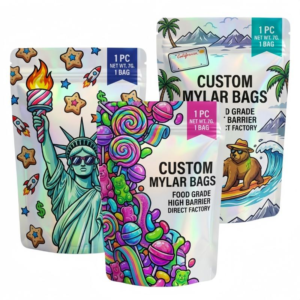
Custom Printed 3.5g Mylar Bags for Cannabis Packaging
Custom printed 3.5g mylar bags are resealable ziplock pouches specified for packaging a nominal 3.5-gram fill, commonly considered by cannabis brands, distributors, wholesalers, private-label programs, and buyers managing multiple SKUs. The stated 3.5g fill weight does not define one universal pouch size because flower density, grind or product form, headspace, and filling method change the space required. Confirm the actual product and pouch dimensions before approving artwork or requesting a production quotation.
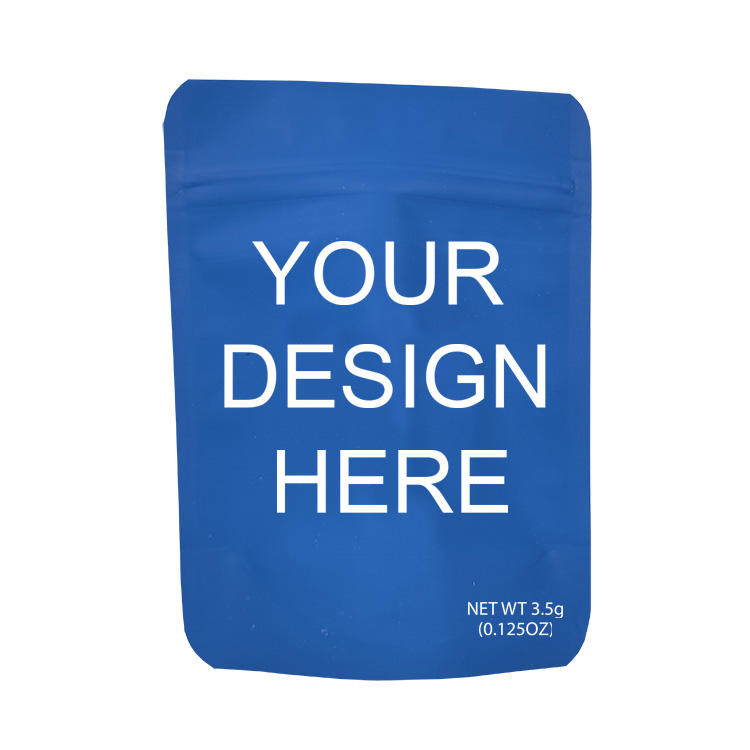
Product Specifications
| Product type | Custom printed resealable ziplock bag |
|---|---|
| Stated fill reference | 3.5g; actual usable volume depends on the packed product |
| Material reference | Mylar bag; confirm the complete laminate or barrier structure |
| Closure | Resealable ziplock; separate from a tested child-resistant closure |
| Printing | Custom printing; artwork method, printable area, and color requirements require confirmation |
| Dimensions | Not stated; confirm finished width, height, gusset if applicable, and seal geometry |
| Finish | Not stated; confirm matte, gloss, metallic, clear-window, or other visual requirements |
| Primary B2B use | Branded cannabis packaging programs, subject to product and destination-market requirements |
Fit the Bag to the Contents, Not Only the Fill Weight
A 3.5-gram cannabis flower fill can occupy different volumes depending on density, moisture condition, bud size, and how the product is loaded. A pouch that is too small can compress flower, interfere with the zipper, or leave material in the seal area. A pouch that is too large can create excess headspace, allow more movement during handling, and require a different artwork proportion. Provide a representative product sample, product dimensions, or measured fill volume when possible. The supplier can then help confirm a practical pouch width, height, opening, and headspace target.
Filling behavior also matters for multi-SKU operations. Consistent pouch dimensions can simplify automated or semi-automated filling, but different strains or product densities may not present identically inside the same bag. Confirm whether the 3.5g reference applies to one product or a wider SKU family. A shared format may support brand consistency, while separate sizes may improve fill presentation and seal control.
Barrier Structure and Protection Trade-Offs
The word “Mylar” identifies the product family in the requested name, but it does not by itself specify the complete laminate, foil layer, metallization, sealant, or measured barrier values. Ask for the proposed structure when aroma retention, moisture control, oxygen exposure, light protection, or puncture resistance affects the application. Barrier performance depends on the complete film combination and on the quality of the finished seal, not simply on the outer appearance.
A suitable flexible barrier structure can help contain aroma and limit moisture or oxygen transfer when properly converted and sealed. A metallic or opaque appearance may provide stronger light protection than a clear viewing area, but a clear window can improve product visibility while trading away some light-blocking capability. Thicker or more protective structures may improve stiffness and handling but can affect folding, sealing conditions, material cost, and print behavior. Treat “smell resistant” as a packaging objective to validate against the selected structure and closure rather than as an absolute, permanent guarantee.
Ziplock, Heat Seal, and Child-Resistance Decisions
The resealable ziplock supports repeated opening and closing after the initial pack-out. It does not automatically mean that the package is hermetically sealed, child-resistant, or suitable for every regulated cannabis market. If the product requires tamper evidence, an initial heat seal may be considered above the zipper, subject to the selected pouch construction and sealing equipment. The heat seal must be kept free of flower, dust, oil, or other contamination to support a reliable closure.
Do not substitute an ordinary resealable zipper for a tested child-resistant closure. If the destination market requires child-resistant packaging, identify that requirement at the RFQ stage and request the appropriate closure design, testing documentation, and market-specific review. Any compliance, performance, or test claim must be confirmed for the exact finished bag, closure, contents, and destination.
Custom Printing and Artwork Control
Custom printing turns the bag into a branded SKU asset for strain names, product identifiers, regulatory panels, batch information, and distributor or private-label requirements. Before creating final artwork, confirm the dieline, safe area, zipper position, seal zones, tear-notch position if selected, and any area that may be hidden by folds or filling. The usable print area is not necessarily the same as the overall bag area.
Printing results depend on the chosen substrate, surface treatment, ink system, and finish. Matte, gloss, metallic, kraft-look, holographic, and clear effects should be treated as specification choices rather than assumed properties of every Mylar bag. If several strains or brands will use one format, establish a master template and a controlled artwork list. Confirm version count, variable data, barcode requirements, color references, and approval responsibilities before production planning.
Wholesale and Multi-SKU Procurement Checks
For wholesale, OEM, ODM, and private-label purchasing, define the complete packaging brief instead of quoting only “3.5g bag.” The brief should identify the packed contents, target fill weight, actual product dimensions or sample, desired finished pouch dimensions, material or barrier objective, ziplock requirement, any heat-seal or tear-notch requirement, finish, artwork versions, estimated quantity by SKU, filling method, and destination market.
Ask how samples will represent the proposed production structure and whether the final print will use the same dimensions, substrate, closure, and finish. If one brand will launch several strains, confirm registration consistency, color control, panel layout, and whether each version needs a separate approval. These checks reduce the risk of receiving a visually attractive sample that does not match the filling process or final compliance brief.
Frequently Asked Questions
Are these bags suitable for a 3.5g cannabis flower fill?
They are specified for a 3.5g fill reference, but suitability depends on flower density, product dimensions, headspace, and filling method. Confirm the required pouch dimensions using a representative sample or measured fill volume.
Does the resealable ziplock make the bag child-resistant?
No. A standard resealable ziplock should be treated separately from a tested child-resistant closure. If child resistance is required, state it in the RFQ and confirm the exact closure and supporting documentation.
Are the bags completely smell proof?
No absolute smell-proof claim should be assumed. A suitable barrier structure and properly sealed closure can help contain aroma, but the result depends on the complete laminate, seal quality, contents, and handling conditions.
Can each cannabis strain have different artwork?
Yes, custom printing can be planned for multiple artwork versions, subject to the selected print process, printable area, file requirements, and buyer approval process. Confirm the number of versions and variable information before quotation.
What dimensions should a buyer request?
Request dimensions based on the actual packed product, not only the 3.5g label. Confirm finished width, height, opening, headspace, seal zones, and any gusset or special geometry that affects filling and presentation.
Request a Product-Specific RFQ
For a useful quotation on these custom printed 3.5g resealable ziplock mylar bags, provide the contents, target fill weight, actual product dimensions or sample, desired pouch dimensions, quantity by artwork version, artwork status, required material or barrier objective, closure and heat-seal requirements, finish, filling method, destination market, and applicable compliance needs. The final specification should be reviewed against the packed product, sealing process, artwork layout, and market requirements before approval.
Reviews
There are no reviews yet.