
Custom 3.5g Die-Cut Mylar Bags for Cannabis Packaging
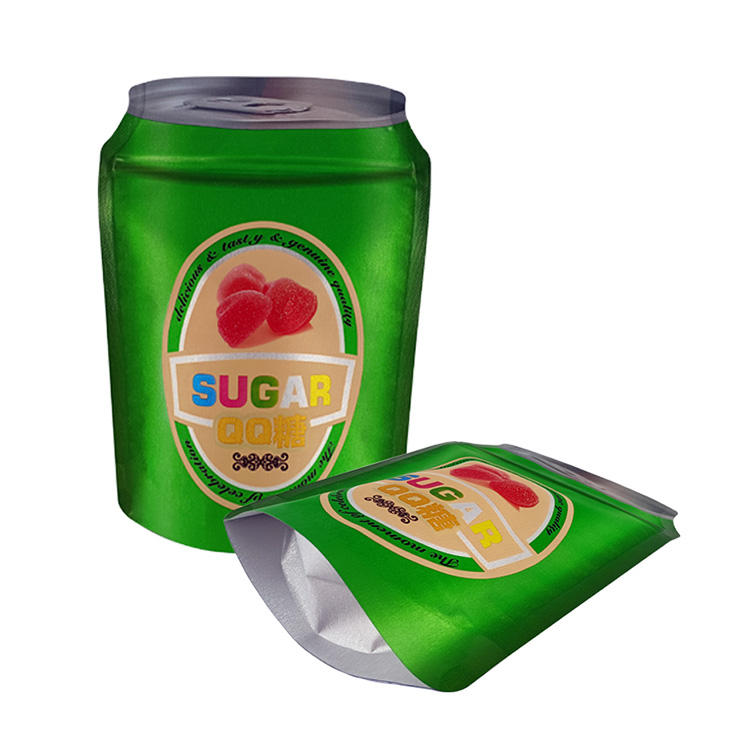
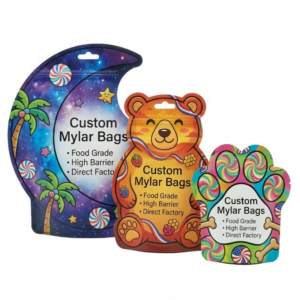
Custom 3.5g die-cut Mylar bags are resealable, specially shaped flexible pouches for cannabis brands, distributors, wholesalers, private-label buyers, and multi-SKU programs that need a distinctive pack format for an approximately 3.5 g product fill. The die-cut silhouette gives the bag a product-specific outline, while the resealable format supports repeated opening and closing. Final dimensions, material structure, seal design, and regulatory details should be confirmed against the actual product and destination market before an RFQ is approved.
Product Specifications
| Product type | Special-shaped die-cut flexible bag |
|---|---|
| Stated fill reference | 3.5 g; actual usable volume depends on product density, dimensions, headspace, and filling method |
| Packaging material | Mylar-based packaging; the complete laminate and barrier structure require confirmation |
| Closure | Resealable closure; confirm zipper construction and whether a separate heat seal is required |
| Shape | Custom die-cut shape; confirm die line, seal geometry, opening position, and usable artwork area |
| Printing | Custom branding and artwork may be configured subject to substrate, print process, and final dieline |
| Intended buyer | Cannabis brands, wholesalers, distributors, private-label/OEM/ODM buyers, and multi-SKU purchasers |
| Commercial details | Confirm quantity, MOQ, sampling, lead time, delivery terms, and destination requirements during quotation |
How the Special Shape Affects Filling and Usable Volume
A 3.5 g fill reference does not establish one universal pouch size. Cannabis flower density, nug size, trim, moisture condition, and the desired presentation all affect the space required inside the bag. A shaped pouch may also have less usable volume than a rectangular pouch with the same maximum width and height because curved edges, narrow shoulders, or angled corners can reduce the practical filling zone.
Before approving the die line, provide the actual product dimensions or representative samples whenever possible. The specification should account for headspace above the product, room for a reliable seal, and sufficient clearance around the resealable opening. Excessive headspace may allow movement and reduce presentation quality; insufficient headspace can make filling, closing, and heat sealing more difficult. A filling trial is useful for checking whether the product settles naturally into the shape without stressing the seals.
Mylar Structure, Barrier Selection, and Seal Performance
“Mylar” is commonly used as a market term for flexible polyester-based packaging, but appearance alone does not define the complete barrier system. The selected laminate, inner sealant, thickness, print construction, and sealing conditions influence resistance to moisture, oxygen, light, aroma transmission, puncture, and handling stress. A suitable structure may help protect cannabis flower quality and help contain aroma when properly sealed, but performance must be evaluated against the exact laminate and closure specification.
For aromatic flower, ask the supplier to identify the proposed barrier structure and explain how the inner sealant supports consistent heat sealing. If light sensitivity is a concern, an opaque or light-blocking structure may be preferred. A metallic appearance or matte finish does not, by itself, prove a specific oxygen or moisture barrier. Likewise, adding a clear window can improve product visibility but may reduce light protection in that area. The final choice is a trade-off between shelf presentation, barrier needs, print appearance, and production requirements.
Resealable Closure, Heat Seal, and Child-Resistance
The stated resealable function is useful for repeated access, but an ordinary resealable zipper should not be treated as a tested child-resistant closure. If the destination market requires child-resistant cannabis packaging, identify that requirement before tooling and request the appropriate closure design, testing documentation, and market-specific review. Those details are not established by the product name alone.
Confirm whether the bag will use only a resealable zipper or a zipper plus a permanent heat seal applied after filling. A heat seal can provide an additional tamper-evident or transport-oriented closure step, depending on the selected construction, but it changes the opening workflow. Ask the packaging team to verify zipper alignment, seal width, tear-notch position, opening force, and compatibility with the filling equipment. A tear notch placed too close to a shaped edge may affect opening control, so it should be checked against the final die line.
Custom Printing and Brand Differentiation
Die-cut geometry gives cannabis brands more visual distinction than a standard rectangular bag, particularly when several strains or product variants share one packaging family. Custom printing can be configured for logos, strain names, color systems, product information, and market-specific copy, subject to the approved artwork area, print method, laminate, finish, and dieline. The narrowest parts of the shape, zipper zone, seal area, and any tear feature should be treated as restricted or high-risk artwork areas until the supplier confirms otherwise.
For a multi-SKU program, establish a master dieline and a controlled artwork system before production. Confirm which elements remain consistent across every SKU and which fields change, such as strain name, batch information, flavor, or product variant. This reduces the risk of inconsistent placement between versions. Matte, gloss, metallic, or other visual finishes may be discussed during specification, but the chosen finish should be checked for scuffing, contrast, barcode readability, and compatibility with the intended print construction.
Procurement Checks for Private-Label and Wholesale Programs
Private-label, OEM, ODM, and wholesale buyers should evaluate the bag as a complete packaging system rather than selecting a shape from an image alone. The RFQ should identify the intended contents, stated fill weight, product density, actual product dimensions, preferred pouch dimensions, target headspace, closure arrangement, laminate or barrier preference, finish, artwork versions, and filling method.
For cannabis distribution, also specify the destination market and the required warning, labeling, traceability, barcode, recycling, food-contact, or child-resistance considerations that apply there. The packaging supplier can then determine which specifications and documents need review. Do not assume that a custom printed bag is automatically compliant in every jurisdiction. Requirements can vary by market and may depend on the product category, package format, closure, labeling, and testing pathway.
Frequently Asked Questions
Is this bag sized for exactly 3.5 g of cannabis flower?
The product has a 3.5 g fill reference, but one fixed size cannot be confirmed from fill weight alone. Flower density, nug size, headspace, seal clearance, and filling method affect the required dimensions. Confirm sizing with product measurements or a filling trial.
Does the special-shaped design reduce usable capacity?
It can. Curved edges, angled shoulders, and narrow sections may reduce the practical filling area compared with a rectangular pouch of similar outside dimensions. The final die line should be checked against the actual product and desired headspace.
Is the resealable closure child-resistant?
Not necessarily. A resealable closure should be treated as an ordinary access feature unless a separate child-resistant design and applicable testing have been specified and verified for the destination market.
Can the bags be custom printed for several cannabis strains?
Yes, custom branding and multiple artwork versions may be configured subject to the approved substrate, print process, dieline, and commercial specification. A master template can help keep logos, required information, and variable SKU fields consistent.
Does Mylar automatically make the pouch smell proof?
No absolute odor claim should be made from the term Mylar alone. Aroma containment depends on the complete laminate, sealant, zipper, heat-seal process, and package condition. The selected structure should be reviewed for the intended aromatic product and sealing method.
What should be included in a wholesale RFQ?
Include the contents, fill weight, actual product dimensions, desired bag dimensions, quantity, artwork versions, material or barrier preference, closure, finish, filling method, destination market, and applicable compliance or testing needs.
Request a Product-Specific RFQ
To quote these custom 3.5g die-cut Mylar bags accurately, send the intended contents, fill weight, product dimensions or samples, preferred pouch dimensions, quantity, number of artwork versions, material or barrier requirements, resealable or additional heat-seal preference, finish, filling method, destination market, and compliance needs. These inputs allow the die-cut shape, usable volume, closure layout, print area, and specification documents to be reviewed before production planning.
Reviews
There are no reviews yet.