
Custom Resealable Tobacco Pouches with Printed Warning Panels
Custom resealable tobacco pouches are flexible printed bags designed for loose tobacco, herbal blends, hemp flower, cannabis-adjacent products, or other regulated dry contents where resealability and visible warning-panel artwork are part of the package brief. This product is intended for B2B buyers such as tobacco brands, cannabis packaging distributors, private-label programs, importers, and multi-SKU purchasers that need consistent printed pouch packaging across flavors, strains, weights, or destination markets.
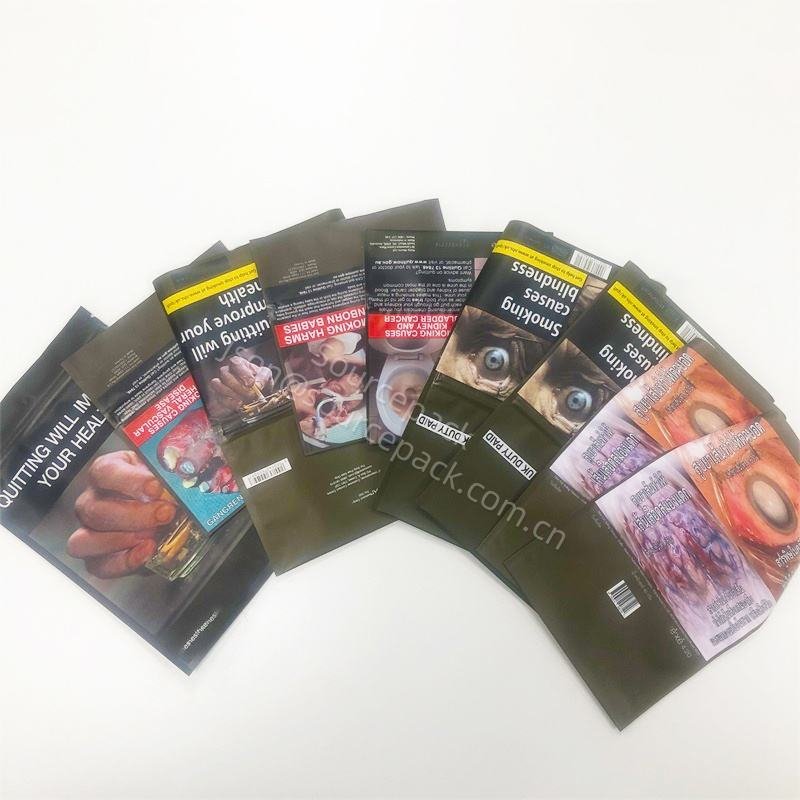
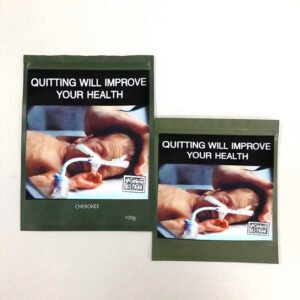
The defining feature is the combination of a resealable pouch format and printed warning panels. The warning area can support mandated statements, age restriction language, product identity, barcode placement, batch fields, icons, and brand artwork, subject to the buyer’s final compliance review. The pouch can be specified as a smell resistant, moisture-conscious, or higher-barrier structure depending on the selected laminate, zipper, seal design, and filling process; no single visual finish alone confirms barrier performance.
Product Specifications
| Product type | Custom printed resealable flexible pouch for tobacco or related dry products |
|---|---|
| Confirmed feature | Printed warning panels and resealable pouch format |
| Intended contents | Loose tobacco, herbal blends, hemp flower, cannabis-adjacent dry goods, or buyer-specified contents |
| Pouch style | To be confirmed; may be configured as flat pouch, stand-up pouch, or other flexible pouch style depending on fill volume and shelf display needs |
| Material structure | To be specified; may include PET, PE, metallized film, foil, kraft laminate, or other flexible packaging materials depending on barrier, stiffness, and finish requirements |
| Closure | Resealable zipper or other resealable closure to be confirmed; child-resistant performance must be specified separately if required |
| Printing | Custom printed artwork with warning panels; artwork area, colors, finish, and registration depend on dieline and substrate |
| Size and capacity | Buyer to confirm desired pouch dimensions, target fill weight, product density, usable volume, and headspace |
| Compliance status | Buyer and destination-market requirements must be reviewed before approval; no compliance certification is implied |
What This Pouch Is Best Suited For
This printed tobacco pouch packaging is most useful when the product needs repeated opening and closing after the first seal is broken. Loose tobacco, hemp flower, and dry herbal blends can shift, compress, or settle inside a pouch, so the specification should account for product density, intended fill weight, and the amount of headspace needed above the contents. A pouch that looks correct when empty may feel tight after filling if the product is fluffy, irregular, or sensitive to compression.
For cannabis-adjacent SKUs, the same format can support strain names, terpene callouts, flavor systems, cannabinoid information, or warning panels, but all regulated claims and mandatory text must be supplied by the buyer. If the pouch must meet child-resistant requirements, it should be treated as a separate closure and testing discussion, not assumed from an ordinary zipper.
Laminate, Barrier, and Aroma Control Considerations
The barrier behavior of resealable flexible barrier pouches comes from the complete laminate, not from the printed graphics. PET may add printability and stiffness, PE may contribute heat sealability, metallized or foil layers may improve light and aroma protection, and kraft paper may provide a natural appearance when laminated with film. Buyers comparing structures can review broader packaging material comparison factors before finalizing a pouch build.
For tobacco and aromatic dry products, the pouch may be configured to help contain aroma and reduce moisture exchange when properly sealed. However, “smell proof” should not be treated as an absolute guarantee unless the final structure, zipper, seal geometry, and testing requirements are defined. A higher-barrier laminate can improve aroma, oxygen, moisture, and light resistance, but it may also increase stiffness, cost, or recycling complexity depending on the chosen layers.
Resealable Zipper, Heat Seal, Tear Notch, and Tamper Evidence
A resealable zipper helps the end user close the pouch after opening. Many B2B buyers also specify a top heat seal above the zipper for first-opening integrity, plus a tear notch for cleaner access. If tamper evidence is needed, the pouch design should identify how the first seal, notch position, and opening sequence will work together. You can compare feature choices with resealable packaging options before RFQ submission.
The trade-off is usability versus security. A standard zipper can be convenient and cost-efficient for adult-use tobacco packaging, but it is not the same as a tested child-resistant closure. Child-resistant formats may affect opening force, pouch dimensions, user instructions, artwork placement, and certification documentation requirements in the buyer’s market.
Warning Panel and Custom Printing Requirements
Custom warning panel pouches require a clean dieline, confirmed safe zones, barcode quiet zones, seal allowances, and readable typography. Warning statements should not be placed too close to the zipper, side seal, bottom gusset, tear notch, or high-distortion fold areas. For multi-SKU programs, consistent placement of warning panels helps distributors, regulators, and retail staff compare SKUs quickly.
Artwork can be developed for matte, gloss, soft-touch, metallic, kraft-look, spot effect, or other finishes depending on the selected structure and printing method. A matte black pouch with a printed warning panel may communicate a premium regulated product, while a kraft-style pouch can feel more natural. These visual choices do not automatically define oxygen, moisture, or light barrier; the functional laminate must be specified separately.
Multi-SKU and Private-Label Procurement Fit
Private label tobacco pouches are commonly ordered across different flavors, blends, strengths, or regional label versions. A disciplined artwork system can keep the pouch size, zipper location, warning area, nutrition or product fact space, barcode location, and batch coding zone consistent while allowing SKU names and color blocks to change.
For OEM, ODM, distributor, and wholesale programs, the most important early decision is whether all SKUs can share one pouch size. If one product is dense cut tobacco and another is fluffy hemp flower, one universal pouch may create either excessive headspace or overfilled corners. Multi-SKU buyers should provide actual filled samples or product dimensions where possible, not only target grams.
Compliance and Destination-Market Review
Printed warning panels can support compliance communication, but the pouch itself should not be described as compliant until the buyer confirms destination-market rules, required statements, minimum font size, symbol placement, language requirements, child-resistant obligations, excise marking, and any test documentation needed. For regulated cannabis or hemp programs, review cannabis packaging compliance considerations before approving final artwork.
Importers should also confirm whether the pouch will contact tobacco, hemp, edible-adjacent products, or non-food herbal goods, because material declarations and contact requirements can differ by product category and market.
Custom Development Process
- Requirements review: Confirm contents, fill weight, product density, destination market, warning text, closure needs, and retail display requirements.
- Specification confirmation: Select pouch style, dimensions, laminate direction, zipper type, heat seal area, finish, and printed warning-panel layout.
- Sample and artwork review: Check dieline fit, readability, opening behavior, headspace, seal position, barcode placement, and SKU version consistency.
- Bulk-production approval: Approve the final specification, print files, material structure, and packaging requirements before mass production proceeds.
FAQ
Are these pouches automatically child-resistant?
No. A resealable zipper is not the same as a tested child-resistant closure. If child-resistant packaging is required, the closure style, opening instructions, testing expectations, and destination-market rules must be specified separately.
Can the warning panel be customized for different markets?
Yes, the printed warning panel can be configured for different artwork versions, languages, icons, and label layouts, provided the buyer supplies the required regulatory content and approves the final artwork.
What material should be used for aroma-sensitive tobacco or hemp flower?
The material should be selected around aroma retention, moisture control, oxygen exposure, light protection, stiffness, sealability, and finish. Metallized, foil, PET, PE, kraft laminate, or other structures may be considered depending on the final specification.
Can one pouch size work for multiple tobacco or flower SKUs?
Sometimes, but it depends on fill weight, cut size, density, product compression, and headspace. Buyers should confirm actual product volume rather than choosing pouch dimensions only by gram weight.
Can the pouch include a top heat seal above the zipper?
Yes, it may be configured with a top heat seal and tear notch when first-opening integrity is required. The seal width, notch location, and opening direction should be confirmed during dieline review.
RFQ Information to Provide
For a wholesale resealable pouch manufacturer quotation, send the intended contents, target fill weight or product dimensions, desired pouch size, pouch style, quantity, number of artwork versions, warning-panel requirements, material or barrier preference, zipper or closure requirement, finish, filling method, destination market, and any compliance documents or test expectations that must be reviewed before production approval.
Reviews
There are no reviews yet.