
Custom Fold Over Tobacco Pouches with Yellow Warning Panels
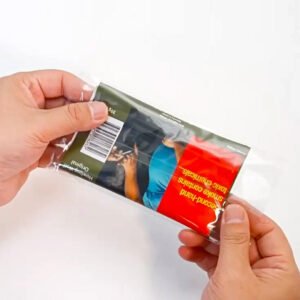
Custom fold over tobacco pouches with yellow warning panels are flexible printed pouches for tobacco, herbal smoking blends, and other regulated smoking-product lines that require prominent warning communication on the pack face. This product is defined by its fold-over pouch format and high-visibility yellow warning panel design, making it relevant for brands, distributors, importers, and private-label buyers managing multi-SKU tobacco or cannabis-adjacent packaging programs.
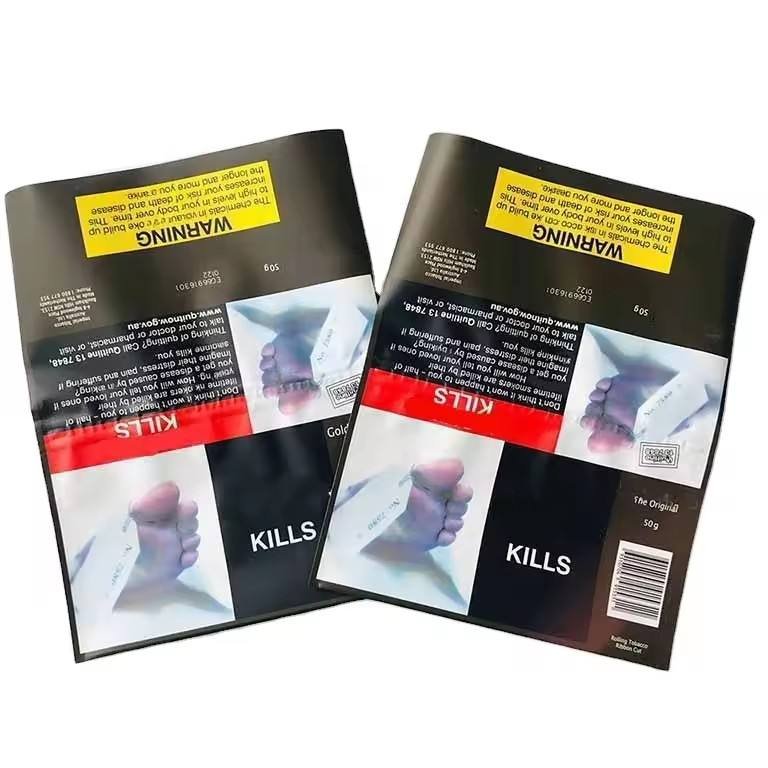
The pouch can be specified as a flexible laminated structure, with the final material, barrier level, closure, seal geometry, and print finish confirmed before quotation. Buyers should treat the yellow warning panel as a design and labeling feature, not as proof of destination-market compliance. Warning wording, panel size, symbols, language, placement, and legal formatting should be checked against the intended sales market before bulk production.
Product Specifications
| Product type | Custom fold-over flexible tobacco pouch with printed yellow warning panel |
|---|---|
| Intended contents | Tobacco, herbal smoking blends, cannabis-adjacent smoking products, or similar dry loose-fill products subject to buyer confirmation |
| Pouch style | Fold-over pouch; final fold depth, opening position, and seal layout to be confirmed |
| Material structure | Can be configured with laminated films depending on required stiffness, barrier, print appearance, and sealing method |
| Closure | May include fold-over retention, adhesive, zipper, or heat-seal features depending on the selected design |
| Warning panel | Confirmed yellow warning panel design; text, size, and compliance wording must be supplied or approved by the buyer |
| Printing | Custom printed artwork, brand graphics, warning panels, strain or product identifiers, and batch-information areas may be specified |
| Dimensions and capacity | Not fixed by the product name; pouch size must be matched to fill weight, product density, headspace, and folding behavior |
| Performance data | Barrier values, test reports, and compliance documents are not assumed and should be requested if required |
Where This Fold-Over Pouch Fits
Fold over laminated tobacco pouches are commonly used when the product needs a compact, flat, paper-like handling profile rather than a bulky stand-up bag. The fold-over format can work well for loose tobacco, herbal blends, and similar dry products where the pouch is opened repeatedly and stored in a pocket, carton, or retail display. Compared with a rigid container, a flexible pouch reduces empty-pack volume and gives more continuous printable surface for branding, warnings, and product identification.
The yellow warning panel is the key visual feature. It creates immediate contrast against the main artwork and gives compliance teams a defined area for required caution text. For cannabis, marijuana, weed, or tobacco-related markets, the exact wording and graphic treatment may vary by jurisdiction, product type, sales channel, and buyer responsibility. For broader labeling planning, buyers can review cannabis packaging compliance considerations before locking the dieline.
Material, Barrier, and Product Protection Choices
The final pouch performance depends on the full laminate, not only the visible color or printed warning panel. A structure using PET, PE, PP, metallized film, aluminum foil, or other layers can be considered depending on the required stiffness, aroma control, moisture resistance, oxygen barrier, puncture resistance, and heat sealability. For dry tobacco and aromatic herbs, the structure should help contain aroma and reduce moisture exchange when properly sealed, but no flexible pouch should be described as permanent or absolute odor-proof without validated test data.
A foil or high-barrier laminate may improve light, oxygen, and moisture protection, while a simpler film structure may be more economical or easier to fold. A softer laminate can feel more pocket-friendly, but it may reduce stiffness and display structure. A stiffer laminate may improve shelf presentation and panel readability, but it can make the fold less compact. This trade-off should be evaluated with actual filled samples because loose product density and cut size affect how the pouch closes and feels in hand.
Closure, Folding, and Filling Behavior
A fold-over pouch is not the same as a standard stand-up zipper bag. The buyer should confirm how the top folds, whether the fold is decorative or functional, and whether any reseal feature is needed. Options may include an adhesive label, pressure-sensitive closure, resealable zipper, or a heat-sealed top for tamper evidence before first opening. If a zipper is selected, it should be treated as an ordinary resealable feature unless a tested child-resistant mechanism is separately specified and documented.
For loose tobacco or herbal products, usable volume matters more than outside dimensions alone. Fine-cut, ribbon-cut, or chunky botanical contents pack differently, which changes headspace, pouch thickness, and folding reliability. Buyers should test the actual fill weight and product texture in the proposed pouch size before approving bulk production. If product freshness, aroma retention, and repeated opening are priorities, compare closure options with resealable packaging formats during specification development.
Custom Printing and Multi-SKU Control
Custom printed tobacco pouches can carry brand color, product name, blend strength, flavor, batch area, barcode space, warning text, and destination-market information. The yellow warning panel should be built into the artwork dieline so it remains consistent across flavors, strengths, strains, or private-label versions. Multi-SKU buyers should decide which elements stay fixed and which elements change, such as product name, background color, fill weight, warning language, or local distributor details.
Artwork should also account for fold lines and seal areas. Important text should not sit on a crease, edge seal, zipper track, tear zone, or area likely to be obscured after folding. Matte, gloss, metallic, kraft-look, or soft-touch effects may be possible depending on the substrate and print method, but finish selection can influence scuff resistance, color density, and barcode readability. Buyers planning several pouch versions can use custom printed packaging bags guidance to organize artwork and variant control before RFQ.
Compliance and Procurement Checks Before Quotation
Because this pouch visibly includes yellow warning panels, compliance review should happen before tooling, plate-making, or bulk printing. The supplier can manufacture to the confirmed artwork and specification, but the buyer should verify the warning copy, font size, icon use, language, net-weight statement, age restriction, health warning, nicotine or cannabis-related wording, and any country-specific label rules. If the pouch will contact tobacco or other regulated contents directly, buyers should also confirm any required food-contact or product-contact documentation for the destination market.
Procurement teams should confirm whether the pouch is for hand filling, semi-automatic filling, or machine filling. Filling method affects opening width, film stiffness, coefficient of friction, seal strength targets, and how the pouch stacks after packing. Carton count, case packing direction, retail display method, and barcode scanning position should also be reviewed before approving the final dieline.
Visible Custom Development Process
- Requirement collection: Confirm contents, fill weight, target market, warning-panel needs, pouch style, closure preference, and artwork versions.
- Specification confirmation: Review dimensions, laminate options, barrier expectations, print finish, fold position, seal areas, and compliance text responsibility.
- Sample review: Evaluate filled samples for folding behavior, closure feel, aroma containment, panel readability, barcode placement, and shelf or pocket handling.
- Bulk-production approval: Approve final artwork, material specification, dieline, closure, and packing requirements before production release.
FAQ
Are these pouches only for tobacco?
They are described as tobacco pouches, but the same fold-over flexible format may be suitable for herbal smoking blends or cannabis-adjacent dry products if the material, labeling, and destination-market requirements are confirmed.
Does the yellow warning panel make the pouch compliant?
No. The yellow panel provides a visible area for warning communication, but legal wording, size, symbols, placement, and language must be reviewed for the buyer’s destination market.
Can the pouch be made smell resistant?
It can be configured with laminate and closure choices that help contain aroma when properly sealed. Actual odor control depends on the complete structure, closure, seal quality, and handling conditions.
Is a resealable zipper the same as child-resistant packaging?
No. A standard zipper supports repeated opening and closing, but child-resistant performance requires a separately specified and tested child-resistant closure system.
What information is needed for an accurate RFQ?
Provide the contents, fill weight or product volume, preferred pouch dimensions, quantity, artwork versions, warning-panel requirements, laminate or barrier target, closure type, finish, filling method, destination market, and any required documents.
Request a B2B Packaging Quote
For a custom RFQ, send the actual product type, fill weight, target pouch size, desired fold-over construction, closure requirement, yellow warning-panel artwork, number of SKUs, order quantity, finish preference, filling method, destination market, and compliance documentation needs. These details allow the pouch specification to be matched to the product instead of quoting a generic bag.
Reviews
There are no reviews yet.