
Custom Holographic Die-Cut Zipper Pouches for Cannabis Brands
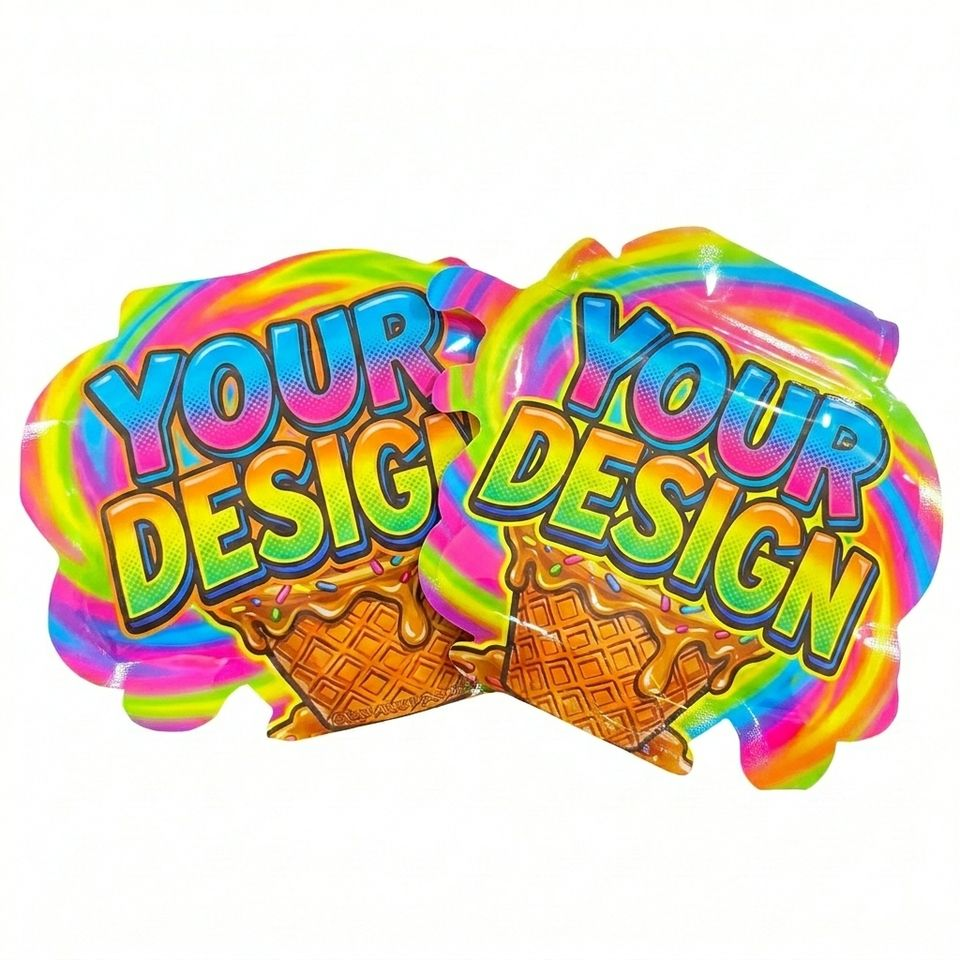
Custom holographic die-cut zipper pouches are shaped flexible pouches with a reflective holographic appearance, a resealable zipper, and a custom die-cut outline. They can be evaluated for cannabis flower, pre-roll accessories, edibles, or other products that need branded flexible packaging and a distinctive shelf presentation. Cannabis brands, distributors, private-label buyers, wholesalers, importers, and multi-SKU purchasing teams should confirm the pouch structure, usable dimensions, closure specification, and destination-market requirements before requesting a quotation.
Product Specifications
| Product type | Custom die-cut flexible zipper pouch |
|---|---|
| Appearance | Holographic finish or holographic visual effect, subject to the selected construction |
| Closure | Resealable zipper; a separate child-resistant specification must be confirmed if required |
| Odor positioning | Smell-resistant or smell-proof positioning; actual containment depends on the complete laminate and seal system |
| Dimensions | To be confirmed from the product dimensions, fill method, desired headspace, and die line |
| Material structure | To be selected according to barrier, print, seal, stiffness, and destination-market requirements |
| Printing | Custom artwork and printing configuration to be confirmed |
| Order details | Quantity, artwork versions, samples, and production terms to be confirmed by RFQ |
What the Die-Cut Pouch Is Designed to Do
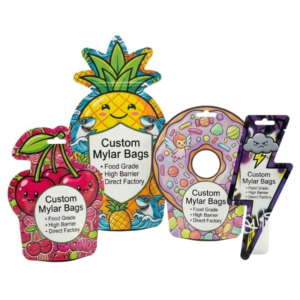
The die-cut format allows the brand to use a non-rectangular silhouette, shaped top, contour, or opening position instead of a standard stock pouch outline. The shape can help create a recognizable package across a cannabis product line, but the die line also affects usable fill area, seal geometry, zipper placement, and artwork space. A decorative profile should therefore be checked against the actual product dimensions and filling equipment rather than selected only for appearance.
For flower, the correct pouch size depends on flower density, nug size, fill weight, headspace, and the amount of product movement permitted during handling. A stated weight does not establish one universal pouch size. For pre-roll-related contents, the buyer should confirm length, diameter, quantity, internal movement, and crush-risk controls. For edibles, the review should include moisture, grease, resealability, available warning space, and any applicable food-contact requirements.
Laminate, Odor Containment, and Barrier Selection
The holographic appearance does not by itself identify the pouch material or establish a barrier level. Depending on the selected laminate structure, the package may be configured to balance aroma containment, moisture resistance, oxygen protection, light reduction, puncture resistance, stiffness, print quality, and heat sealability. Barrier performance comes from the complete film construction, zipper area, heat seals, and filling process rather than from the visual finish alone.
For cannabis products with a noticeable aroma, a smell-resistant structure may help contain odor when the pouch is properly sealed. Buyers should request confirmation of the proposed laminate, seal width, zipper design, and any relevant test method instead of treating the term “smell-proof” as a permanent or absolute performance guarantee. A higher-barrier structure may improve protection but can affect material cost, stiffness, fold behavior, seal settings, and the appearance of the holographic effect. The best selection depends on product sensitivity, expected handling, storage conditions, and destination-market requirements.
Closure, Seal, and Filling Considerations
The zipper supports repeated opening and closing, while the heat seal can provide the initial sealed condition when the package is filled and sealed correctly. These functions should not be treated as interchangeable. Confirm whether the finished pouch requires a top heat seal above the zipper, a tear notch, a specific opening direction, or another tamper-evident feature. An ordinary resealable zipper should also be distinguished from a tested child-resistant closure; child-resistant performance cannot be assumed from the presence of a zipper.
Before approving the die line, review the relationship between the zipper, top seal, side or contour seals, product loading area, and filling method. Sharp product edges, overfilled pouches, excessive headspace, or misaligned seals can affect presentation and closure performance. Sample evaluation should include actual product or a representative substitute, particularly when the package will be filled by an automated or semi-automated process.
Custom Printing and Holographic Brand Presentation
Custom printed die-cut pouches give cannabis brands space to coordinate strain, flavor, potency, collection, or private-label artwork across multiple SKUs. Artwork review should cover the usable print area, die line, zipper and seal exclusions, opening position, registration, small text, barcode placement, and any required warning or regulatory panel. Holographic effects can change how colors, contrast, fine details, and metallic-looking areas appear, so a digital proof or physical sample should be reviewed before production approval.
Not every substrate or ink system produces the same holographic result. Confirm whether the effect is created by a holographic film, printed effect, coating, or another construction, and ask how that choice affects opacity, light protection, print layers, and sealability. If the brand wants a clear window, visibility may improve while light protection and privacy are reduced in that area. The final artwork and laminate should be treated as one specification.
Multi-SKU and Private-Label Procurement
Private-label cannabis pouches and multi-SKU programs benefit from a controlled master specification. Keep the pouch outline, finished dimensions, zipper location, seal geometry, laminate family, and artwork safe areas consistent where practical, while allowing the graphics to identify individual strains or product variants. Confirm whether each artwork version uses the same material and finishing system, because changes between SKUs can influence color, registration, stiffness, and perceived shelf impact.
For wholesale or distribution programs, prepare a SKU matrix showing product name, contents, fill weight or physical dimensions, pouch size, artwork version, quantity, closure requirement, finish, and destination market. This helps separate a common structural pouch specification from variant-specific print files and reduces ambiguity during sampling and quotation.
Destination-Market Review
Regulatory and packaging obligations vary by destination and product category. Before artwork approval, the buyer should identify the market, cannabis product type, required warnings, labeling area, traceability information, disposal or material rules, and whether a child-resistant or tamper-evident feature is required. The pouch should not be described as certified, approved, or compliant until the applicable requirements and supporting evidence have been reviewed for the final construction.
FAQ for Buyers
Are these pouches completely odor-proof?
The product is positioned for smell-resistant or smell-proof use, but actual odor containment depends on the complete laminate, zipper, heat seals, filling method, and proper closure. Confirm the required performance and test approach before approval.
Does the holographic finish define the barrier level?
No. A holographic appearance does not by itself establish moisture, oxygen, light, or aroma-barrier performance. The complete laminate and sealing system must be specified separately.
Can the pouch be made in a custom shape?
Yes, the product is a custom die-cut pouch. The final shape, usable area, zipper position, seal geometry, and artwork limits should be confirmed against the product and filling process.
Is the zipper child-resistant?
An ordinary resealable zipper should not be assumed to be child-resistant. If child-resistant packaging is required, request a separately specified and appropriately evaluated closure system.
How should a cannabis brand choose the pouch size?
Size should be based on the actual product dimensions, fill weight, density, headspace, desired presentation, zipper and seal layout, and filling method. A fill weight alone does not determine one universal pouch size.
What should be included in an RFQ?
Include the contents, fill weight or actual product dimensions, desired pouch dimensions, quantity, artwork versions, material or barrier target, closure, finish, filling method, destination market, and compliance needs.
Request a Product-Specific B2B Quote
For a useful quotation on custom holographic die-cut zipper pouches, send the intended contents, fill weight or product dimensions, desired finished pouch dimensions, quantity, number of artwork versions, material or barrier preference, zipper and heat-seal requirements, holographic finish direction, filling method, destination market, and compliance needs. The RFQ can then be reviewed against the die line, usable volume, headspace, aroma-control objective, artwork area, and multi-SKU requirements.
Reviews
There are no reviews yet.