
Custom Printed Mini 3-Side Seal Pouches for Small-Format Products
Custom printed mini 3-side seal pouches are compact, flat flexible packages formed with seals on three sides and a remaining edge used for filling and final heat sealing. They suit cannabis brands, distributors, private-label buyers, wholesalers, and multi-SKU programs that need a small printed pack without a stand-up gusset. Potential contents include appropriately sized portions of cannabis flower, edibles, concentrates in primary containers, accessories, or samples, subject to the selected laminate, dimensions, sealing process, and destination-market requirements.
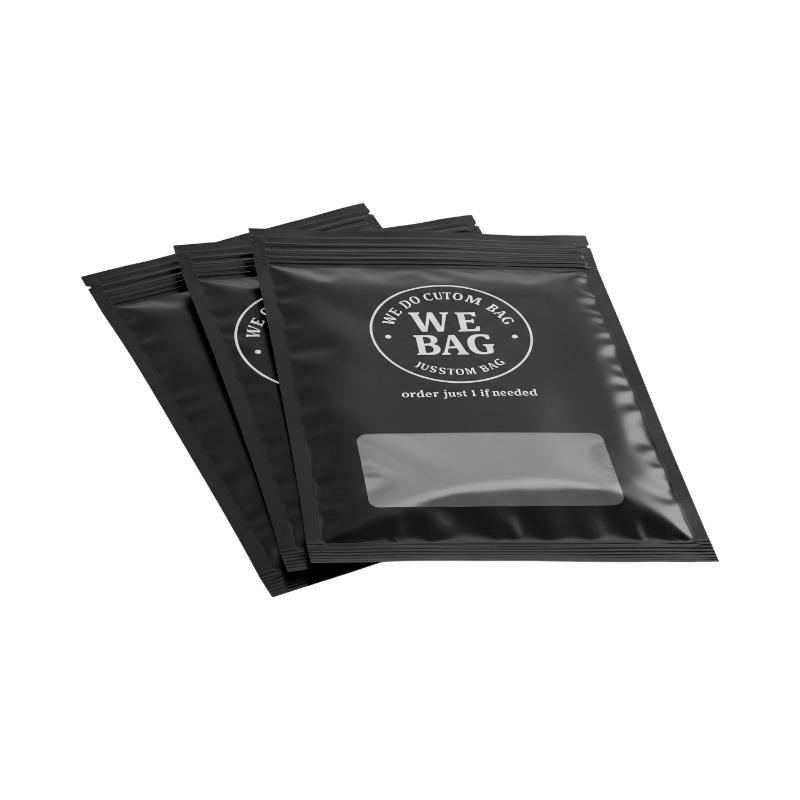
Product Specifications
| Specification | Product detail |
|---|---|
| Packaging format | Mini flat pouch |
| Pouch construction | Three-side seal |
| Final closure | Heat-seal configuration |
| Printing | Custom printed; artwork method, color requirements, and printable area require confirmation |
| Material | Flexible laminate structure to be selected according to contents and required barrier performance |
| Dimensions and capacity | Not specified; confirm using the actual product, target fill, headspace, and seal geometry |
| Gusset | No stand-up gusset; this is a flat pouch format |
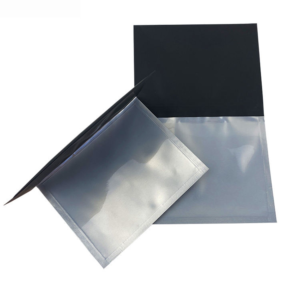
| Optional features | Tear notch, zipper, finish, window, and other features are subject to final specification |
| Intended buyers | Cannabis brands, distributors, wholesalers, importers, and private-label or multi-SKU purchasers |
How the Three-Side Seal Format Works
A three-side seal pouch is manufactured as a flat pack with three perimeter edges sealed. The remaining edge provides the filling opening and is heat sealed after the product is loaded. This geometry gives the pouch front and back panels that can carry branding, strain identification, product information, warnings, and other required copy, while the perimeter seals reduce the truly usable artwork and filling area.
Unlike a stand-up pouch, this format has no bottom gusset to expand into a display base. It normally lies flat or may be merchandised in secondary packaging or through a separately specified hanging feature. Its compact profile can be useful for samples and small portions, but buyers should not assume that every product with the same stated weight fits the same pouch. Flower density, edible shape, primary concentrate-container dimensions, and desired headspace all affect fit.
Laminate Selection and Barrier Performance
Mini flat laminate pouches can be configured with different flexible film layers, depending on product sensitivity and commercial requirements. The complete laminate—not a matte, metallic, holographic, or kraft-style appearance by itself—determines much of the package’s resistance to moisture, oxygen, aroma migration, light, and puncture.
For cannabis flower, a suitable barrier structure can help contain aroma and limit exposure to outside moisture and oxygen when the pouch is properly sealed. The required structure depends on expected distribution conditions and shelf-life objectives. Edibles may require attention to moisture, grease, oxygen, or food-contact requirements. When a concentrate is already held in a jar or other primary container, the pouch must also be evaluated for puncture risk and the movement of that container.
A clear window can improve product visibility, but it reduces light protection in the window area. Thicker or stiffer structures may improve handling and puncture resistance, yet they can feel less flexible and may require adjusted heat-sealing conditions. Barrier targets, sealant compatibility, and any requested testing must therefore be agreed during specification rather than inferred from appearance.
Sizing a Mini Flat Pouch Correctly
“Mini” describes a compact format, not a standardized dimension or capacity. The buyer should provide the actual product dimensions or a representative sample where possible. For flower, both target fill weight and typical product density matter because airy buds occupy more volume than dense material at the same weight. Excessively tight packing can place pressure on the seals or compress the contents, while too much headspace can allow movement and create an oversized appearance.
The three perimeter seals and final top seal consume part of the overall pouch dimensions. Tear notches, registration tolerances, and any zipper can further affect the opening and usable interior. A dimension review should distinguish the external pouch size from the internal fill area and confirm the preferred opening edge.
Heat Seal, Zipper, and Child-Resistant Requirements
These heat-seal cannabis sample bags are intended to receive a final heat seal after filling. Seal temperature, pressure, and dwell time depend on the selected sealant layer, pouch construction, equipment, and contents near the sealing area. Product residue or wrinkles across the seal path can weaken seal consistency, so the filling method and seal-area clearance should be reviewed before production.
A resealable zipper may be considered if repeated access is required, but a standard zipper must not be described as child resistant. Child-resistant packaging requires a specifically designed system and applicable testing for the intended market. A tear notch can make the sealed edge easier to open, although its position must be coordinated with the final seal, zipper, and artwork.
Custom Printing and Multi-SKU Artwork
Custom cannabis flat pouches can allocate the front and back panels to brand graphics, strain names, potency or ingredient information supplied by the buyer, usage statements, warnings, and traceability elements. The approved die line should identify seal zones, trim tolerances, the opening edge, and areas where small text or codes may be affected by seams.
Available printing methods, color handling, finishes, metallic effects, white ink, and window execution depend on the chosen substrate and production specification. For private-label multi-SKU cannabis pouches, a shared layout can support visual consistency while variable artwork separates strains, flavors, or product types. Buyers should identify the number of artwork versions and quantity per version because this affects production planning and quotation.
Key Trade-Off: Compact Size Versus Filling Flexibility
A mini three-side seal pouch uses a compact, flat presentation and can provide useful printable panels relative to a very small package. The trade-off is reduced filling tolerance compared with a larger or gusseted pouch. Irregular flower, bulky edibles, or a rigid inner container may need more headspace and seal clearance than a flat visual estimate suggests. Confirming the packed product profile before approving the die line helps avoid compressed contents, distorted artwork, and interference with the final heat seal.
Compliance and Procurement Checks
- Confirm whether the pouch will contact cannabis flower, food, or another primary-packed product.
- Identify destination-market rules for child resistance, tamper evidence, opacity, warnings, symbols, and labeling.
- Define the required barrier objective without treating “smell proof” as a permanent or absolute guarantee.
- Confirm the filling equipment, orientation, seal-area clearance, and planned sealing validation.
- Review every artwork version for legibility, seam placement, regulatory copy, and code location.
Frequently Asked Questions
What does three-side seal mean for this pouch?
It means three perimeter edges are sealed during pouch manufacture, leaving one edge for filling and final heat sealing. The seals reduce the usable interior and printable area compared with the pouch’s external dimensions.
Can one mini pouch size fit every cannabis flower weight?
No. A stated fill weight does not establish a universal pouch size because flower density, bud shape, desired headspace, and seal clearance affect the required volume.
Are these pouches automatically smell proof?
No absolute odor claim should be assumed. A properly selected laminate and consistent heat seal can help contain aroma, but performance depends on the complete structure, seal integrity, handling, and storage conditions.
Does a heat seal make the pouch child resistant?
Not by itself. A standard heat seal or resealable zipper is distinct from a child-resistant packaging system. Any child-resistant requirement must be specified and evaluated for the destination market.
What information is needed for custom printing?
Provide pouch dimensions or the product to be packed, artwork files, number of versions, quantities per version, required colors, finish preferences, window needs, regulatory copy, and any variable-code area.
Request a Product-Specific B2B Quotation
For an RFQ from a wholesale 3-side seal pouch supplier, provide the contents, target fill weight or actual product dimensions, desired external pouch dimensions, total quantity, quantity per artwork version, material or barrier objectives, closure and tear-notch requirements, finish, filling method, destination market, and applicable compliance needs. These inputs allow the pouch structure, usable fill area, print layout, and heat-seal configuration to be reviewed against the actual application.

Reviews
There are no reviews yet.