
Custom Printed 3.5g Mylar Bags for Candy and Gummies
Custom printed 3.5g Mylar bags are flexible high-barrier packages intended for small portions of candy, gummies, and, where legally permitted, cannabis edibles. They give brands, distributors, wholesalers, private-label buyers, and multi-SKU programs a printable package that can help manage aroma, moisture, oxygen, and light exposure when the selected laminate and sealing system are suitable for the contents.
Product Specifications
| Attribute | Specification |
|---|---|
| Product type | Custom printed flexible Mylar bag |
| Nominal fill weight | 3.5g; final pouch dimensions must be matched to product density and headspace |
| Intended contents | Candy and gummies, including applicable cannabis edible products |
| Barrier designation | High barrier; the complete laminate, seal design, and measured performance require confirmation |
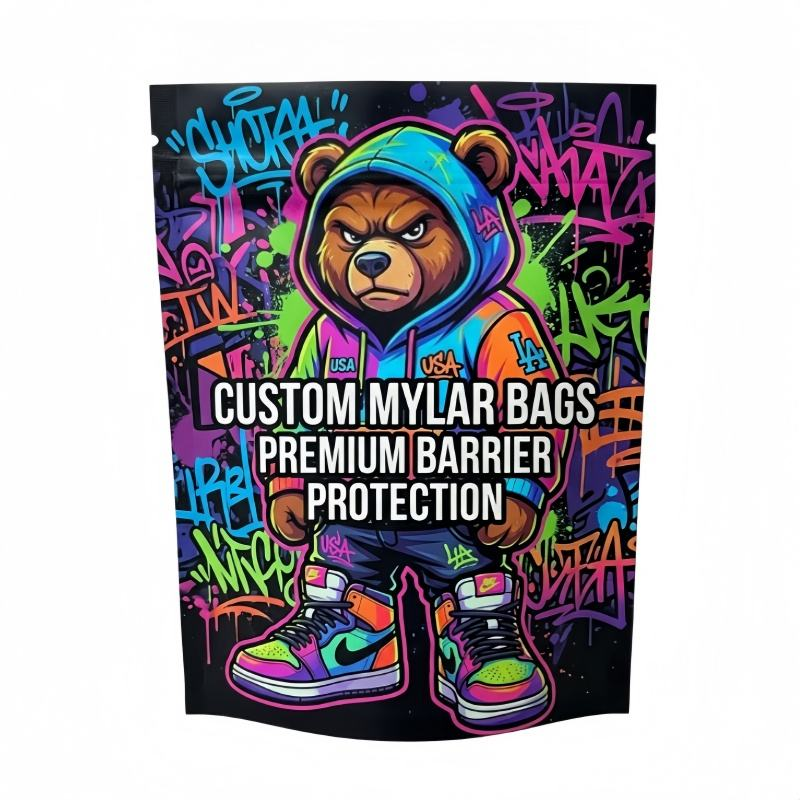
| Printing | Custom printed; print method, color targets, coverage, and artwork limits are subject to the final specification |
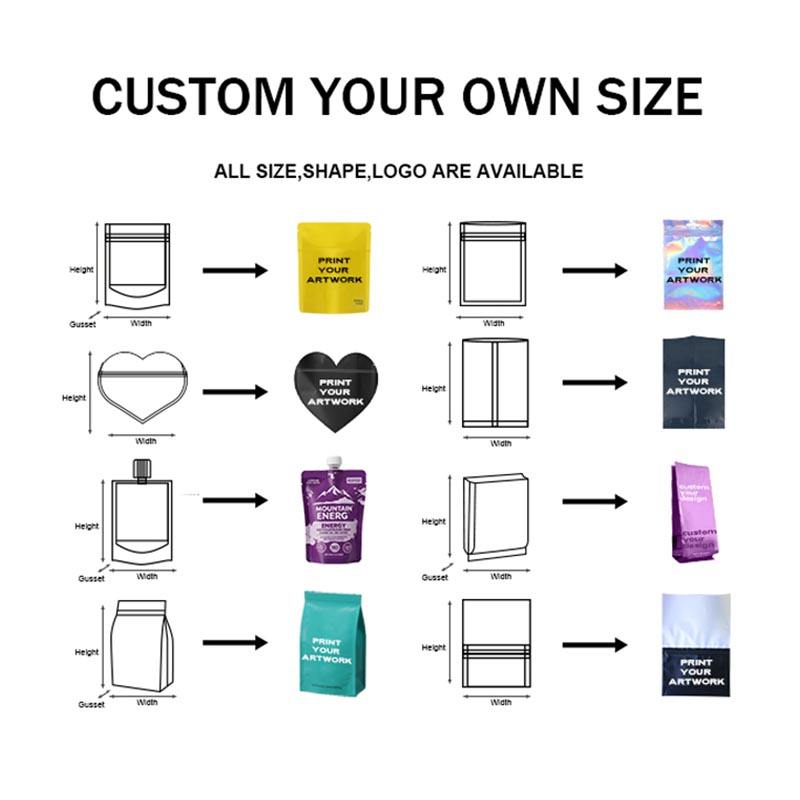
| Pouch style | To be selected and confirmed for the filling process and display requirements |
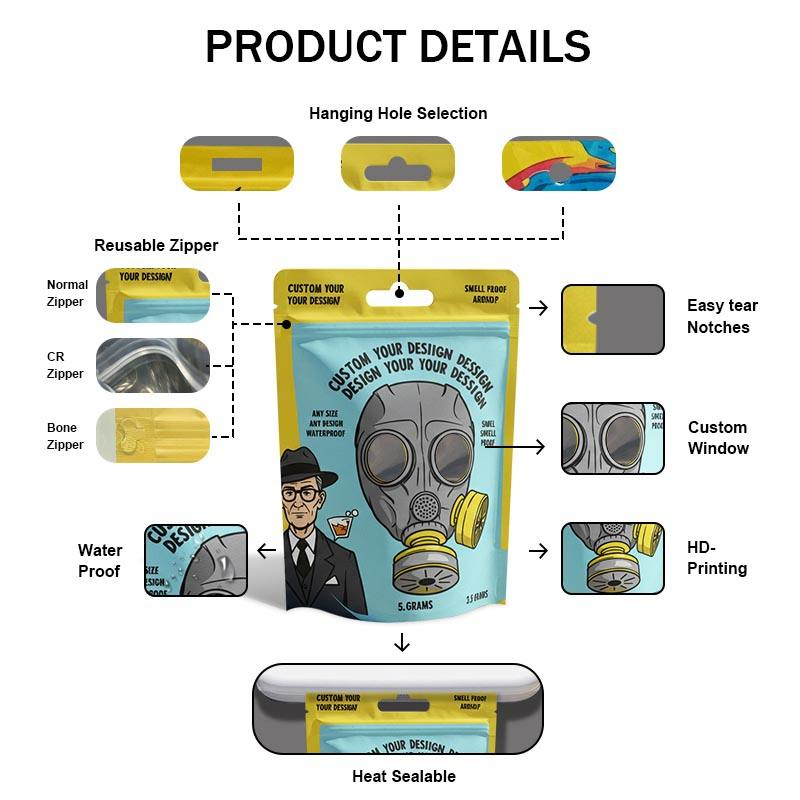
| Closure | Zipper, heat-seal format, tear notch, and any child-resistant mechanism must be specified if required |
| Finish | To be confirmed from available substrate and printing options |
| Market requirements | Buyer must identify the destination market, food-contact needs, labeling rules, and any required child-resistant standard |
What the 3.5g Format Means for Gummies
The stated 3.5g weight does not establish one universal bag size. Gummies and candies vary in piece dimensions, shape, density, surface coating, and the amount of air space needed around the product. A dense candy may occupy much less volume than a soft or aerated gummy at the same weight.
Before approving the die line, buyers should conduct a physical fill test using the actual product. The test should check usable volume below the zipper or top seal, headspace, product movement, opening access, and whether sugar, oil, or powder can enter the sealing area. These factors are more reliable than selecting 3.5g gummy packaging bags from fill weight alone.
Laminate and Barrier Decisions
“Mylar” is commonly used as packaging language for polyester-based flexible bags, but the name alone does not identify the complete laminate. High-barrier Mylar candy pouches may be configured with multiple layers selected for printability, stiffness, puncture resistance, light control, and heat sealability. The final structure must be documented before production.
Barrier performance comes from the combined laminate and properly formed seals. A suitable structure can help reduce moisture and oxygen transfer, protect flavor and texture, and contain aroma when properly sealed. It should not be treated as a permanent smell-proof guarantee. Buyers requiring defined barrier performance should request the applicable structure and test data rather than relying only on appearance or the term “high barrier.”
A metallic or opaque layer can improve light protection, while an optional clear window increases product visibility but reduces light shielding in that area. This is a practical trade-off for colorful gummies: the window can support merchandising, but light-sensitive ingredients may be better served by a fully opaque structure.
Closure, Filling, and Seal Integrity
The closure configuration should follow how the product will be filled, opened, and stored. A resealable zipper may support repeated access, while a heat seal above the zipper can provide initial closure evidence and improve package integrity before opening. Tear-notch position must work with the top seal and leave enough material for comfortable opening.
An ordinary press-to-close zipper is not automatically child-resistant. Cannabis edible brands that require child-resistant packaging must specify a tested child-resistant closure system appropriate to the destination jurisdiction. The finished package, opening method, labeling, and use conditions may all affect the compliance assessment.
Manual and automated filling processes can require different pouch tolerances, opening behavior, and seal-area cleanliness. Grease, gummy residue, sugar, or powder in the heat-seal zone can interfere with seal formation, so filling trials should reflect real production conditions.
Custom Printing and Multi-SKU Control
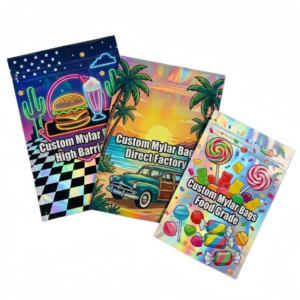
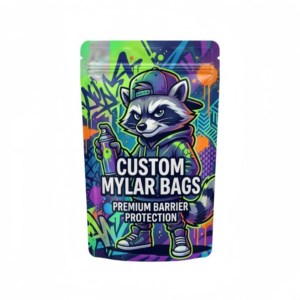
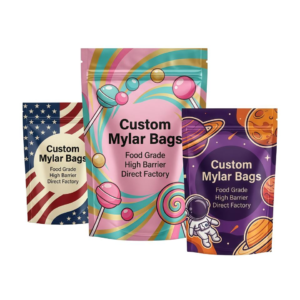
These custom cannabis edible bags can carry product identity, flavor or strain differentiation, warnings, ingredients, serving information, lot coding areas, and other required copy. Exact artwork area depends on the confirmed pouch dimensions, seal geometry, zipper position, gusset, and any tear notch or window.
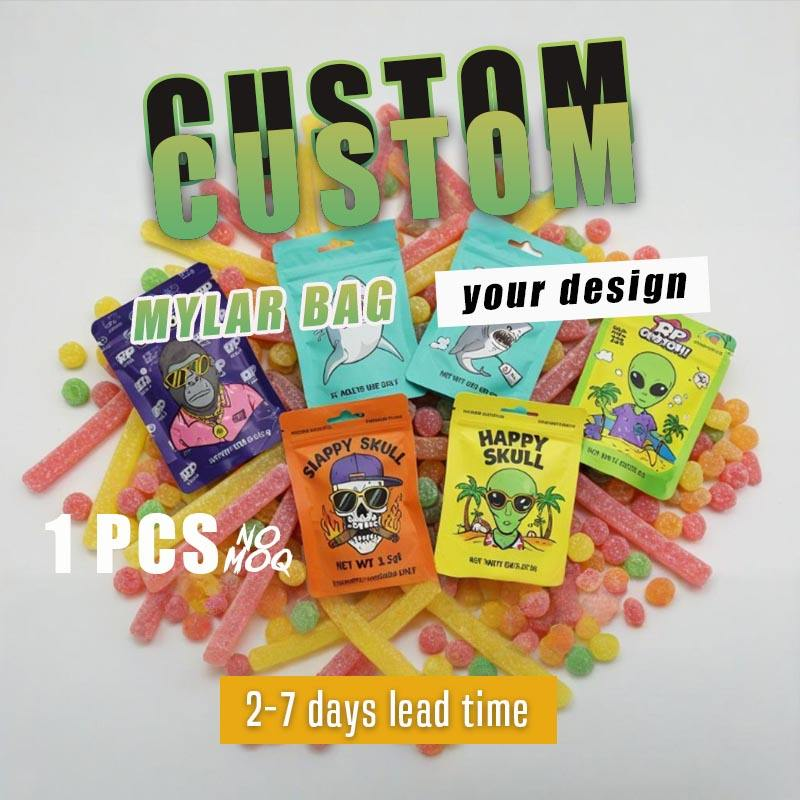
For private-label multi-SKU gummy pouches, use a controlled master die line and consistent placement for logos, regulatory panels, variable flavors, and warning elements. Color references should be agreed before production because metallic films, white ink, transparent areas, and matte or gloss effects can change the appearance of printed colors. Printing method, proofing process, surface finish, and variable artwork count belong in the RFQ.
Food-Contact and Destination-Market Review
Candy and gummy packaging may need food-contact documentation appropriate to the selected materials and intended conditions of use. Cannabis edibles can also be subject to jurisdiction-specific rules for child resistance, opacity, warning symbols, labeling, serving information, and appeal to children. Requirements vary by destination, so no unconfirmed laminate or closure should be assumed approved or compliant.
Provide the supplier with the sales market and product characteristics, including whether the gummies are oily, acidic, sugar-coated, strongly aromatic, or sensitive to moisture or light. This information helps define the laminate and sealant layer without making unsupported assumptions about compatibility.
Questions Buyers Ask
Does 3.5g determine the exact pouch dimensions?
No. The correct dimensions depend on gummy or candy density, piece size, count, required headspace, closure position, and filling method. A fill test with the actual product is recommended before the die line is approved.
Are these bags guaranteed to be smell proof?
No absolute odor guarantee should be inferred. A suitable high-barrier laminate and sound seals can help contain aroma, but results depend on the complete structure, sealing conditions, contents, storage, and handling.
Is a standard zipper child-resistant?
No. A conventional resealable zipper is not automatically child-resistant. If child resistance is required, the buyer must specify an appropriate tested closure and confirm the rules that apply in the destination market.
Can different gummy flavors use a consistent package format?
Yes, a multi-SKU program can use a shared pouch format and master die line while changing flavor names, colors, product graphics, and required copy. Each artwork version should still be reviewed for print and regulatory accuracy.
What should be checked before approving custom printing?
Confirm the final die line, seals, zipper and notch positions, artwork coverage, color references, finish, barcode quiet zones, variable SKU content, and any areas reserved for lot or date coding.
Request a Product-Specific B2B Quote
For an accurate quotation from a wholesale Mylar bag manufacturer, provide the candy or gummy type, actual 3.5g product sample or dimensions, target pouch dimensions, order quantity, number of artwork versions, preferred barrier structure, pouch style, closure, finish, filling method, and destination market. Also identify food-contact documentation, child-resistant functionality, labeling constraints, or other compliance needs that must be reviewed before production.
Reviews
There are no reviews yet.