
Printed Child-Resistant Die-Cut Bags for 3.5g and 7g Cannabis Packaging
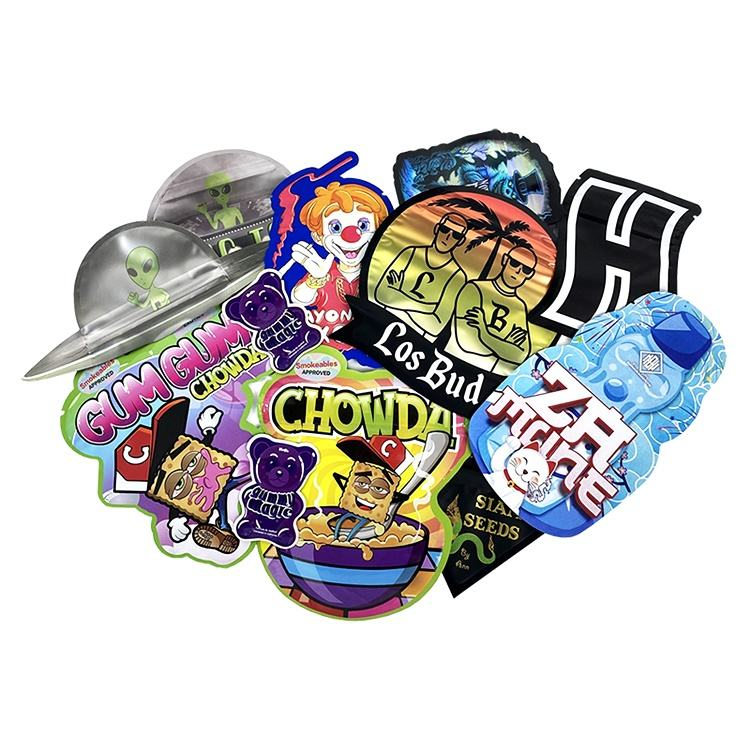
Printed child-resistant die-cut bags are shaped flexible pouches specified for cannabis products packed at nominal 3.5g or 7g fill weights. Their defining attributes are a die-cut bag format, printed branding, and a child-resistant design stated for the product. They are suited to cannabis brands, distributors, wholesalers, private-label buyers, and multi-SKU purchasing teams that need coordinated packaging for several strains or product variants. The actual contents, product density, final dimensions, closure construction, and destination-market requirements should be confirmed before an RFQ or production approval.
Product Specifications
| Product type | Printed child-resistant die-cut bag |
|---|---|
| Nominal fill references | 3.5g and 7g; actual usable volume depends on product density, shape, and headspace |
| Printing | Printed custom packaging; artwork method, color count, print area, and repeat must be confirmed |
| Closure | Child-resistant design stated; closure mechanism, testing documentation, and operating instructions require confirmation |
| Material | Flexible packaging structure to be selected according to barrier, seal, appearance, and market requirements |
| Bag format | Die-cut shaped bag; seal geometry, opening position, and usable artwork area require confirmation |
| Intended procurement | Brand programs, wholesale supply, private-label, OEM, ODM, and multi-SKU packaging projects |
How the 3.5g and 7g references affect specification
A stated fill weight does not identify one universal bag size. Cannabis flower density varies by cultivar, trim, moisture condition, and packing method, so two products with the same nominal weight may need different internal volume or headspace. Ask the supplier to evaluate a representative product sample or provide the product’s actual packed dimensions. For flower, confirm whether the bag must accommodate loose material, a compact fill, or an insert. Excessive headspace can allow product movement and may affect presentation, while insufficient headspace can make filling, sealing, and closure operation difficult.
The 3.5g and 7g versions can be treated as separate specifications even when the graphics are part of one brand family. Confirm the finished width, height, seal allowance, opening location, and usable fill area for each size. The die-cut outline should be reviewed with the filling method because sharp transitions, narrow corners, or a restricted opening can slow manual or automated loading.
Barrier structure and product protection
The bag’s appearance does not by itself identify its barrier performance. A matte, metallic, holographic, or kraft-look surface may be paired with different flexible packaging structures, and a clear window can improve product visibility while reducing light protection in that area. The complete laminate, sealant layer, closure, and sealing process influence resistance to aroma transfer, moisture movement, oxygen exposure, light, puncture, and seal failure.
For cannabis flower, a suitable structure may help contain aroma and protect the product from environmental exposure when properly sealed, but the result depends on the selected materials and production conditions. If aroma retention, moisture control, or extended shelf-life is important, request the proposed laminate structure and any relevant barrier data for review. Do not treat the phrase “smell resistant” as a permanent or absolute performance guarantee. Confirm whether the packaging is intended for dry flower, and separately review requirements for concentrates, edibles, or other contents.
Child-resistant closure and sealing decisions
Child-resistant packaging is not interchangeable with an ordinary resealable zipper. This product is identified as child-resistant, but the buyer should confirm the exact opening mechanism, user instructions, testing documentation, and destination-market acceptance before relying on the claim for a regulated product. A separate heat seal may be specified for tamper evidence or initial package integrity, subject to the final design and material selection.
Closure choice affects filling speed, usability, seal width, and available printed area. Ask whether the child-resistant feature is integrated into the bag, the closure profile, or another component of the finished package. Also confirm whether the bag is intended to be heat sealed after filling, opened and reclosed by the consumer, or used with both functions. The selected sealing temperature, dwell time, pressure, and equipment must be matched to the final structure rather than assumed from the artwork or exterior finish.
Custom printing for strains and product lines
Printed packaging can support strain names, potency panels, warning information, brand marks, batch references, and other market-specific content, subject to the available artwork area and applicable rules. Die-cut shapes require particular care around the trim line, seal zones, opening feature, and any corners that may distort the visual layout. Keep critical text and regulatory content inside the confirmed safe area, and request a production dieline before final artwork release.
For a multi-SKU program, define which elements remain consistent across the 3.5g and 7g bags and which elements change by strain, flavor, batch, or market. Confirm the number of artwork versions, variable-data capability, color references, finish, and substrate limitations. A high-contrast matte design may support legibility, while metallic or special-effect treatments can change color appearance and may affect the readability of small compliance text. Final print proofs should be checked against the approved dieline.
Filling workflow and quality checks
Before approving production, test the bag with the real product or a representative substitute. Check whether the product reaches the intended fill level, whether flower is crushed during loading, whether the closure can be operated consistently, and whether the die-cut edge or seal area interferes with handling. Inspect the finished package for seal continuity, opening function, print registration, trim accuracy, and visible scuffing after normal packing operations.
For wholesale and private-label programs, use one approved specification sheet for each size and artwork version. Record the intended contents, target fill weight, product dimensions, bag dimensions, material structure, closure, finish, and destination market. This reduces the risk of sending a 3.5g artwork file to a 7g die line or applying one barrier assumption to multiple product types.
Buyer questions before requesting a quotation
- What exactly will be packed: flower, pre-rolls, edibles, concentrates, or another cannabis product?
- Is 3.5g or 7g the target fill weight, and what are the packed product dimensions and density?
- Which child-resistant mechanism is required, and what documentation or market acceptance must be reviewed?
- Does the package need a heat seal, resealable function, aroma containment, moisture control, light protection, or a clear viewing area?
- How many SKUs, artwork versions, finishes, and destination markets are included?
Frequently asked questions
Are these bags available for both 3.5g and 7g cannabis products?
Yes. The product is specified for 3.5g and 7g fill references. Final bag dimensions should be confirmed against the density, shape, and packed dimensions of the actual product because fill weight alone does not determine usable volume.
Are the die-cut bags made from a specific laminate?
The input identifies the product as a flexible die-cut bag but does not specify one laminate. The final structure should be selected and confirmed according to aroma, moisture, oxygen, light, puncture, stiffness, and heat-sealing requirements.
Does child-resistant mean the bag has an ordinary zipper?
No. An ordinary resealable zipper should not automatically be treated as child-resistant. Confirm the exact child-resistant mechanism, operating instructions, testing documentation, and destination-market requirements for the finished package.
Can the bags be printed for several cannabis strains?
Yes. Printed packaging can be planned for multiple strain or product versions, subject to the confirmed artwork area, die line, print process, finish, and number of SKUs. Review each version against the approved production template.
What information is needed for a quotation?
Provide the contents, target fill weight, packed product dimensions, desired bag dimensions, quantity, artwork versions, material or barrier priorities, closure, finish, filling method, destination market, and compliance documentation needs.
Request a B2B specification review
For an accurate RFQ, send the intended contents, 3.5g or 7g target fill weight, actual product dimensions, desired pouch dimensions if known, quantity, number of artwork versions, material or barrier requirements, child-resistant closure preference, finish, filling method, destination market, and compliance needs. The supplier can then confirm the die line, usable volume, closure configuration, laminate options, print area, and next specification steps for your cannabis packaging program.

Reviews
There are no reviews yet.