
Custom Printed 3.5g Child-Resistant Cali Bags for Cannabis Brands
Custom printed 3.5g child-resistant Cali bags are cannabis packaging bags specified for approximately 3.5g product fills, with a child-resistant opening system, custom branding, and a smell-resistant packaging objective when the selected structure is properly sealed. They are intended for cannabis brands, distributors, wholesalers, private-label buyers, and multi-SKU programs that need a branded bag format rather than an unprinted stock package. The stated 3.5g designation is a fill reference, not a universal pouch dimension: product density, particle size, headspace, seal area, and the buyer’s filling process must be confirmed before production.
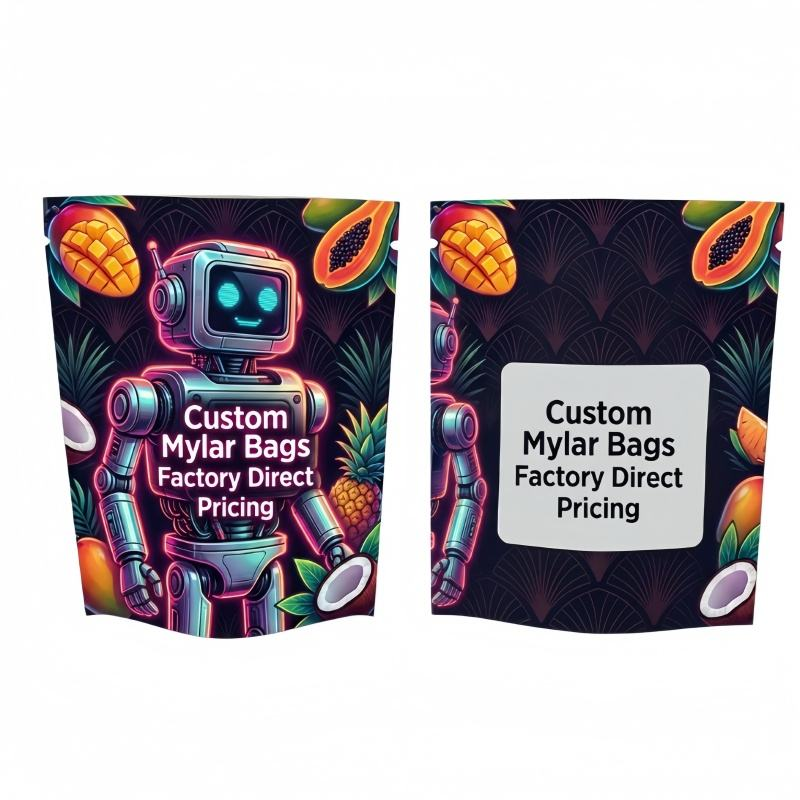
Product Specifications
| Product type | Custom printed cannabis packaging bags |
|---|---|
| Stated fill reference | 3.5g; final usable volume depends on product density and selected dimensions |
| Intended packaging use | Small-format cannabis product packaging, subject to final product confirmation |
| Child-resistant feature | Child-resistant bag format as specified; test method, market requirements, and documentation must be confirmed |
| Odor control | Smell-resistant objective depending on the complete laminate, seals, and closure system |
| Printing | Custom printed; artwork coverage, colors, registration, and print process require confirmation |
| Material | Final film or laminate structure to be selected according to barrier, appearance, sealing, and destination-market requirements |
| Dimensions | Not stated; confirm finished width, height, opening, seal geometry, and usable fill area |
How the 3.5g Format Should Be Sized
A nominal 3.5g fill does not identify one correct bag size for every cannabis product. A dense flower fill may occupy less volume than a light, loose, or larger-particle fill. If the bag is too small, filling can stress the side seals, interfere with the child-resistant opening, or leave insufficient headspace for a clean top seal. If it is too large, excess headspace can increase product movement and make the pack look underfilled.
For an RFQ, provide the actual product dimensions or a representative sample specification, not only the target weight. The supplier should review the required usable volume, headspace, opening position, seal width, and filling equipment. The final bag dimensions should also reserve enough printable area for the brand identity, product information, warnings, batch details, and any destination-market content.
Barrier Structure and Smell-Resistant Performance
The phrase “smell-proof” is commonly used to describe an odor-control objective, but odor retention depends on the complete packaging system. Film selection, laminate layers, zipper or closure design, heat-seal quality, folds, punctures, and handling all influence performance. A suitable barrier structure can help contain aroma and may also be selected to manage moisture, oxygen, and light exposure, depending on the product and market requirements.
Appearance does not prove barrier performance. A matte, metallic, holographic, or kraft-look exterior may be chosen for visual positioning, but the appearance layer does not by itself establish the underlying laminate. A clear window can improve product visibility while reducing light protection in the window area. The buyer should therefore approve the proposed structure using the intended contents, storage conditions, filling method, and required barrier objectives rather than selecting film only by appearance.
Child-Resistant Opening and Sealing Decisions
These bags are described as child-resistant, which distinguishes them from an ordinary resealable zipper. However, child-resistant status should be matched to the destination market’s required test method, documentation, labeling, and packaging rules. Confirm whether the selected closure is intended to be used as the primary child-resistant feature, whether a heat seal is also required, and how the package is opened and resealed during normal use.
A heat seal can provide an additional tamper-evident or freshness-oriented barrier when specified, but it changes the filling workflow and may affect consumer opening instructions. A zipper can support resealing after opening, while a more complex child-resistant mechanism may require greater opening force or clearer instructions. The final choice should balance child-resistance requirements, user access, aroma containment, filling speed, and the desired customer experience.
Custom Printing for Cali-Style Cannabis Packaging
Custom printing allows the bag to support a strain family, product line, or private-label identity across a compact format. Before artwork approval, confirm the dieline, safe area, seal exclusion zones, closure position, tear or opening location if applicable, color references, barcode placement, and any transparent or metallic effects. Print limitations can vary with the selected substrate, laminate, finish, and production method, so the approved proof should represent the final structure as closely as possible.
For a multi-SKU program, establish a controlled artwork system for strain names, cannabinoid or terpene information, product weights, lot fields, and market-specific warnings. Consistent dimensions and placement can simplify filling and outer-carton handling, while variable artwork may require separate approvals and production controls. Confirm whether each SKU will use the same structure and finish or whether some products require different barrier or labeling treatments.
Procurement and Destination-Market Review
Wholesale and private-label buyers should separate the visual brief from the technical specification. The brief may call for Cali bags, a particular finish, brand colors, and a discreet smell-resistant format. The technical specification should define dimensions, material structure, closure, seal method, intended contents, fill reference, artwork versions, and required documentation.
Destination-market obligations can affect the amount of printable space and the package configuration. Confirm applicable child-resistant packaging rules, cannabis labeling and warning requirements, recycling or material-marking expectations, food-contact considerations where relevant, and any testing or documentation required by the jurisdiction. This product description does not establish certification, approval, or compliance; those items must be reviewed for the final bag specification and market.
Important Trade-Off: Barrier Versus Visibility
A fully opaque high-barrier appearance may provide stronger light protection and a more controlled brand presentation, while a clear window can let buyers view the contents. The window may reduce protection in that area and can complicate artwork continuity. Similarly, adding a robust closure and heat-seal combination may improve containment objectives but can increase opening complexity or require an adjusted filling process. Decide which performance and merchandising priorities matter most before approving the structure.
Frequently Asked Questions
Are these bags sized for exactly 3.5g of cannabis flower?
The product is identified with a 3.5g fill reference, but one universal size cannot be assumed. Flower density, particle size, headspace, and filling method affect the required dimensions. Confirm the actual product and target bag measurements before ordering.
Are the bags genuinely child-resistant?
They are specified as child-resistant bags, but the applicable test method, documentation, labeling, and market requirements must be confirmed for the final closure and destination market. Do not treat an ordinary zipper as equivalent to a tested child-resistant system.
Do the bags eliminate cannabis odor?
They are positioned for a smell-resistant objective, not an unconditional odor-elimination guarantee. Aroma containment depends on the laminate, closure, seals, puncture resistance, and proper sealing. Confirm the required barrier structure with the supplier.
Can each strain or SKU have different printing?
Custom printing can support multiple strain or product artworks. Confirm the number of artwork versions, shared dimensions, variable information, color requirements, and whether every SKU will use the same material, finish, and closure.
What should a buyer send for a quotation?
Provide the contents, fill weight, actual product dimensions, desired finished bag dimensions, quantity, artwork versions, material or barrier preference, closure, finish, filling method, destination market, and compliance or documentation needs.
Request a B2B Specification Review
For a quotation on these custom printed 3.5g child-resistant Cali bags, send the intended contents, target fill weight, actual product dimensions, desired pouch dimensions, order quantity, number of artwork versions, preferred material or barrier, closure and sealing requirements, finish, filling method, destination market, and applicable compliance needs. Those details allow the bag structure, usable volume, artwork area, and procurement scope to be reviewed before an RFQ is finalized.

Reviews
There are no reviews yet.