
Custom Printed 3.5g and 28g Mylar Bags for Cannabis Packaging
Custom printed 3.5g and 28g Mylar bags are flexible cannabis packaging formats for brands, distributors, wholesalers, and private-label buyers that need two defined fill-weight options in a coordinated package program. The stated 3.5g and 28g formats can be evaluated for flower or another intended dry product, but the correct pouch dimensions are not determined by fill weight alone. Product density, shape, headspace, filling equipment, closure specification, and the selected laminate should be confirmed before production.
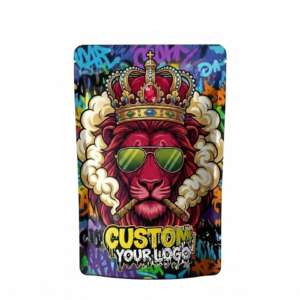
These bags combine a Mylar-based flexible packaging concept with custom printing for brand identity, strain or SKU differentiation, and market-specific information. A packaging buyer should treat the listed weights as target fill formats rather than a universal size specification. Request a technical drawing or preproduction sample for each size before approving artwork or an order.
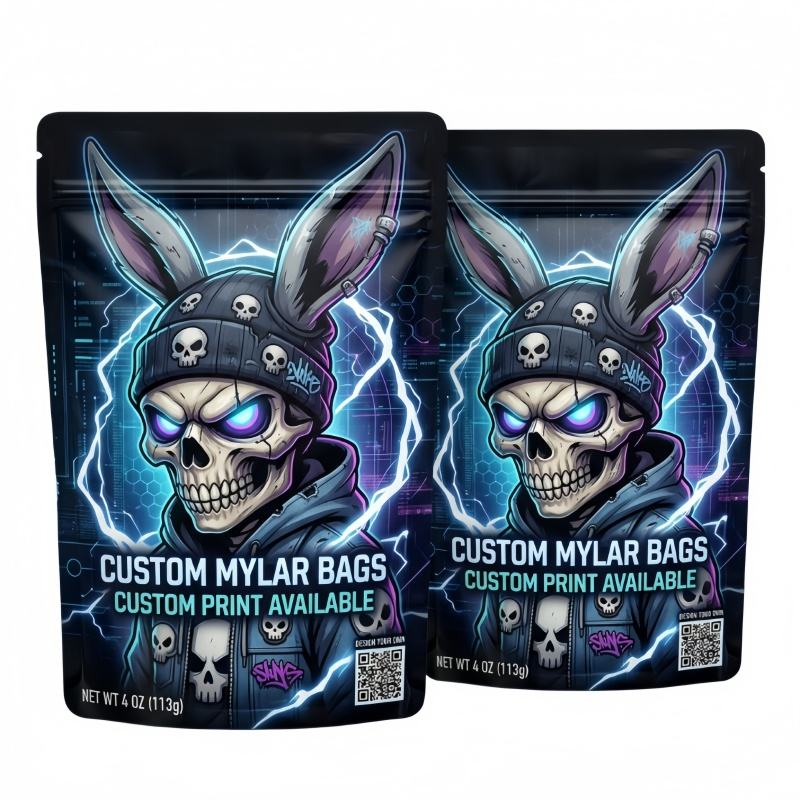
Product Specifications
| Product type | Custom printed flexible Mylar bags |
|---|---|
| Stated fill formats | 3.5g and 28g options |
| Intended B2B use | Cannabis product packaging, subject to product and market requirements |
| Customization | Custom printed artwork; final print process, colors, coverage, and registration require confirmation |
| Material structure | Mylar-based structure; the complete laminate, barrier layers, and seal construction require confirmation |
| Pouch dimensions | Not stated; confirm external dimensions, usable internal area, seal width, and headspace |
| Closure | Not stated; confirm zipper, heat seal, tear notch, or another selected opening system |
| Finish | Not stated; confirm matte, gloss, metallic, kraft-look, or other requested appearance |
| Commercial details | MOQ, pricing, lead time, samples, and availability require a supplier quotation |
Size Selection for 3.5g and 28g Formats
A 3.5g bag and a 28g bag should not be scaled only by multiplying width or height. Cannabis flower density varies by cultivar, trim, moisture condition, and packing method, so the same stated weight may occupy different volumes. A larger or looser product may need more usable volume and headspace, while compact product may need a smaller internal footprint to reduce movement.
For an RFQ, provide the actual product dimensions when available, including approximate length, width, thickness, density, and whether the product is filled by hand or equipment. Confirm whether the bag must stand upright, remain flat, or accommodate a particular display format. A gusseted stand-up construction may improve filling and shelf presentation, while a flat pouch may use less material and require more careful control of seal geometry and fill position.
Mylar Structure, Barrier, and Product Protection
“Mylar” identifies a packaging material family or film reference, but it does not by itself define the complete barrier performance of the finished bag. Aroma retention, moisture resistance, oxygen exposure, light protection, puncture resistance, stiffness, and heat sealability depend on the full laminate structure, film gauges, inner sealant, seams, and production settings.
For cannabis flower, a suitable structure may help contain aroma and protect the contents from unwanted environmental exposure when properly sealed. The buyer should ask which layers are proposed and whether the structure is appropriate for the product’s aroma, moisture, and handling conditions. If aroma containment is a priority, evaluate the seal design and closure together with the film; a zipper alone should not be treated as a permanent or absolute odor barrier.
A metallic or opaque appearance may support light protection, but appearance does not prove a particular barrier value. Likewise, a clear window can improve product visibility while reducing the amount of opaque coverage in that area. If the brand requires a window, metallic effect, kraft appearance, or high-contrast artwork, confirm how that choice affects the laminate and printable surface.
Closure, Sealing, and Filling Considerations
The input does not specify a closure, so the 3.5g and 28g formats should be quoted with the required opening and sealing system clearly identified. A resealable zipper can support repeated access, but it is not the same as a tested child-resistant closure. If the destination market requires child-resistant packaging, request the applicable closure design and test documentation separately rather than assuming that a standard zipper meets that requirement.
A heat seal can provide a closed top above the zipper, and a tear notch can make initial opening easier, but each option affects the seal zone, filling process, artwork position, and tamper-evidence expectations. Confirm whether the customer will heat seal the bag after filling, whether the supplier is expected to provide a finished seal, and how much headspace is needed above the product. Excess headspace can increase movement and reduce presentation quality; insufficient headspace can interfere with sealing or compress the contents.
Custom Printing and Multi-SKU Programs
Custom printed marijuana bag packaging can coordinate a 3.5g and 28g range while separating strains, flavors, potency presentations, or private-label product lines. Before artwork preparation, request the dieline, printable boundaries, seal exclusion areas, zipper position, tear-notch location, gusset folds if applicable, and minimum text size guidance. Critical regulatory or product information should not be placed across a seal, fold, closure, or trim area.
Confirm whether the selected construction supports the requested color appearance, metallic effects, matte or gloss finish, spot details, and front-panel visibility. The final result may vary according to the printing method, substrate, ink system, and laminate. For multi-SKU purchasing, define which elements remain consistent across both fill formats and which elements change. A controlled artwork naming system and approval proof can reduce mix-ups between strain names, weights, barcodes, and destination-market versions.
Market and Procurement Review
Destination-market requirements should be reviewed before artwork and material approval. Depending on the jurisdiction and product category, buyers may need specific warnings, symbols, lot or batch information, tamper-related features, child-resistant packaging, recycling statements, or food-contact considerations. This product page does not establish certification, approval, or compliance status. The buyer and its regulatory advisers should identify the applicable rules, while the supplier confirms what documentation or construction options can be provided.
Private-label weed bags for multi-SKU programs should also be evaluated for consistency between the 3.5g and 28g versions. Compare the visible print area, pouch proportions, closure position, fill-line behavior, and color treatment rather than assuming that one approved artwork will transfer without adjustment. A preproduction sample or proof can help verify product fit, opening behavior, and information placement before a larger purchasing decision.
Key Trade-Off: Barrier Protection Versus Product Visibility
One practical trade-off is the choice between stronger visual access and greater light-blocking coverage. A window or transparent panel may help a brand show the product, but it can reduce opaque coverage and change the barrier design. An opaque or metallic construction may provide a more controlled appearance and support light protection, but the contents are less visible. The correct decision depends on the product, destination market, brand presentation, and confirmed laminate structure—not on the finish name alone.
Questions B2B Buyers Commonly Ask
Are the 3.5g and 28g bags based on one universal pouch size?
No. The stated fill weights identify two target formats, not fixed dimensions. Confirm the product’s density, volume, desired headspace, pouch style, and filling method before selecting dimensions.
Can these bags be used for cannabis flower?
They can be evaluated for cannabis flower packaging, but suitability depends on the selected laminate, seal construction, closure, product volume, and destination-market requirements. Ask for the proposed structure and confirm the fit with a sample or technical review.
Does Mylar automatically mean the bag is smell proof?
No. Aroma containment depends on the complete laminate, seams, closure, and seal quality. The finished bag may help contain aroma when properly sealed, but no absolute or permanent smell-proof performance should be assumed without relevant product-specific evidence.
Is a standard zipper child resistant?
No. A conventional resealable zipper should be distinguished from a tested child-resistant closure. If child-resistant packaging is required, specify that requirement in the RFQ and request the relevant construction and documentation.
What artwork information is needed for custom printing?
Provide the desired bag format, artwork versions, logos, text, required symbols, color references, finish, and any window or metallic-effect requests. The supplier should provide or confirm the dieline, printable area, seal exclusions, closure position, and proofing process.
Request a Product-Specific RFQ
To receive a useful quotation from a cannabis packaging manufacturer and wholesale supplier, provide the intended contents, 3.5g or 28g fill weight, actual product dimensions if available, desired pouch dimensions, estimated quantity, number of artwork versions, material or barrier preferences, closure and tear-notch requirements, finish, filling method, destination market, and known compliance needs. Ask the supplier to confirm the proposed laminate, usable volume, headspace, seal area, sample or proof process, and any commercial terms before approving production.
Reviews
There are no reviews yet.