
14g Die-Cut Stand-Up Mylar Bags for Cannabis Packaging
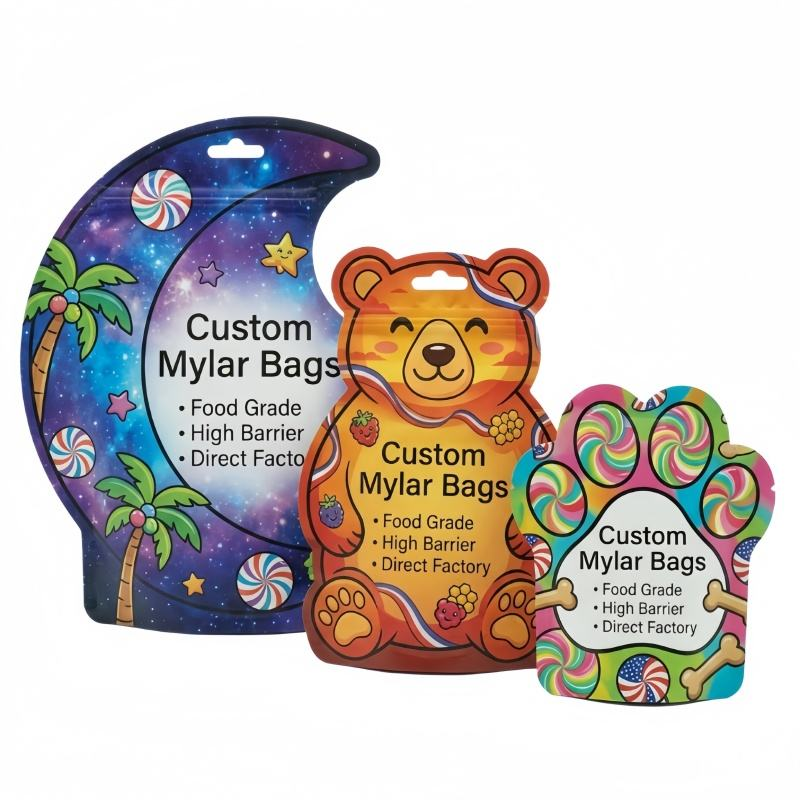
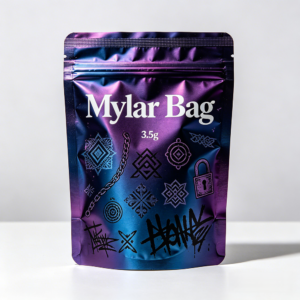
14g die-cut stand-up Mylar bags are food-grade, shaped stand-up pouches intended for packaging a nominal 14-gram fill, including cannabis flower when the selected structure, dimensions, closure, and destination-market requirements are confirmed. Their die-cut silhouette gives a branded alternative to a conventional rectangular pouch, while the stand-up format can support shelf presentation and upright filling. These bags are suitable for cannabis brands, wholesalers, distributors, private-label programs, and multi-SKU buyers that need a distinctive pouch format rather than an unprinted stock bag.
Product Specifications
| Product type | Die-cut stand-up pouch |
|---|---|
| Nominal fill reference | 14g; actual usable volume depends on product density, dimensions, headspace, and filling method |
| Material | Mylar packaging structure; complete laminate and food-contact documentation should be confirmed for the final specification |
| Food-grade designation | Stated in the product name; request the applicable documentation and intended-use limitations before approval |
| Intended application | Cannabis flower and other suitable dry products, subject to product compatibility and market requirements |
| Pouch format | Stand-up construction with a die-cut profile |
| Closure and sealing | Selected zipper, heat-seal configuration, tear notch, and opening geometry require buyer confirmation |
| Printing and finish | Custom printing, artwork area, substrate, and finish are configuration items to confirm |
Fit the Pouch to the Actual 14g Product
A 14g label does not define one universal pouch size. Flower density, nug size, trim, humidity condition, and the amount of headspace needed for filling and closing can change the required internal volume. A dense product may occupy less space than a light, bulky product at the same weight. Buyers should provide actual product dimensions or representative samples, not only the target fill weight.
The die-cut shape also affects usable area. Curved shoulders, angled edges, narrow corners, or a shaped top can reduce the practical filling zone compared with the maximum outside dimensions. Confirm the internal width, height, bottom gusset, seal margins, opening location, and artwork-safe area before finalizing a dieline. A filling trial can identify whether flower catches at the corners, interferes with the zipper, or requires additional headspace.
Mylar Structure, Aroma, and Product Protection
Mylar is commonly used as a flexible packaging film term, but the appearance or name alone does not establish the complete barrier performance. Odor containment, aroma retention, moisture control, oxygen exposure, light protection, puncture resistance, stiffness, and heat sealability depend on the full laminate, seal design, and production settings. A properly selected and sealed structure can help contain aroma and provide a smell-resistant packaging option, but performance should not be treated as an absolute or permanent guarantee.
For cannabis flower, ask the supplier to identify the complete material structure, thickness or gauge, sealant layer, barrier requirements, and available test information for the proposed specification. A more protective opaque structure may improve light control, while a clear window can improve product visibility but trade away some light protection. Metallic, matte, holographic, or kraft-style appearances do not by themselves prove a particular barrier level.
Stand-Up Filling and Closure Decisions
The bottom gusset allows the pouch to stand when filled, which can simplify presentation and may help operators load the bag in an upright position. Filling behavior still depends on gusset width, product flow, bag stiffness, and the equipment or manual process used. Confirm whether the bag will be filled by hand, through a scale, or with automated equipment, and check that the die-cut profile remains stable during loading.
An ordinary resealable zipper supports repeated opening and closing but should not be described as a tested child-resistant closure. If the destination market requires child-resistant packaging, request the appropriate closure design, test evidence, and packaging configuration separately. A heat seal above the zipper can provide tamper evidence or added protection when properly formed, but it changes the opening process and must be considered alongside tear-notch placement. Confirm whether the final bag needs a zipper, heat seal, tear notch, or a combination.
Custom Printing and Multi-SKU Control
These custom printed die-cut weed bags can support strain, cultivar, flavor, potency, lot, warning, and brand artwork across a coordinated product line. The shaped profile makes the dieline especially important: keep mandatory text, barcodes, batch fields, and warning content away from seals, folds, gusset transitions, tear notches, and curved die-cut edges. Request the approved dieline before artwork production and verify print direction, color references, registration tolerance, and the usable front and back panels.
Finish selection should be reviewed with the structure rather than chosen only for appearance. Matte, gloss, metallic, holographic, and spot-effect treatments may affect color reproduction, scuff visibility, barcode contrast, or the way the product is viewed. For a multi-SKU or private-label program, establish one master specification for dimensions, laminate, zipper position, seal geometry, and print placement. Then document the variable artwork elements for each SKU to reduce mix-ups during proofing and packing.
Destination-Market and Food-Contact Review
The stated food-grade description is useful for procurement, but it does not replace a destination-market review. Cannabis packaging rules can address child resistance, tamper evidence, opacity, labeling space, warning language, serving or net-content information, recyclability statements, and product-contact documentation. Requirements vary by jurisdiction and product category. Ask for the documents relevant to the selected material and intended use, and have the importing party or compliance adviser verify the finished package against the destination market.
For flower, confirm whether the package must remain opaque, whether a heat seal is required, and whether an ordinary zipper is sufficient. If the bag will hold a food or edible product rather than flower, review grease resistance, moisture sensitivity, odor transfer, food-contact requirements, and the amount of space needed for ingredients and warnings. Do not assume that a food-grade label alone establishes approval for every product or market.
Trade-Off: Shape Versus Usable Area
The die-cut profile can create stronger shelf differentiation and support a distinctive brand identity, but shaped edges may reduce usable print and fill area compared with a standard rectangular stand-up pouch. A complex profile can also require tighter control of the die line, seal margins, and artwork registration. If maximum internal volume, fast filling, or dense information panels are more important than visual differentiation, compare the proposed shape with a simpler pouch before approving tooling or artwork.
What to Include in a Cannabis Packaging RFQ
For a useful quote and specification review, send the intended contents, target fill weight, actual product dimensions or representative sample, desired pouch dimensions, estimated quantity, number of artwork versions, material or barrier preference, closure requirement, finish, filling method, and destination market. Also state whether you need a standard zipper, heat seal, tear notch, child-resistant configuration, barcode area, or special compliance documentation. These details help the supplier assess fit, seal geometry, printing feasibility, and the correct structure without treating 14g as a complete size specification.
Frequently Asked Questions
Are these bags suitable for 14g of cannabis flower?
They are identified for a nominal 14g fill reference, but suitability depends on flower density, nug size, headspace, internal dimensions, closure geometry, and the filling process. Confirm fit with actual product dimensions or a filling trial.
Are the 14g die-cut stand-up Mylar bags smell proof?
The selected laminate and properly formed seals can help contain aroma and provide smell-resistant performance. “Smell proof” should not be treated as an absolute claim without structure-specific testing and a defined sealing configuration.
Do these pouches have a child-resistant closure?
The product input does not confirm a child-resistant closure. An ordinary zipper is not the same as a tested child-resistant system, so request the closure option and applicable test documentation if the destination market requires it.
Can the bags be custom printed for multiple cannabis strains?
Custom printing and multi-SKU artwork can be discussed as configuration requirements. Confirm the dieline, artwork-safe area, finish, print process, version count, and variable information before production approval.
What material and barrier should be specified?
Confirm the complete Mylar laminate, sealant layer, thickness, opacity, and required protection for aroma, moisture, oxygen, light, and puncture resistance. The visible appearance alone does not establish barrier performance.
Request an RFQ for the 14g die-cut stand-up Mylar bags by providing your contents, fill weight, actual product dimensions, desired pouch dimensions, quantity, artwork versions, material or barrier needs, closure, finish, filling method, destination market, and compliance requirements. The supplier can then review the die line, usable volume, seal design, and printing specification for your program.
Reviews
There are no reviews yet.