
Custom Printed Tobacco Pouches with Multilingual Label Panels
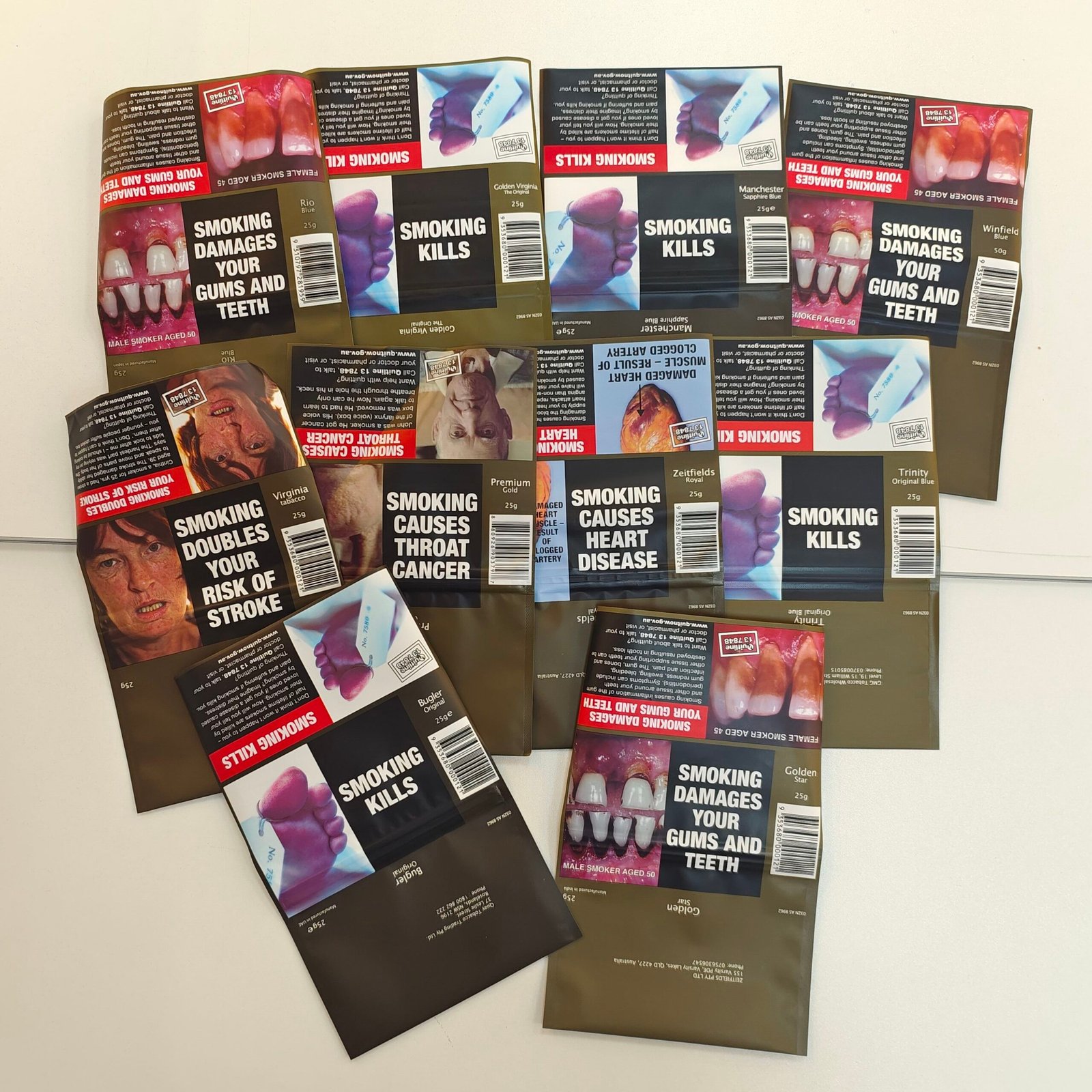
Custom printed tobacco pouches with multilingual label panels are flexible retail and distribution pouches designed for tobacco, hemp, herbal blends, and cannabis-adjacent product lines that need branded artwork plus space for multiple language versions, warnings, product information, or destination-market label content. They are especially relevant for B2B buyers managing export packs, private-label programs, distributor-specific SKUs, or multi-region packaging where the same pouch design must communicate clearly across languages.
Product Specifications
| Product type | Custom printed flexible pouch for tobacco, hemp, herbal, or cannabis-adjacent packaged goods |
|---|---|
| Confirmed defining attribute | Multilingual label panels integrated into the printed pouch design |
| Printing | Custom printed artwork; color count, finish, and print method to be confirmed from final specification |
| Material structure | Flexible laminate structure to be selected according to barrier, stiffness, sealing, and appearance requirements |
| Pouch format | Buyer-confirmed format such as flat pouch or stand-up pouch, depending on filling method and display goals |
| Closure | May include resealable zipper, heat seal, tear notch, or other closure features subject to final design |
| Barrier needs | Aroma, moisture, oxygen, and light protection depend on the complete laminate and sealing system |
| Compliance content | Language panels, warnings, ingredients, symbols, and market-specific statements must be supplied or approved by the buyer |
What This Pouch Is Designed to Solve
Multilingual tobacco pouch packaging is useful when one product family must serve several regions, provinces, countries, or distributor channels without losing brand consistency. Instead of treating translated stickers as an afterthought, the label panels can be planned into the printable area so required text, batch information zones, warning blocks, and product descriptors remain legible and organized.
For cannabis and hemp-related buyers, the pouch can also support strain names, cannabinoid or terpene information, net weight statements, and cautionary text when those items are required by the destination market. The pouch itself should not be assumed compliant simply because it contains label panels; final artwork, child-resistance requirements, warning format, and local packaging rules must be verified before production. Buyers comparing regulatory obligations can review broader cannabis packaging compliance considerations before approving artwork.
Material and Barrier Configuration
Printed flexible tobacco bags may be built from laminated films selected for different performance priorities. A PET-based outer layer can support print quality and stiffness, while inner sealant layers such as PE or PP may support heat sealing. Depending on the selected structure, metallized film, aluminum foil, or other high-barrier layers may help reduce aroma migration, moisture exchange, oxygen exposure, and light impact.
The key procurement point is that appearance alone does not define performance. A matte black pouch, kraft-look pouch, glossy pouch, or metallic pouch can have very different barrier behavior depending on the full laminate. If the product contains aromatic tobacco, terpene-rich hemp flower, or moisture-sensitive herbal material, the buyer should confirm the intended barrier level, seal width, zipper selection, and filling conditions rather than relying only on the printed finish.
Pouch Style, Filling Behavior, and Headspace
The correct pouch size cannot be determined by product name alone. Loose tobacco, shredded herbal blends, flower, and dense infused products can occupy different volumes at the same fill weight. A stand-up pouch may improve shelf presentation and provide more front-panel branding space, while a flat pouch may reduce material use and suit compact carton packing. Gusset depth, pouch width, fill opening, and headspace should be tested against the actual product, not only a target gram weight.
Headspace is a real trade-off. Too little headspace can make filling and sealing difficult, especially if product fibers sit in the seal area. Too much headspace can make the pouch look underfilled and increase internal product movement. For automated or semi-automatic packing lines, buyers should share filling method, target fill weight, bulk density, and whether the pouch will be hand-filled, weighed, vibrated, or nitrogen-flushed.
Closure Options and Tamper Evidence
These pouches may be configured with an ordinary resealable zipper for repeated opening and closing, a top heat seal for first-open integrity, and a tear notch for easier consumer opening. A resealable zipper is not the same as a tested child-resistant closure. If the destination market requires child resistance, the buyer must specify that requirement early so the closure system, pouch size, and testing expectations can be evaluated.
For tobacco and cannabis-adjacent goods, a heat seal above the zipper is often considered when brands want an unopened pack to remain sealed during distribution. Tamper-evident structures, hang holes, rounded corners, or euro slots may also be considered where appropriate, but each feature affects the die line, usable artwork area, and sealing geometry.
Custom Printing and Multilingual Panel Planning
The main value of this product is the combination of custom printed pouch branding and structured multilingual label areas. Buyers can use the primary panel for brand identity and flavor or strain recognition, while secondary panels can hold translations, ingredients, warnings, distributor details, barcode zones, batch spaces, and legal statements. For related print capabilities, see custom printed packaging bags.
Artwork should be built from a confirmed die line. Translation expansion is important: some languages require more space than English, and warning statements may need minimum size, contrast, or placement. If one pouch design will serve multiple markets, the design team should decide whether language panels are fixed on every unit or changed by SKU, region, or private-label customer. This decision affects plate or cylinder planning, digital print suitability, and artwork version control.
Private Label and Multi-SKU Procurement Use
Private label tobacco pouch packaging is often purchased as a family system. A distributor may need one pouch structure across several flavors, strengths, strains, or languages, with controlled changes to color bands, icons, product names, and regulatory panels. Maintaining the same pouch dimensions and laminate can simplify filling, carton packing, and shelf blocking, while variable artwork supports each SKU.
The trade-off is flexibility versus inventory complexity. A fully customized pouch for every market can improve local relevance but may increase artwork management and version approval work. A shared master design with designated multilingual label panels can reduce confusion, but it must leave enough space for the longest required language and the strictest warning layout among the target markets.
Custom Development Process
- Requirements review: Confirm contents, fill weight, target pouch style, destination markets, languages, and whether tobacco, hemp, cannabis, or herbal product rules apply.
- Specification confirmation: Select tentative pouch dimensions, laminate structure, barrier target, closure, finish, print approach, and multilingual artwork zones.
- Sample and artwork review: Review physical samples or prototypes where applicable, check fill behavior, seal area, zipper position, readability, barcode space, and translation layout.
- Bulk-production approval: Approve final die line, artwork files, material specification, closure details, and compliance text before mass production is released.
FAQ
Can these pouches be used for cannabis flower as well as tobacco?
They can be configured for tobacco, hemp, herbal blends, or cannabis-adjacent products, but the correct laminate, closure, label content, and compliance requirements depend on the exact contents and destination market.
Do multilingual label panels make the pouch compliant in every country?
No. The panels provide planned space for translated and regulatory information, but the buyer must confirm required language, warning format, symbols, product claims, and market-specific rules before artwork approval.
Are these pouches smell proof?
They can be specified as smell resistant or aroma-control packaging depending on laminate selection, zipper quality, and heat sealing. Aroma containment is affected by the complete pouch structure and proper sealing.
Can one design cover several SKUs or languages?
Yes, a master design can be planned with consistent brand elements and variable panels for flavor, strain, strength, barcode, warning, or language differences. Buyers should define all artwork versions before quotation.
Is a resealable zipper automatically child resistant?
No. A standard resealable zipper is for repeated opening and closing. If child resistance is required, the closure system must be specified separately and evaluated against the applicable market requirement.
RFQ Inputs for B2B Buyers
To request a practical quotation for a wholesale custom pouch manufacturer project, prepare the product contents, target fill weight or actual product volume, desired pouch dimensions, pouch style, order quantity, artwork versions, required languages, laminate or barrier expectations, closure type, surface finish, filling method, destination markets, and any compliance documents or warnings that must appear on pack. For project review and specification confirmation, send these details through the B2B packaging RFQ contact form.
Reviews
There are no reviews yet.