
Custom Printed Round Child Resistant Glass Jars for Cannabis Brands
Custom printed round child resistant glass jars are rigid cannabis packaging containers made for brands, distributors, wholesalers, and private-label buyers that need a round glass jar format with a child-resistant closure and brand-specific decoration. They are commonly specified for cannabis flower, infused edibles, concentrates in secondary containment, and premium marijuana product lines where shelf presence, product protection, and repeatable multi-SKU branding matter.
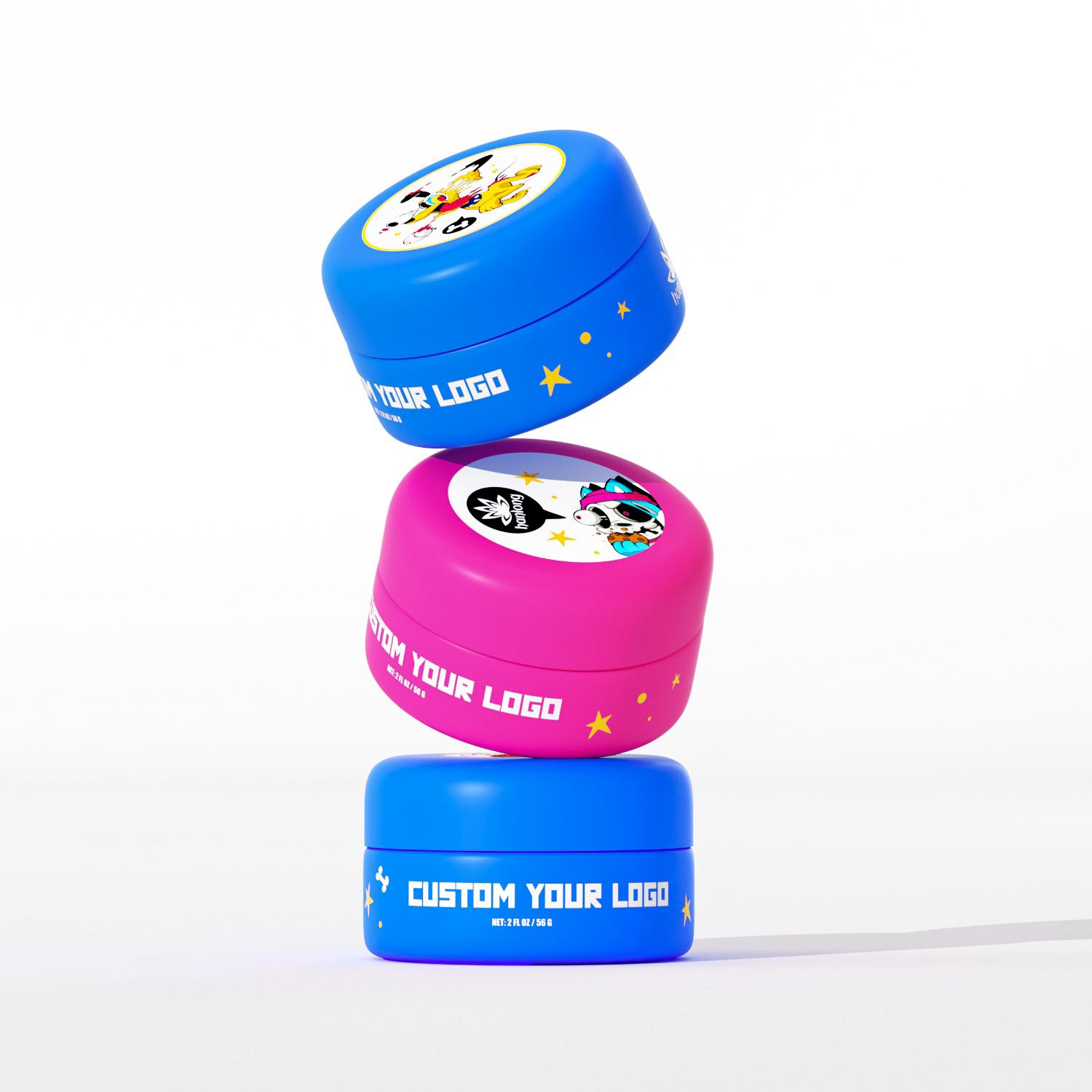
Unlike flexible pouches, round glass cannabis jars provide a rigid wall, a stable retail silhouette, and a premium hand feel. The buyer still needs to confirm the actual fill weight, usable internal volume, lid system, liner, decoration method, and destination-market labeling rules before quotation or production. The verified product image below represents this product type and should be matched against the final jar shape, closure color, print area, and artwork requirements during specification review.
Product Specifications
| Product type | Custom printed round child resistant glass jars |
|---|---|
| Primary material | Glass jar body; exact glass color, wall profile, and closure material must be confirmed |
| Closure | Child-resistant closure configuration; final mechanism, liner, and test or compliance documentation are subject to specification and destination requirements |
| Intended contents | Cannabis flower, marijuana products, edibles, or other regulated contents where a rigid jar is suitable; compatibility must be confirmed by product type |
| Shape | Round jar |
| Printing and decoration | Custom printing may include direct decoration, label application, lid decoration, or other selected methods depending on artwork, surface, and order specification |
| Capacity and dimensions | To be confirmed by fill weight, product density, headspace needs, and closure fit |
| Finish options | May include clear, tinted, coated, matte, glossy, or decorated effects depending on selected jar and process |
| Buyer type | B2B cannabis brands, OEM/ODM buyers, distributors, wholesalers, importers, and multi-SKU purchasers |
Where This Jar Format Fits Best
Round glass cannabis jars are often chosen when the product needs more structure than a pouch and a more premium presentation than a simple plastic container. For flower, the rigid wall helps reduce crushing during handling compared with soft packaging, while the round opening can make filling, inspection, and consumer access easier. For edibles, buyers should check whether the food-contact expectations, liner selection, label area, and moisture requirements match the recipe and destination market.
A stated cannabis fill weight does not automatically define one universal jar size. Flower density varies by strain, trim style, cure level, and desired headspace. Dense buds may fit a smaller volume than airy flower at the same net weight. Before ordering private label glass marijuana jars, send the actual product dimensions or bulk density targets so the jar capacity, neck finish, and closure height can be matched to the product instead of guessed from a label claim.
Glass, Closure, Aroma, Moisture, and Light Considerations
Glass is valued because it is rigid, has a premium appearance, and does not flex around the product during normal handling. For aroma containment, the complete package matters: jar body, neck finish, cap, liner, and closing torque or engagement must work together. A child-resistant cannabis jar packaging system may help contain aroma when properly closed, but terms such as smell resistant or odor control should be treated as performance goals rather than absolute guarantees. Buyers comparing aroma-control options can review related smell resistant packaging considerations when defining expectations.
Clear glass offers product visibility and strong shelf appeal, but it allows more light exposure than opaque, amber, black, or coated options. If cannabinoids, terpenes, colors, or edible ingredients are sensitive to light, a tinted jar, coated glass, label coverage, carton, or secondary packaging may be considered. That decision creates a real trade-off: visibility can support merchandising, while higher light protection can reduce the consumer’s ability to inspect the product before opening. If light exposure is a key risk, compare the jar decoration plan with UV protection packaging options during development.
Child-Resistant Closure Is Not the Same as an Ordinary Cap
The phrase child resistant describes a closure concept that requires a defined opening action, such as push-and-turn or another controlled mechanism. It should not be confused with an ordinary screw cap, a tamper band, or a decorative lid. For regulated cannabis products, buyers should confirm what child-resistant standard, documentation, and market rules apply to the destination. The jar, closure, liner, and instructions may all influence whether the finished package is acceptable for a specific market.
Tamper evidence may also be required, but it is a separate packaging function. A child-resistant lid can restrict access, while a tamper-evident band, seal, shrink sleeve, or induction-style solution can help show whether the package has been opened. If both functions are needed, they should be listed separately in the RFQ so the closure system and decorating area are not designed around incomplete assumptions.
Custom Printing, Label Area, and Multi-SKU Branding
Custom printed weed jars can support direct brand graphics, strain color systems, compliance labels, lid artwork, warning icons, batch information, QR codes, and product differentiation across multiple SKUs. The printable area depends on jar curvature, shoulder shape, label panel height, closure diameter, and the selected printing or labeling process. Fine text, metallic effects, tactile coatings, transparent labels, and full-wrap graphics may each have different registration, durability, and cost implications.
For multi-SKU programs, consistency is often more important than one dramatic finish. A wholesale cannabis glass jar supplier should be given the full SKU plan: jar sizes, strains, flavors, potency tiers, lid colors, label variations, and master artwork rules. This helps keep the family appearance consistent while allowing each product to meet its own warning, ingredient, net weight, and batch coding requirements. Buyers planning a branded system can also compare options for private label cannabis packaging.
Procurement Trade-Offs to Confirm Before RFQ
- Clear versus opaque appearance: clear glass shows product quality but provides less visual shielding than tinted, coated, or heavily labeled jars.
- Jar volume versus headspace: too little volume can compress flower; too much headspace may look underfilled and increase movement.
- Direct print versus label: direct decoration can look premium, while labels may offer more flexibility for strain changes, compliance updates, and smaller artwork revisions.
- Child resistance versus ease of opening: a stronger access-control mechanism can affect consumer usability, especially if the target market includes medical consumers with dexterity concerns.
- Premium glass versus transport weight: glass improves rigidity and perceived value, but shipping weight and breakage protection must be considered in carton design.
Custom Development Process
- Requirement collection: confirm contents, fill weight or product dimensions, target market, child-resistant expectations, branding goals, and whether tamper evidence or light protection is required.
- Specification confirmation: select jar volume, glass color or coating, closure style, liner, decoration method, label area, and packing method for the intended filling line.
- Sample and artwork review: evaluate jar fit, closure operation, graphic placement, barcode or QR readability, warning space, and carton compatibility before bulk approval.
- Bulk-production approval: approve final specification, artwork files, color targets, closure components, and any required compliance documents before production release.
FAQ
Can these jars be used for cannabis flower?
Yes, round glass jars are commonly selected for cannabis flower, but the correct capacity depends on actual flower density, trim style, desired headspace, and target fill weight. Buyers should provide sample product data before final sizing.
Are these jars automatically compliant in every cannabis market?
No. Child-resistant requirements, warning statements, label size, opacity rules, and documentation expectations vary by destination. The final jar, closure, artwork, and test documents must be checked against the buyer’s market requirements.
Can the glass jar be custom printed instead of labeled?
It may be possible depending on the selected jar surface, artwork complexity, color count, finish, and production process. Labels may be more flexible for frequent strain changes, while direct decoration can create a more integrated premium look.
Do glass jars make cannabis packaging smell proof?
Glass itself is rigid and non-porous, but aroma containment depends on the closure, liner, neck finish, and correct closing method. It is more accurate to specify smell resistant performance goals and confirm the complete sealing system.
What should be provided for a quotation?
Provide contents, fill weight or actual product dimensions, preferred jar capacity, closure requirement, child-resistant and tamper-evident needs, artwork versions, print or label preference, quantity, filling method, destination market, and compliance documentation needs.
RFQ Checklist for B2B Buyers
To request a specification for custom printed round child resistant glass jars, share the product type, target fill weight, expected jar capacity, closure style, liner needs, glass color or finish, number of artwork versions, label or direct-print preference, quantity range, filling method, shipping carton expectations, destination market, and any required child-resistant, tamper-evident, food-contact, or cannabis compliance documents. Clear inputs allow the jar, cap, decoration, and compliance review to be quoted as one complete packaging system rather than separate assumptions.

Reviews
There are no reviews yet.