
Custom Printed Beverage Spout Pouches for B2B Programs
Custom printed beverage spout pouches are flexible liquid packages combining a vertical-seal pouch format, branded printing, and a dispensing spout. They are intended for beverage brands, including qualified cannabis-infused beverage programs, as well as private-label buyers, distributors, wholesalers, importers, and multi-SKU purchasers. The final pouch must be engineered around the beverage formulation, filling process, required shelf protection, dispensing behavior, and destination-market rules.
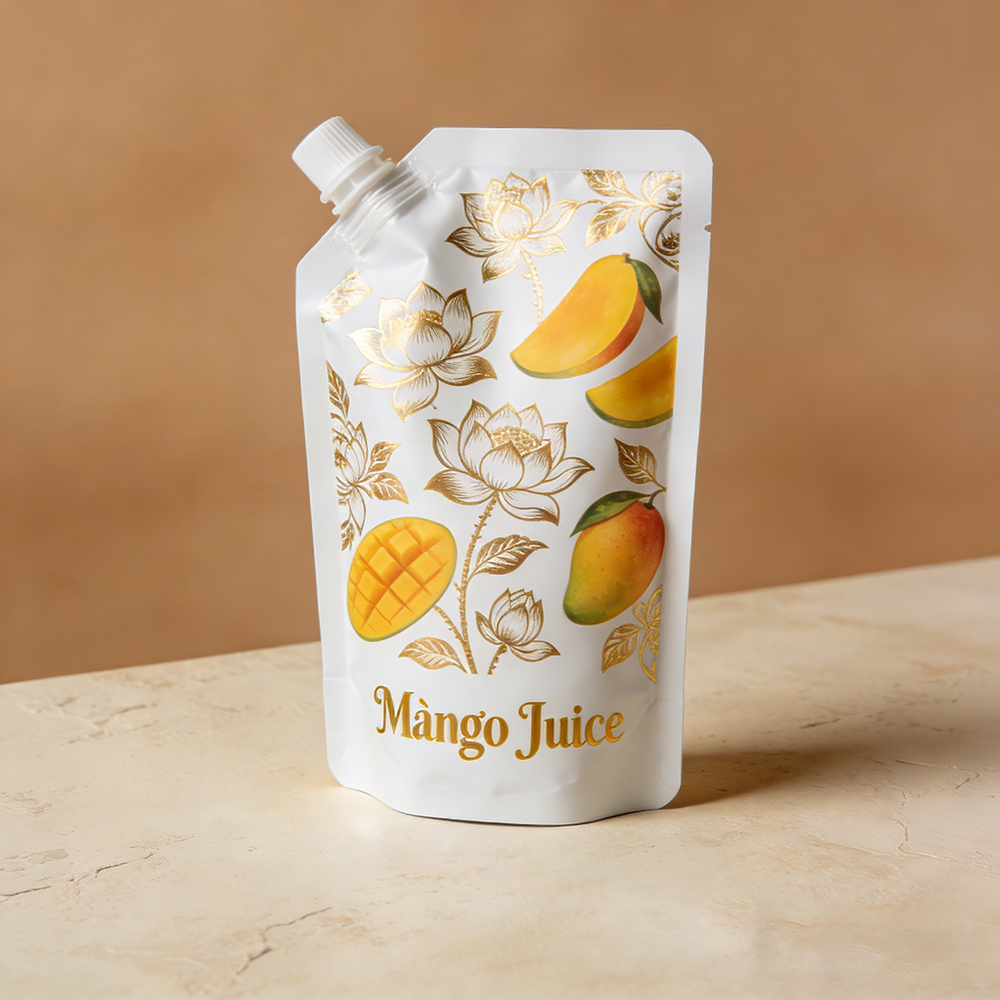
Product Specifications
| Specification | Product Detail |
|---|---|
| Packaging type | Flexible beverage pouch with a dispensing spout |
| Pouch construction | Vertical-seal format; complete seal geometry and any base or gusset must be confirmed |
| Intended contents | Beverages; compatibility must be assessed against the actual formulation |
| Customization | Custom printed; artwork versions, print process, color targets, and coverage require confirmation |
| Material | Flexible laminate selected according to barrier, sealing, filling, and product-contact requirements |
| Spout and cap | Fitment type, opening size, position, cap style, and tamper or child-resistant requirements are specification-dependent |
| Dimensions and capacity | Not universal; determine from target fill volume, product density, headspace, and filling equipment |
| Finish | May be configured according to the selected substrate, print method, and artwork objectives |
| Filling compatibility | Cold fill, hot fill, aseptic, retort, or other processing conditions must not be assumed and require technical confirmation |
Matching the Pouch to the Beverage
Spouted pouches for liquid beverages cannot be sized from a nominal fill volume alone. Beverage density, required headspace, pouch expansion, spout displacement, and the way the pouch is supported during filling all affect usable capacity. Formulations containing pulp, particulates, suspended ingredients, oils, acids, alcohol, or active cannabis ingredients may also change the required fitment, laminate, and sealing evaluation.
A vertical seal identifies part of the pouch construction, but it does not by itself confirm that the package is a stand-up pouch. Buyers should verify the base profile, gusset configuration, seal widths, spout position, opening orientation, and finished die line. These details influence filling stability, shelf presentation, case packing, and how completely the beverage can be dispensed.
Laminate and Beverage Protection
Vertical seal flexible drink pouches may use multilayer laminates configured for mechanical strength, heat sealability, and the required level of oxygen, moisture, aroma, or light protection. No single material structure is correct for every beverage. Barrier performance depends on the complete laminate, fitment interface, cap, seal integrity, storage conditions, and expected distribution period.
- Oxygen control: A suitable barrier layer can help limit oxidation-related flavor, aroma, or color changes.
- Light protection: Opaque or metallized structures may improve light screening, while transparent areas trade product visibility against light protection.
- Puncture and flex resistance: Tougher structures can help withstand handling, but may add stiffness and alter filling or dispensing behavior.
- Heat sealability: The inner sealant layer must suit the vertical seam, perimeter seals, spout installation, product chemistry, and processing temperature.
Claims such as leak resistance or aroma containment should be tied to the selected structure and verified sealing conditions. A printed appearance, including matte, metallic, or clear effects, does not independently establish barrier performance.
Spout, Cap, Filling, and Resealing Decisions
The spout bore should be selected for beverage viscosity, particulates, desired pour rate, and filling equipment. A wider opening can improve flow for thicker products but occupies more package area and may require different fitment handling. A smaller opening can provide more controlled dispensing for thin liquids but may restrict pulp or inclusions. Spout location also affects evacuation, consumer use, artwork space, and how the pouch enters a filling fixture.
An ordinary screw cap or resealable cap is not automatically child-resistant. Cannabis beverage buyers requiring child-resistant packaging must specify the relevant requirement and confirm that the complete closure system has appropriate supporting evidence for the destination market. Tamper evidence, torque requirements, induction components, and filling-line compatibility must likewise be agreed rather than assumed.
Custom Printing and Multi-SKU Control
Custom branded beverage pouch packaging can allocate panels for the product name, flavor or strain identification, ingredients, serving information, warnings, batch coding, and required regulatory text. The printable area depends on the final die line, seals, spout position, folds, and any gusset. Critical copy should remain outside seal zones and distortion areas.
For OEM multi-SKU beverage pouches, procurement teams should provide one approved structural die line and identify every artwork version. Shared dimensions and construction can improve visual consistency across flavors, strengths, or regional versions, while separate artwork files preserve SKU-specific information. Print method, spot colors, white ink, variable coding area, finish, and color tolerances must be confirmed during artwork review.
Key Trade-Offs and Compliance Checks
Higher-barrier laminates may provide greater protection from oxygen or light, but they can change stiffness, appearance, processing behavior, and end-of-life options. A clear panel improves product visibility but reduces light screening in that area. The best specification balances the beverage’s sensitivity, intended distribution, filling method, brand presentation, and market requirements rather than maximizing one feature in isolation.
For cannabis-infused beverages, packaging requirements may address product contact, labeling, warning placement, tamper evidence, child resistance, opacity, and serving presentation. Requirements differ by jurisdiction and product category. Buyers should have the final package, artwork, and closure specification reviewed for the destination market; custom printing or a particular cap style does not itself establish compliance.
Frequently Asked Questions
Can this pouch be used for a cannabis-infused beverage?
It can be specified for a cannabis-infused beverage, but the formulation, filling process, product-contact requirements, closure, labeling, and destination-market rules must be confirmed before production.
Does a vertical seal mean the pouch will stand upright?
No. A vertical seam alone does not establish a stand-up base or gusset. The finished base profile, gusset, dimensions, and seal geometry must be confirmed on the pouch specification.
Which laminate should be used for the beverage?
There is no universal laminate. Selection depends on the beverage chemistry, oxygen and light sensitivity, processing temperature, storage conditions, required stiffness, seal system, and distribution needs.
Is the standard spout cap child-resistant?
Not necessarily. An ordinary resealable cap is different from a child-resistant closure. Any child-resistant requirement must be specified and supported for the complete package and intended market.
What information is needed for an accurate B2B quotation?
Provide the beverage type, formulation considerations, target fill volume, desired pouch dimensions, quantity, artwork count, laminate or barrier needs, spout and cap requirements, finish, filling method, destination market, and applicable compliance needs.
Request a Product-Specific B2B Quote
To request pricing from a wholesale beverage spout pouch supplier, submit the beverage type, target fill volume, desired pouch dimensions, order quantity, number of artwork versions, preferred finish, barrier priorities, spout position and opening requirements, cap type, filling conditions, destination market, and compliance needs. If dimensions are not yet established, include the beverage density, headspace target, product characteristics, and filling-equipment details so the pouch structure can be evaluated before quotation.

Reviews
There are no reviews yet.