
Custom Side-Gusset Bags for Rice Packaging
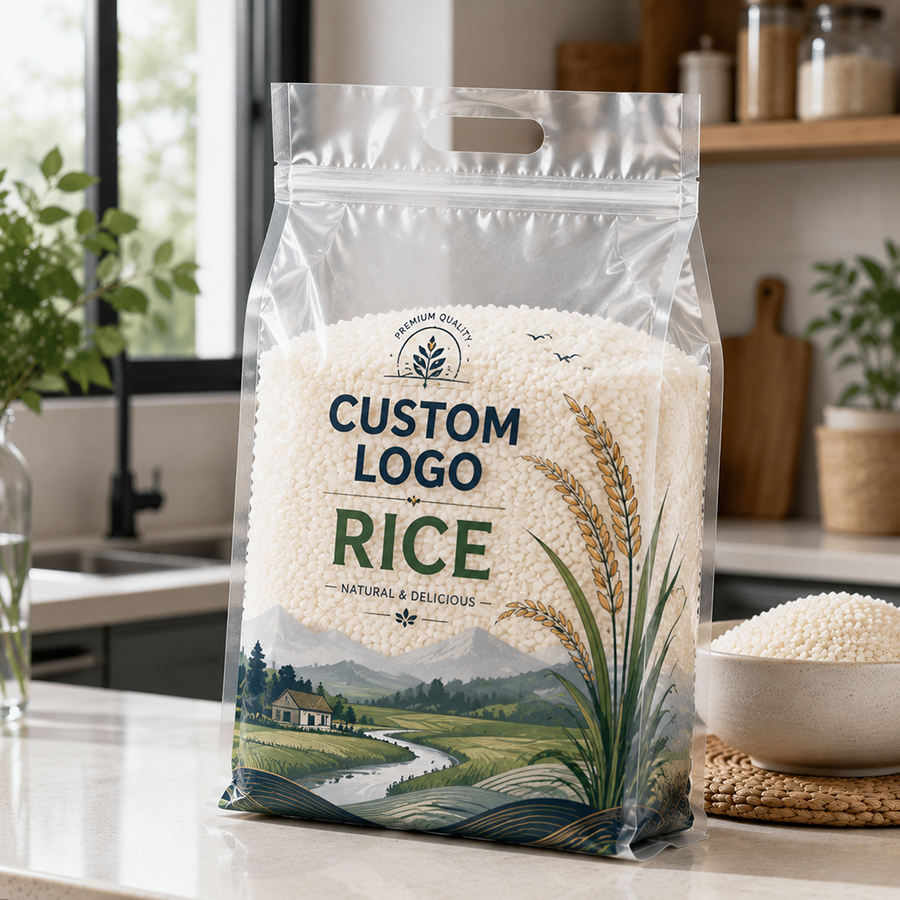
Custom side-gusset bags for rice packaging are flexible pouches with expandable side panels that create additional usable volume for dry rice. They are intended for brands, food distributors, wholesalers, private-label programs, importers and multi-SKU buyers that need the bag dimensions, graphics and packaging structure matched to a specific rice product and filling process.
The side gussets expand as rice enters the bag, helping the package form a rectangular profile rather than remaining completely flat. Final suitability depends on rice type, fill weight, bulk density, desired shelf presentation, laminate, seals and closure configuration. These variables should be confirmed before tooling, printing or production.
Product Specifications
| Specification | Product Information |
|---|---|
| Product type | Custom flexible bag for rice packaging |
| Pouch style | Side-gusset bag |
| Intended contents | Rice; the exact variety, grain format and preparation state must be identified |
| Dimensions and capacity | Custom specification; confirm fill weight, rice density, headspace and required bag dimensions |
| Material or laminate | To be selected according to barrier, stiffness, sealability, appearance and destination-market needs |
| Closure | To be confirmed; heat-seal and optional resealable formats depend on the selected design |
| Printing | Can be configured for custom artwork, subject to the substrate, print process and approved die line |
| Finish | To be confirmed during specification |
| Filling method | Manual or automated compatibility must be verified with the buyer’s filling and sealing equipment |
How the Side Gussets Affect Filling and Display
A side-gusset bag has folds running along both sides. These folds open during filling and allow the package to accommodate more product depth than a comparable flat pouch. The format can produce a compact shelf block and may provide front, back and side panels for branding or instructions, depending on the final construction.
Gusset geometry must match the intended fill. A wider gusset may increase usable volume, but it can also enlarge the shelf footprint and change how artwork appears near the folds. If the bag is undersized, dense rice can place excessive stress on the seals. If it is oversized, excess headspace may create a loose presentation and unnecessary material use. A production trial with the actual rice is preferable to selecting dimensions from fill weight alone.
Laminate and Barrier Decisions
Laminated side-gusset rice bags can be configured from multiple film or flexible packaging layers, but no particular material structure is confirmed by the product name. Each layer may contribute printability, stiffness, puncture resistance, moisture control, oxygen resistance or heat sealability. Barrier performance comes from the complete laminate and sealing system, not from a matte, glossy, metallic or kraft-style appearance by itself.
For dry rice, moisture control is often a central specification because exposure to humid conditions can affect storage quality. Oxygen and light requirements depend on the rice type, processing, expected distribution conditions and required shelf life. Any target barrier values, including OTR or MVTR, require supplier documentation and should be confirmed rather than assumed.
Clear windows can help buyers see the grain, but they may reduce light protection compared with an opaque panel. Likewise, higher-barrier multilayer structures can support demanding distribution conditions, while simpler structures may offer different cost, stiffness or recovery considerations. Buyers should define the needed performance before selecting a laminate instead of specifying more barrier than the application requires.
Size, Rice Density and Headspace
A stated rice weight does not establish one universal bag size. Long-grain, short-grain, parboiled and other rice products can settle differently, and trapped air affects the initial filled volume. The package must also leave suitable headspace for filling control and formation of the top seal.
Buyers requesting barrier pouches for rice storage should provide the target fill weight, actual bulk-density information where available and preferred finished dimensions. Samples filled on the intended line can reveal whether the gussets open consistently, the bag stands or stacks as expected, and rice grains interfere with the sealing area.
Custom Printing and Multi-SKU Artwork
Custom-printed rice packaging bags may carry product names, rice variety, preparation directions, origin statements, lot or date areas, barcodes and destination-market labeling. Available colors, print coverage, reverse or surface printing and finish depend on the selected substrate and printing method. Artwork should be built on the supplier-approved die line because gusset folds, seals and registration tolerances can affect text and graphics.
For OEM private-label rice pouches, use a controlled artwork system across different varieties and pack weights. Shared brand elements can remain consistent while designated panels identify each SKU. The RFQ should state the number of artwork versions and quantity per version, since multiple designs are not the same as one combined production quantity.
Closure, Sealing and Compliance Questions
A heat-sealed top can provide tamper evidence when the seal is properly formed for the selected laminate. A resealable zipper may be configured when repeated consumer access is required, but it changes the filling opening, seal area and usable internal volume. An ordinary zipper is not a tested child-resistant closure and should never be represented as one.
Rice packaging may need suitable food-contact materials and market-specific labeling, migration documentation or traceability information. Requirements vary by destination and application. Buyers should identify the country of sale and applicable standards so the proposed materials and documentation can be reviewed; the product name alone does not establish approval or compliance.
Frequently Asked Questions
What rice weight fits a side-gusset bag?
There is no universal weight-to-size conversion. Fit depends on the rice variety, bulk density, settling behavior, gusset depth, bag dimensions and required sealing headspace. Confirm the size by testing the actual rice at the target fill weight.
Can these bags include a resealable zipper?
A zipper may be configurable, subject to the bag construction and filling method. Buyers should specify whether the package needs repeated opening, a separate top heat seal, tear access or only a permanent production seal.
Are side-gusset rice bags automatically moisture proof?
No. Moisture resistance depends on the complete laminate, seal integrity and storage conditions. Define the required shelf life and distribution environment, then confirm the proposed structure and any relevant barrier data with the supplier.
Can multiple rice varieties use the same bag dimensions?
Possibly, but equal fill weights can occupy different volumes. Each variety should be evaluated for density, headspace and presentation before one dimension is approved across a multi-SKU range.
What artwork information is needed for custom printing?
Provide the number of artwork versions, required print coverage, colors, finish preferences, variable-data areas and destination-market labeling needs. Final artwork should follow the approved die line and account for gusset folds and seal zones.
Request a Product-Specific B2B Quotation
When contacting a wholesale side-gusset bag supplier, provide the rice type, target fill weight, actual product density or a fill sample, desired bag dimensions, order quantity, quantity per artwork version, preferred laminate or barrier need, closure, finish, filling method and destination market. Also identify required food-contact or labeling documentation. These inputs allow the manufacturer to assess pouch geometry, printing, sealing compatibility and the specifications that still require confirmation before an RFQ can be finalized.

Reviews
There are no reviews yet.