
Custom Printed Smell-Proof Stand-Up Pouches for B2B Packaging
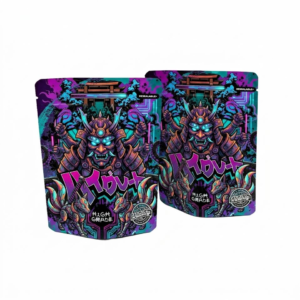
Custom printed smell-proof stand-up pouches are flexible gusseted bags made to display branded artwork while helping contain the aroma of cannabis flower or other odor-sensitive contents when properly sealed. They are relevant to cannabis brands, distributors, wholesalers, private-label buyers, importers, and multi-SKU programs that need a stable retail presentation and a specification tailored to the product. The term “smell-proof” describes the intended odor-control function; actual performance depends on the complete laminate, closure, heat seals, filling process, and storage conditions.
Product Specifications
| Specification | Product Detail |
|---|---|
| Product type | Custom printed flexible stand-up pouch |
| Defining function | Designed to help contain odor when properly filled and sealed |
| Pouch format | Stand-up format with a bottom gusset |
| Printing | Custom printed; artwork method, color requirements, coverage, and print tolerances must be confirmed |
| Material structure | Flexible laminate to be selected according to the required aroma, moisture, oxygen, light, puncture, stiffness, and sealing performance |
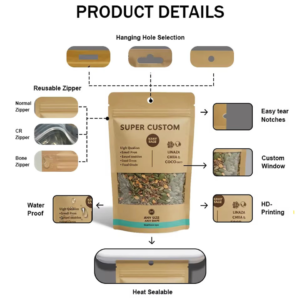
| Closure | Zipper, heat-seal area, tear notch, and any child-resistant requirement are subject to the final specification |
| Size and capacity | Must be determined from the contents, fill weight, product density, headspace, and filling method |
| Finish | To be confirmed from available finish options and the selected print-compatible substrate |
| Intended buyers | Cannabis brands, wholesalers, distributors, OEM or private-label programs, importers, and multi-SKU purchasers |
Stand-Up Format, Gusset, and Filling Behavior
The bottom gusset expands as the pouch is filled, allowing the package to stand when its dimensions, material stiffness, seal geometry, and product distribution are suitable. This format offers a front and back branding area while using less rigid material than a jar or box. It is commonly considered for flower, edibles, and other products that benefit from a resealable flexible package, although the final structure must match the actual contents.
A stated cannabis fill weight does not establish one universal pouch size. Flower density varies by cultivar, trim, cure, and handling, so the buyer should evaluate usable internal volume rather than relying only on nominal weight. Adequate headspace is also needed for filling, zipper operation, and the final top seal. Too much empty space can make the pack look underfilled and allow excess movement; too little can interfere with sealing or compress the product.
Laminate Selection and Odor Control
Smell-resistant weed bags depend on more than the visible pouch surface. Odor containment is influenced by every layer in the laminate and by the continuity of the zipper and heat seals. A configurable structure may combine an outer print layer, one or more functional barrier layers, and an inner sealant layer, but the exact construction must be agreed during specification development.
Barrier requirements should be defined by the packaged product and expected distribution environment. Moisture control can help protect flower from unsuitable environmental exchange, while oxygen and light management may support product quality goals. Puncture resistance matters when stems, hard edible edges, or handling loads can stress the film. Stiffness affects shelf presentation and filling behavior, and the inner layer must provide reliable heat sealability under the selected packing conditions. Requested performance should be validated against the final laminate and sealed pouch rather than inferred from appearance alone.
Closure, Heat Seal, and Child-Resistant Requirements
A press-to-close zipper may provide convenient resealability after opening, but an ordinary zipper is not automatically child-resistant. If the destination market or product category requires child-resistant packaging, the buyer must request an appropriate closure system and confirm the applicable testing, documentation, labeling, and use conditions before ordering.
For retail cannabis packaging, the area above the zipper may be heat sealed to provide an initial sealed boundary before sale. A tear notch can guide opening, subject to the pouch design and seal geometry. Zipper position, top-seal allowance, notch location, and filling clearance should all appear on the approved die line. These details affect both consumer access and production-line usability.
Custom Printing and Multi-SKU Artwork
Custom printed cannabis pouches can carry brand graphics, strain names, product identifiers, warnings, instructions, and variable SKU information within the approved artwork area. Printing capability depends on the substrate, artwork method, finish, color targets, order configuration, and technical limits of the chosen process. Fine text, barcodes, registration-sensitive elements, and colors crossing gussets or seals should be reviewed on the production die line.
For private-label multi-SKU cannabis packaging, consistency should be planned before files are released. Buyers should identify the number of strains or product versions, shared design elements, version-specific colors and text, and whether each artwork version requires a separate production allocation. A controlled naming and approval process reduces the risk of assigning the wrong warning panel, strain name, or regulatory copy to a pouch.
Visibility Versus Barrier Protection
A clear window can be configured when product visibility is important, but it creates a practical trade-off: the contents become easier to inspect while receiving less light protection through the transparent area. Similarly, matte, metallic, holographic, or kraft-style appearance does not by itself establish barrier performance. The complete laminate and sealing system determine functional protection, while the surface treatment primarily influences appearance, print behavior, and tactile feel.
Compliance and Destination-Market Review
Cannabis packaging requirements differ by product type and destination market. Before production, the buyer should determine whether the package needs child-resistant functionality, tamper-evident features, specific warning space, opacity, resealability, or other regulated characteristics. Edible applications may also require suitable food-contact materials and space for ingredients, allergens, serving information, and warnings. These requirements must be confirmed for the final material, closure, artwork, and market; custom printing alone does not establish compliance.
Frequently Asked Questions
Are these pouches completely odor-proof?
No absolute or permanent odor-proof result should be assumed. The pouch is intended to help contain aroma when properly sealed, but performance depends on the selected laminate, closure, heat seals, product, handling, and storage conditions.
What pouch size should be used for a specific flower weight?
Size should be based on actual flower density, usable internal volume, desired headspace, filling method, and zipper clearance. The same fill weight can require different pouch dimensions for different products.
Does a resealable zipper make the pouch child-resistant?
No. A standard resealable zipper is not automatically a tested child-resistant closure. Any child-resistant requirement must be specified and evaluated for the destination market and intended use.
Can each cannabis strain use different printed artwork?
Yes, a multi-SKU program may be configured with different strain or product artwork, subject to the selected printing process, order configuration, file setup, and production requirements.
Can the pouch include a transparent window?
A window may be possible depending on the laminate and design. Buyers should balance product visibility against reduced light protection in the transparent area and confirm the window position on the die line.
Request a Product-Specific B2B Quotation
For an accurate RFQ from a wholesale cannabis pouch supplier, provide the intended contents, fill weight or actual product dimensions, preferred pouch dimensions, total quantity, number of artwork versions, desired laminate or barrier priorities, closure type, finish, filling method, destination market, and applicable compliance needs. Include whether a zipper, top heat seal, tear notch, child-resistant function, window, or special artwork placement is required. These inputs allow the pouch structure, usable volume, print plan, and sealing details to be reviewed against the real application.
Reviews
There are no reviews yet.