
Custom Printed Window Stand-Up Mylar Bags with Zipper
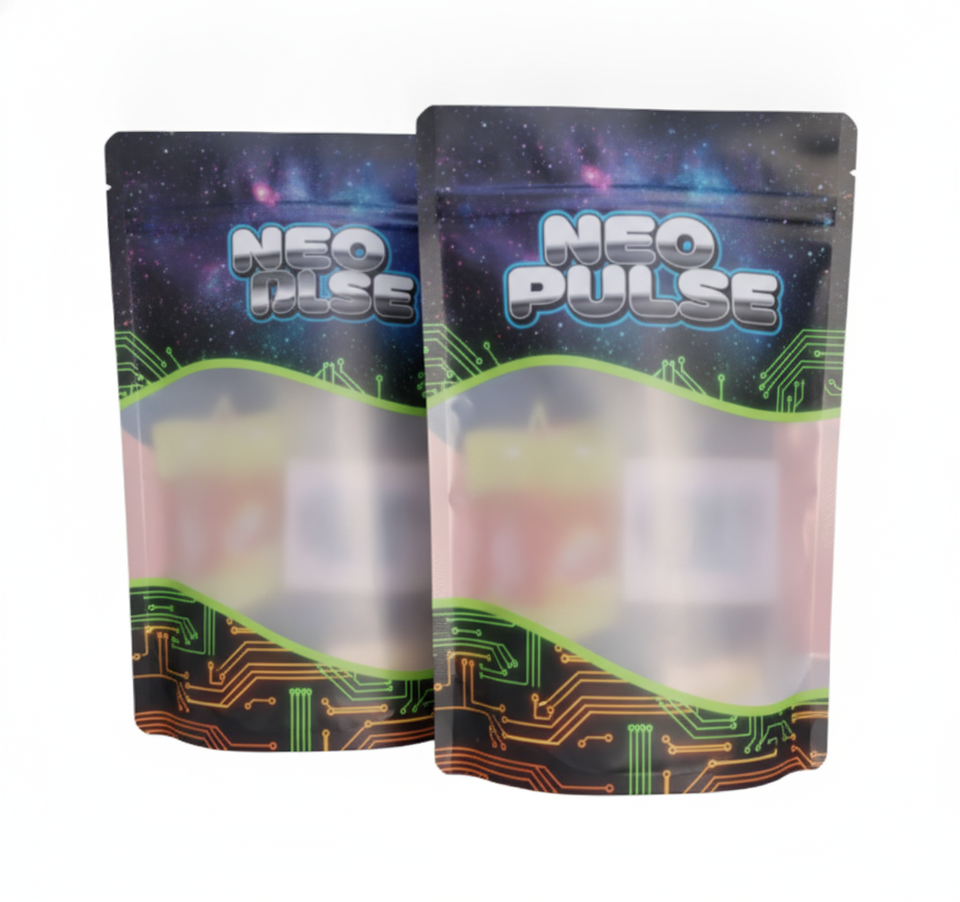
Custom printed window stand-up Mylar bags are flexible pouches combining branded graphics, a clear product-viewing window, a self-supporting format, and a resealable zipper. They are relevant to cannabis brands, distributors, private-label programs, wholesalers, and multi-SKU buyers packaging flower or other products compatible with the selected laminate. The final pouch dimensions, barrier structure, window placement, closure specification, and regulatory artwork must be confirmed before production.
Product Specifications
| Attribute | Product specification |
|---|---|
| Packaging format | Custom printed stand-up flexible pouch |
| Visual feature | Clear window for viewing the packaged contents |
| Closure | Resealable zipper; exact zipper profile requires confirmation |
| Material description | Mylar as stated in the product name; exact film and laminate layers require confirmation |
| Printing | Custom printing; process, color targets, ink coverage, and artwork limits depend on the approved specification |
| Base construction | Stand-up format; gusset depth and seal geometry require confirmation |
| Dimensions and capacity | Buyer-defined according to contents, fill weight, product density, headspace, and filling method |
| Intended B2B applications | Cannabis flower, private-label packaging, strain-specific programs, and other compatible dry products |
| Barrier performance | Depends on the complete laminate, window film, seals, zipper, and storage conditions |
Clear Window Visibility Versus Light Protection
The window lets buyers inspect color, texture, and approximate product condition without opening the pouch. This can be useful for cannabis flower and other products whose visible appearance supports merchandising or product identification.
The trade-off is reduced light shielding within the transparent area. An opaque or metallic-looking printed panel may limit light exposure across the main pouch body, but it does not protect the contents where the window remains clear. Window size and placement should therefore balance product visibility with the light sensitivity of the intended contents. A metallic, matte, holographic, or kraft appearance alone does not establish the underlying barrier structure.
Laminate, Aroma, and Product Protection
Mylar is used here as the stated commercial material description, but buyers should request the exact flexible laminate construction. Individual layers can contribute different properties, including printability, stiffness, puncture resistance, moisture control, oxygen resistance, and heat sealability. The window may use a different transparent film from the printed pouch body, so its contribution to the total barrier must also be evaluated.
For cannabis flower, a suitable laminate and properly formed seals can help contain aroma and limit exposure to external moisture or oxygen. Performance cannot be inferred from appearance or film thickness alone. Odor resistance depends on the full structure, zipper interface, perimeter seals, window construction, filling conditions, and how consistently the pouch is closed. Buyers seeking smell-resistant packaging should define the product, storage period, distribution environment, and required test criteria rather than relying on an absolute smell-proof claim.
Sizing, Gusset, and Filling Behavior
A stated cannabis fill weight does not establish one universal pouch size. Flower density varies by cultivar, trim, moisture condition, and compression tolerance. Correct sizing should be based on actual product trials or representative bulk-density data, not weight alone. Excess internal space can allow movement and create a loosely filled presentation, while insufficient headspace can interfere with zipper use and final sealing.
The bottom gusset expands as the pouch is filled, creating its stand-up footprint. Gusset depth, pouch width, and fill level affect shelf stability and the usable internal volume. The buyer should also account for the area above the zipper, any intended tear notch, the opening needed by manual or automated filling equipment, and clearance required to keep the sealing zone free of product particles.
Zipper, Heat Seal, and Child-Resistant Requirements
The zipper supports repeated opening and closing after first use. It should not be treated as equivalent to a permanent hermetic seal or a tested child-resistant closure. If tamper evidence or an initial barrier seal is required, confirm whether the final construction supports heat sealing above the zipper and establish compatible temperature, pressure, and dwell settings through packaging trials.
An ordinary resealable zipper does not establish child resistance. Buyers serving regulated cannabis markets should specify whether child-resistant functionality is required and request a closure system, test documentation, and finished-package configuration suitable for the destination market. Tear notches, if requested, must be positioned so they work with the top seal and intended opening sequence.
Custom Printing and Multi-SKU Control
Custom printed weed bags with window areas require an artwork dieline that clearly identifies seals, gusset folds, zipper position, tear area, window boundary, and safe zones. Fine text, barcodes, warning panels, and registration-sensitive graphics should not cross folds or seals unless the approved production tolerances support that placement. Transparent areas also affect ink appearance because there is no opaque background unless a white layer is specified.
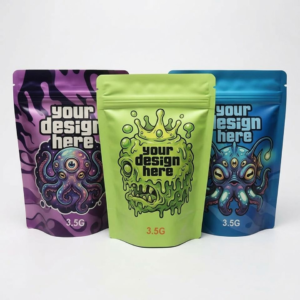
For private label multi-SKU cannabis pouches, maintain a common structural specification while controlling variable strain names, potency panels, colors, and market-specific warnings through an artwork matrix. Each version should have a unique file name and approval record. This reduces the risk of mismatched graphics while preserving consistent pouch dimensions, window placement, filling behavior, and shelf presentation across the range.
Destination-Market and Artwork Review
Cannabis packaging rules vary by jurisdiction and product type. Before approving production, the buyer should review required warnings, universal symbols, net quantity statements, ingredient or serving information where applicable, traceability space, opacity rules, and child-resistant requirements. A clear window may be restricted or unsuitable in some markets or applications. Food-contact requirements may also apply when packaging edibles or other ingestible products. Regulatory suitability and supporting documentation must be confirmed for the finished package and destination market.
Frequently Asked Questions
Does the clear window reduce light protection?
Yes. The transparent area provides less light shielding than an opaque section, so window size and placement should be selected according to the light sensitivity of the contents.
Are these zipper pouches child-resistant?
A standard resealable zipper is not automatically child-resistant. If child resistance is required, specify the destination market and request an appropriate tested closure and finished-package documentation.
How should the correct pouch size for cannabis flower be selected?
Use the actual flower density, target fill weight, desired headspace, zipper clearance, gusset expansion, and filling method. A fill weight by itself is not enough to determine pouch dimensions.
Can the window and artwork change between strains?
Artwork can be developed for multiple strain or SKU versions, subject to the approved dieline, printing process, registration tolerances, and order specification. Keeping the structure consistent can simplify filling and presentation.
What determines whether the pouch helps contain cannabis aroma?
Aroma containment depends on the complete laminate, transparent window film, zipper, perimeter seals, final heat seal when used, and storage conditions. The Mylar name or pouch appearance alone does not establish performance.
Request a Product-Specific B2B Quotation
For an accurate RFQ, provide the intended contents, target fill weight, actual product dimensions or density, desired pouch dimensions, total quantity, number of artwork versions, preferred window shape and location, required laminate or barrier priorities, zipper and child-resistant requirements, finish, filling and sealing method, destination market, and applicable compliance needs. These inputs allow a supplier to assess structure, usable volume, artwork layout, closure selection, and production requirements without relying on unsupported assumptions.
Reviews
There are no reviews yet.