
Custom Printed Die-Cut Smell-Proof Mylar Bags for Candy and Herbs
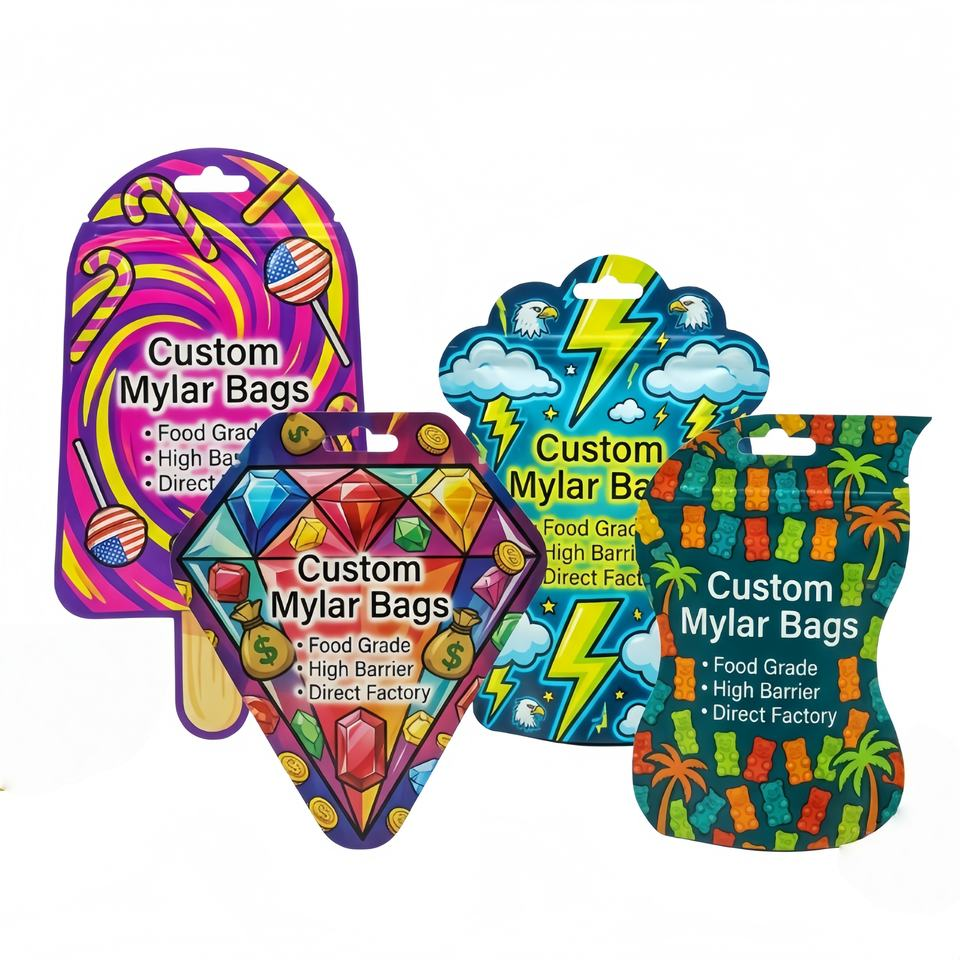
Custom printed die-cut smell-proof Mylar bags are flexible pouches shaped with a defined die line, printed with brand artwork, and intended for candy or herb packaging. They suit cannabis brands, edible producers, distributors, private-label programs, and multi-SKU buyers that need a distinctive pouch profile while helping contain aroma when the selected laminate and sealing system are appropriate.
Product Specifications
| Specification | Product Detail |
|---|---|
| Packaging type | Custom printed die-cut flexible bag |
| Intended contents | Candy and herbs; suitability for a specific product must be confirmed |
| Material description | Mylar; the exact film and laminate structure require buyer confirmation |
| Barrier function | Smell-proof positioning intended to help contain aroma when properly sealed; actual performance depends on the complete laminate, closure, and seals |
| Printing | Custom printed; printing method, ink system, colors, and artwork limits are subject to the final specification |
| Shape | Die-cut; final outline, seal geometry, opening position, and dieline must be confirmed |
| Dimensions and capacity | Not specified; select from actual product volume, fill weight, headspace, and desired pouch dimensions |
| Closure | Not specified; zipper, permanent heat seal, tear notch, or other closure features may be configured subject to feasibility |
| Finish | To be confirmed from available substrate and printing options |
| Child resistance | Not established by the product name; request a suitable tested system if required for the destination market |
How the Die-Cut Format Affects Filling and Use
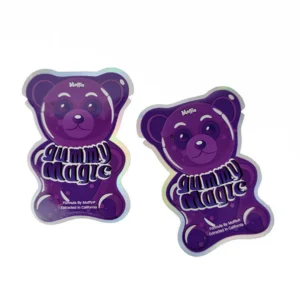
Unlike a conventional rectangular pouch, a die-cut bag uses a shaped perimeter to create a recognizable silhouette. The shape can improve shelf differentiation and reinforce candy, herb, strain, or campaign artwork. However, the external dimensions do not equal the usable internal volume. Curves, narrow sections, seal widths, zipper placement, and the opening position reduce the fillable area.
This creates a practical trade-off: a more intricate shape may deliver stronger visual identity but provide less artwork space, slower manual filling, or reduced usable volume than a simple profile of similar overall size. Buyers should evaluate the proposed dieline using the actual product rather than approving dimensions from fill weight alone.
Laminate Selection and Aroma Control
Mylar is commonly used as commercial language for polyester-based flexible packaging, but the word alone does not define the complete structure. These die-cut Mylar pouches for candy and herbs may be configured with multiple film layers depending on the required stiffness, puncture resistance, heat sealability, and protection from moisture, oxygen, aroma, or light.
Odor resistance comes from the combined laminate and sealing system, not from appearance alone. A metallic, matte, glossy, holographic, or clear presentation does not establish barrier performance. If a window is requested, it can improve product visibility but may reduce light protection in that area. Seal geometry is especially important around shaped edges because contamination, wrinkles, insufficient seal pressure, or an incompatible sealant layer can weaken aroma containment.
For cannabis flower or aromatic herbs, tell the supplier about product density, expected headspace, sharp stems, and desired storage conditions. Barrier targets should be defined through the intended contents and distribution environment rather than relying on an absolute interpretation of “smell-proof.”
Fit for Candy, Edibles, and Herbs
Candy pieces can vary in size, grease content, moisture sensitivity, and surface texture. A pouch for gummies may therefore require different sealant and barrier decisions from one used for dry hard candy. If the candy is a regulated edible, buyers should also confirm applicable food-contact, serving, ingredient, allergen, warning, and cannabis-label requirements without assuming that the pouch is already certified or approved.
Herb and cannabis flower buyers should size odor-resistant cannabis herb bags by measured product volume as well as nominal fill weight. Flower density varies, and excess compression can affect presentation while excessive headspace increases package size and internal movement. A physical fill test is the most reliable way to assess fit.
Zippers, Heat Seals, and Child-Resistant Requirements
A resealable zipper may support repeated opening, but it is not automatically child-resistant. If regulations require child-resistant packaging, the closure and complete package should use an appropriate tested design for the relevant market. This requirement must be stated during the RFQ rather than inferred from a zipper image or pouch description.
A permanent top heat seal can provide tamper evidence when correctly designed and applied. Tear notches may make opening easier, but their location must work with the shaped outline, zipper, and artwork. Buyers should identify whether pouches will be hand filled or machine filled because the opening width, seal area, and pouch stiffness influence production handling.
Custom Printing and Multi-SKU Artwork
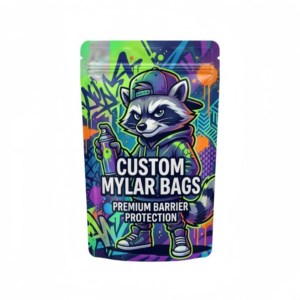
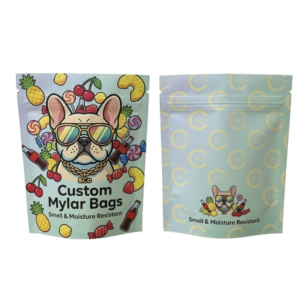
Custom printed shaped Mylar pouches can carry logos, flavor or strain names, potency and warning areas, product information, and variable SKU artwork. The printable area follows the approved dieline; seals, curves, notches, and closure components should remain clear unless the artwork template allows printing there.
For private-label multi-SKU weed packaging, provide the number of artwork versions and identify which elements remain common across the range. Consistent color references, typography, warning placement, and dieline control help keep strain or flavor families visually aligned. Printing method, color capability, white ink, metallic effects, finish, and artwork tolerances must be confirmed against the selected substrate.
RFQ and Destination-Market Review
Package rules differ by product type and destination. Before production, the buyer is responsible for identifying required warnings, symbols, opacity, child resistance, tamper evidence, labeling space, and food-contact expectations. The final structure should also be reviewed for compatibility with the contents and filling process.
- State whether the contents are candy, a cannabis edible, dry herbs, or cannabis flower.
- Provide fill weight and the actual product volume or representative samples.
- Specify desired pouch dimensions, die-cut shape, opening position, and headspace.
- List closure, tear notch, heat-seal, barrier, finish, and window preferences.
- Provide order quantity, artwork count, print files, and multi-SKU requirements.
- Identify the filling method, destination market, and applicable compliance needs.
Frequently Asked Questions
Are these bags guaranteed to block every odor?
No. They are intended to help contain aroma when properly sealed, but performance depends on the complete laminate, closure, edge seals, contents, and handling conditions.
Does a stated herb fill weight determine the pouch size?
No. Herb and flower density vary, so buyers should confirm actual product volume, desired headspace, opening width, and the usable area inside the die-cut seals.
Can the die-cut bag include a resealable zipper?
A zipper may be configured if it is compatible with the selected shape, opening position, laminate, and seal geometry. The exact closure must be confirmed during technical review.
Is an ordinary zipper child-resistant?
No. A standard resealable zipper should not be treated as child-resistant. Request an appropriate tested package system if child resistance is required in the destination market.
Can one pouch design support multiple flavors or strains?
Yes, a common dieline may support multiple artwork versions when the product fit and required information remain compatible. Submit every SKU and identify shared and variable design elements for quotation.
Request a Product-Specific B2B Quote
Request an RFQ for custom printed die-cut smell-proof Mylar bags by sending the intended contents, fill weight, actual product volume, preferred pouch dimensions, die-cut concept, quantity, artwork versions, laminate or barrier needs, closure, finish, filling method, destination market, and compliance requirements. These inputs allow the proposed shape, usable volume, print layout, and sealing approach to be reviewed before quotation.

Reviews
There are no reviews yet.