
Custom Holographic Die-Cut Pouches for Edible Packaging
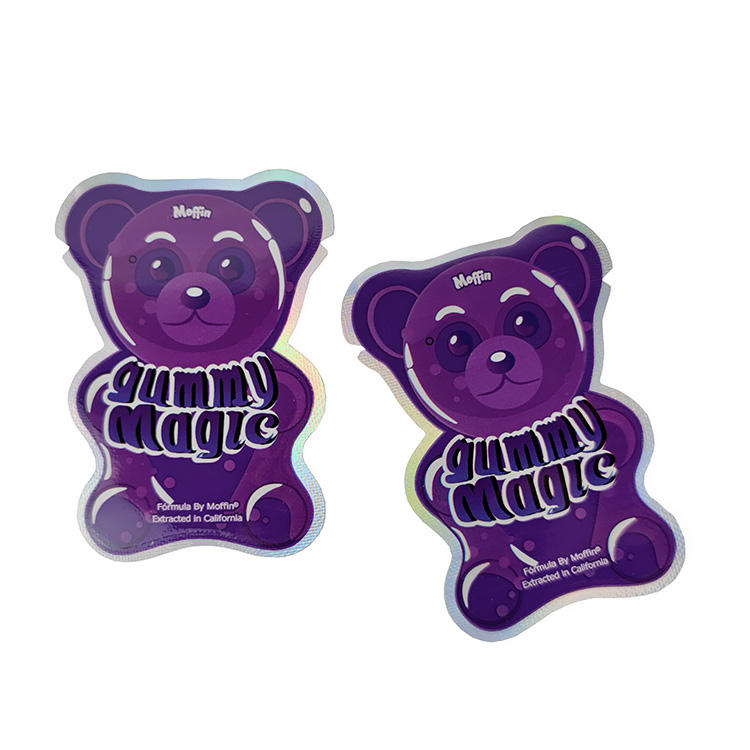
Custom holographic die-cut pouches are shaped flexible packages intended for cannabis edibles and related portioned products. Their defining attributes are a holographic visual effect and a custom die-cut profile rather than a conventional rectangular bag. They are relevant to cannabis brands, distributors, private-label programs, wholesalers, and multi-SKU buyers seeking distinctive shelf presentation. The pouch dimensions, laminate, closure, print process, seal layout, and regulatory features must be specified for the intended edible and destination market.
Product Specifications
| Product type | Custom holographic die-cut flexible pouch |
|---|---|
| Intended use | Packaging for cannabis edibles; suitability must be confirmed for the specific food format |
| Pouch profile | Custom die-cut shape subject to an approved die line and seal geometry |
| Appearance | Holographic effect; exact color shift, reflectivity, finish, and print interaction require confirmation |
| Material structure | Flexible film or laminate structure to be selected according to barrier, sealing, and food-contact requirements |
| Closure | Open-top heat-seal, resealable zipper, or another configured closure may be considered; child-resistant performance is separate and must be specified |
| Printing | Custom printing may be configured subject to artwork, substrate, color, and process review |
| Dimensions and capacity | Buyer confirmation required based on edible dimensions, count, fill weight, headspace, and filling method |
| Compliance inputs | Destination-market labeling, food-contact, warning, tamper-evidence, and child-resistant requirements must be identified by the buyer |
What These Die-Cut Pouches Are Designed to Package
These cannabis edible packaging bags can be evaluated for gummies, candies, chocolates, baked pieces, or other portioned edibles, but the product format materially affects the specification. Gummies may require attention to moisture and product sticking. Chocolate can be sensitive to heat and aroma transfer. Baked or coated products may introduce grease that affects the interior layer and seal area. The buyer should therefore identify the actual edible, piece count, fill weight, and expected storage conditions instead of selecting a pouch from weight alone.
A stated edible weight does not establish one universal pouch size. Two products with the same net weight can occupy very different volumes because piece dimensions, shape, density, wrapping, and packing orientation differ. Physical fill trials are useful for confirming usable volume, opening access, headspace, and whether the package distorts after loading.
Holographic Appearance Versus Functional Barrier
The holographic effect creates a reflective, color-shifting presentation that can distinguish flavor, potency, or product families. It does not by itself establish moisture, oxygen, aroma, grease, or light-barrier performance. Those functions depend on the complete laminate, including each film layer, barrier component, adhesive or coating, sealant layer, and the integrity of the finished seals.
A configured laminate may help contain aroma and limit exposure to moisture or oxygen when properly sealed. Puncture resistance and stiffness also depend on film selection and total structure. A stiffer construction can improve shape retention and handling, while a more flexible construction may conform more closely to the contents. Required food-contact suitability and any migration documentation should be reviewed for the selected structure and destination market rather than inferred from appearance.
Die-Cut Shape, Seal Geometry, and Filling
Unlike standard rectangular bags, die-cut flexible packaging pouches use a shaped perimeter. The approved die line must reserve enough room for perimeter seals, the opening, any zipper, tear notches, mandatory text, and registration tolerances. Narrow corners or decorative projections can reduce usable internal volume and create areas that are harder to fill or seal consistently.
This creates a practical trade-off: a more elaborate silhouette can improve visual recognition, but it may reduce artwork area, filling access, stacking efficiency, and internal capacity relative to the pouch’s overall dimensions. Procurement teams should compare the outside profile with the usable cavity rather than evaluating only the maximum width and height. The filling method should also be disclosed because manual loading and automated filling can require different opening widths and pouch presentation.
Closure, Heat Seal, and Child-Resistant Requirements
The closure should match how the edible will be consumed. An open-top pouch can be filled and permanently heat sealed. A resealable zipper may support repeated access and help maintain package organization after opening, but the zipper must be compatible with the pouch shape and leave enough room for a final top seal where required. Tear notches may be configured to guide opening, subject to the die line and closure layout.
An ordinary press-to-close zipper is not automatically child-resistant. If child-resistant packaging is required, the buyer must request an appropriate closure system and identify the applicable destination-market rules and testing expectations. Tamper-evident presentation, warning placement, serving information, and required symbols are also separate specification decisions. No holographic film, zipper, or heat seal should be assumed to establish compliance without evaluation of the complete package.
Custom Printing and Multi-SKU Artwork Control
Custom printed edible pouches may combine the holographic substrate effect with brand graphics, flavor coding, product imagery, warnings, and variable SKU information. Artwork must account for the shaped trim, seal zones, opening position, and areas where reflectivity can reduce contrast. White ink or controlled opaque areas may be considered when accurate color or text legibility is needed over a holographic background, depending on the selected print method and substrate.
For private-label multi-SKU edible pouches, maintain a common die line, regulatory information hierarchy, color targets, and finish specification across artwork versions. Flavor names, potency statements, net quantity, lot or date areas, and market-specific warnings should be reviewed separately for each SKU. Buyers should provide editable artwork and identify which elements are common, variable, or intentionally left for later coding.
Questions Buyers Often Ask
Does the holographic finish make the pouch high barrier?
No. Holographic appearance does not establish barrier performance. Moisture, oxygen, aroma, light, and grease protection depend on the complete laminate and sealing system selected for the edible.
Can these pouches include a resealable zipper?
A resealable zipper may be configured if the pouch shape, opening width, seal layout, and filling process allow it. The closure must be confirmed during structural review.
Is a resealable zipper the same as a child-resistant closure?
No. A standard resealable zipper is not automatically child-resistant. Child-resistant requirements must be specified separately and evaluated against the applicable market rules and required testing.
How should the pouch size be selected for gummies or other edibles?
Use the edible’s actual piece dimensions, count, density, fill weight, packing orientation, and required headspace. A physical fill trial can verify usable volume and opening access before final production.
Will all artwork remain visible on a custom die-cut shape?
Not necessarily. The die line, perimeter seals, zipper, tear area, trim tolerances, and holographic reflectivity can limit printable or readable space. Artwork should be reviewed on the final structural template.
Request a Product-Specific B2B Quotation
For an RFQ from a wholesale holographic pouch supplier, provide the edible type, piece count, fill weight, actual product dimensions, desired pouch dimensions or target shape, order quantity, number of artwork versions, preferred barrier needs, closure, finish, filling method, and destination market. Also identify food-contact documentation, warning space, tamper-evident features, or child-resistant requirements that must be considered. These inputs allow the laminate, die line, opening, seal geometry, and print plan to be reviewed for the intended product instead of quoting an unsuitable generic pouch.
Reviews
There are no reviews yet.