
3.5g–28g Child-Resistant Cookie and Candy Mylar Bags
These child-resistant cookie and candy Mylar bags are flexible pouches identified for 3.5g–28g fills of cannabis cookies, candies, and similar edible products. They are intended for cannabis brands, edible manufacturers, distributors, wholesalers, and private-label buyers that need to coordinate child-resistant access, barrier performance, resealability, artwork, and multiple product versions. The stated weight range does not establish one universal pouch dimension; the correct format must be matched to the edible’s physical size, density, shape, and required headspace.
Product Specifications
| Product type | Flexible Mylar bags for cookies, candy, and cannabis edibles |
|---|---|
| Stated fill-weight range | 3.5g–28g |
| Defining closure function | Child-resistant; exact closure mechanism and applicable test standard require confirmation |
| Material | Mylar flexible film; complete laminate structure and layer composition require confirmation |
| Pouch dimensions | Not specified; select according to product dimensions, volume, headspace, and filling method |
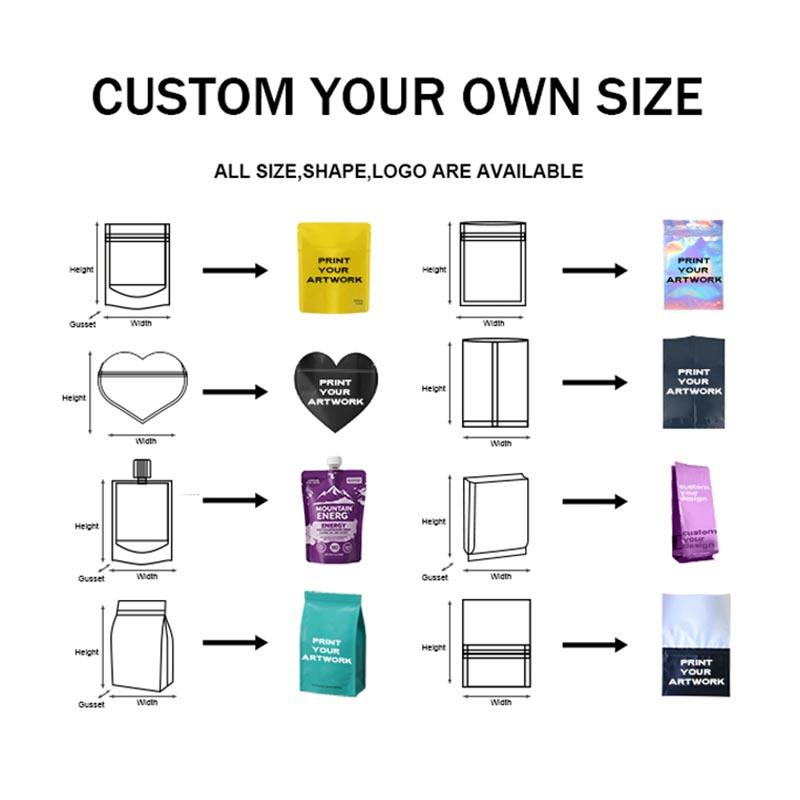
| Pouch style | Final flat, gusseted, or stand-up configuration requires confirmation |
| Barrier performance | Depends on the complete laminate, closure, and heat-seal specification |
| Printing and finish | Custom printing, artwork coverage, colors, and finish may be configured subject to final specification |
| Intended buyers | Cannabis brands, edible producers, distributors, wholesalers, importers, and OEM or private-label programs |
Matching the Pouch to Cookies and Candy
Edible weight alone is not enough to choose a bag. A dense 10g candy can occupy less volume than a lightweight 10g cookie, while brittle, coated, or irregular products may need additional clearance to reduce scuffing or breakage during loading. Buyers should provide the actual product length, width, thickness, piece count, and target net weight in addition to the requested pouch dimensions.
Headspace affects filling efficiency and presentation. Too little space can place the product in the zipper or heat-seal zone, causing poor closure conditions or crushing. Excessive headspace can allow more movement and make the package appear oversized. If a gusseted or stand-up format is requested, the gusset depth and bottom-seal geometry should be evaluated with filled-product samples rather than selected from weight alone.
Laminate, Aroma, Moisture, and Grease Control
High-barrier Mylar edible pouches may use multilayer film structures configured for stiffness, puncture resistance, heat sealability, and protection from environmental exposure. The word “Mylar” or a metallic appearance does not define the full laminate or establish a measured oxygen or moisture barrier. Buyers needing specific protection should identify the product’s sensitivity and request the proposed film structure and relevant performance data for review.
For cookies, moisture control can influence texture, while candy may require attention to humidity, aroma, oils, or grease migration. An appropriate laminate, combined with intact seals, can help contain aroma and limit exposure to moisture, oxygen, and light. Actual performance depends on every layer, the zipper design, seal integrity, storage conditions, and how often the package is opened. A clear window can improve product visibility but generally creates a trade-off against light protection, depending on its construction.
Child-Resistant Closure Versus an Ordinary Zipper
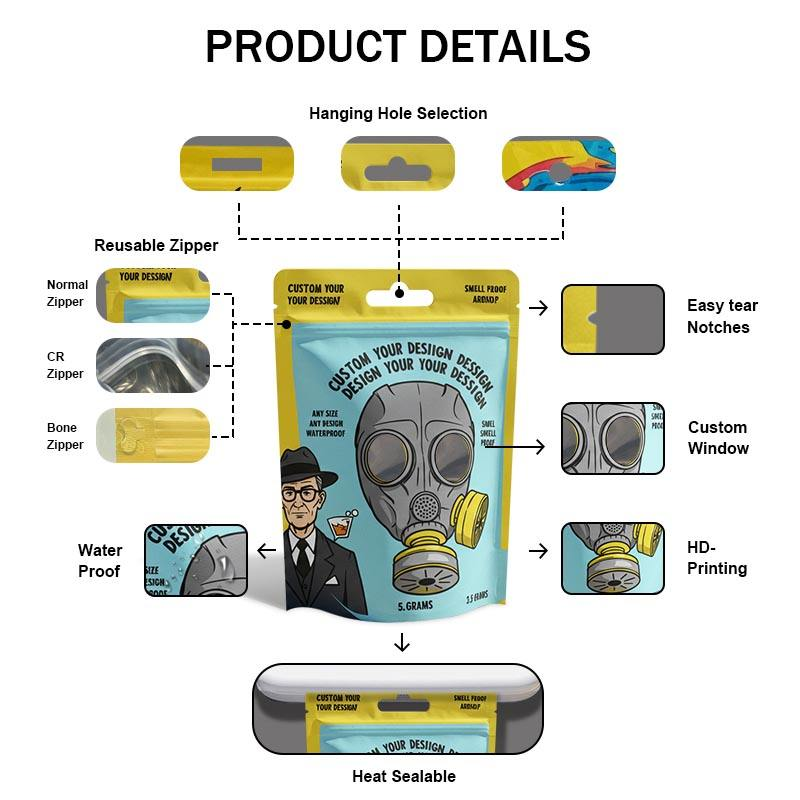
A standard press-to-close zipper is not automatically child-resistant. These bags are identified as child-resistant, but procurement teams should confirm the exact opening sequence, whether a separate permanent heat seal is required, the intended use conditions, and the test standard or documentation relevant to the destination market. A resealable cannabis edible packaging format may help consumers close the pouch between uses, but resealability and child resistance are separate specification questions.
Tear notches can make the initial opening easier after the top seal is removed, yet their position must not undermine the intended child-resistant mechanism. The zipper, notch, top-seal width, and opening instructions should therefore be reviewed together on the final die line. Production filling and sealing equipment must also be compatible with the selected film and seal area.
Custom Printing and Multi-SKU Artwork
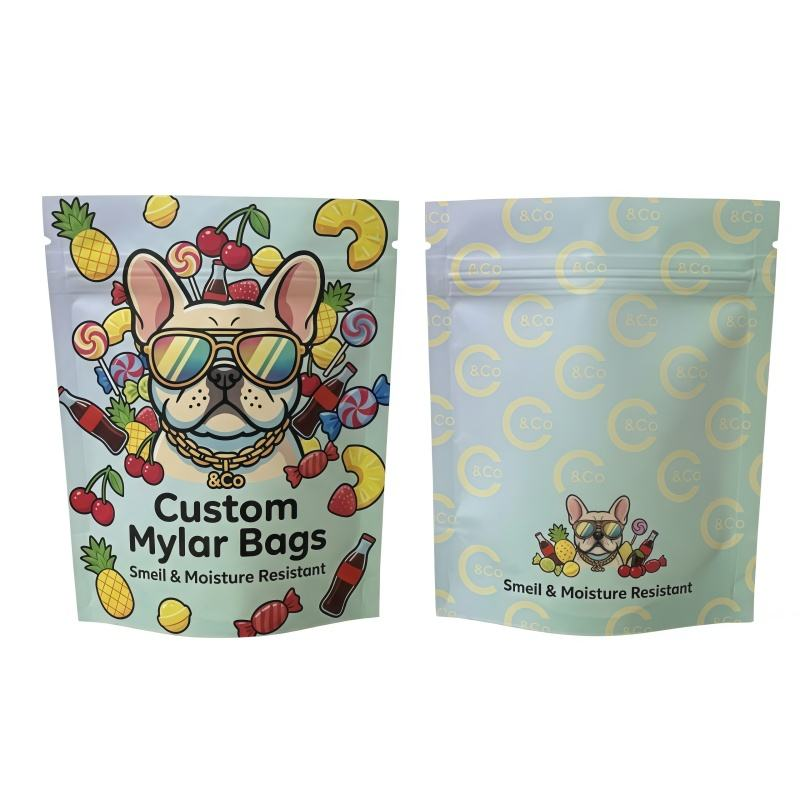
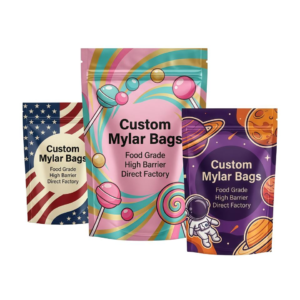
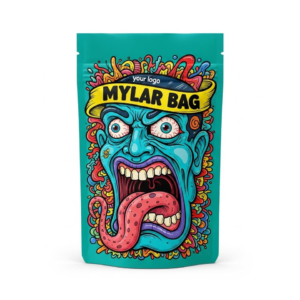
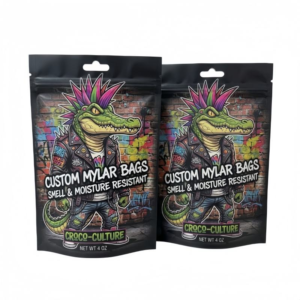
Custom printed cookie and candy bags can be specified with brand graphics, product names, flavor or strain identifiers, warnings, ingredients, serving information, and other required copy, subject to the printing process and destination-market rules. Artwork planning should reserve space for seals, zipper components, tear features, registration tolerances, and any area distorted by a gusset.
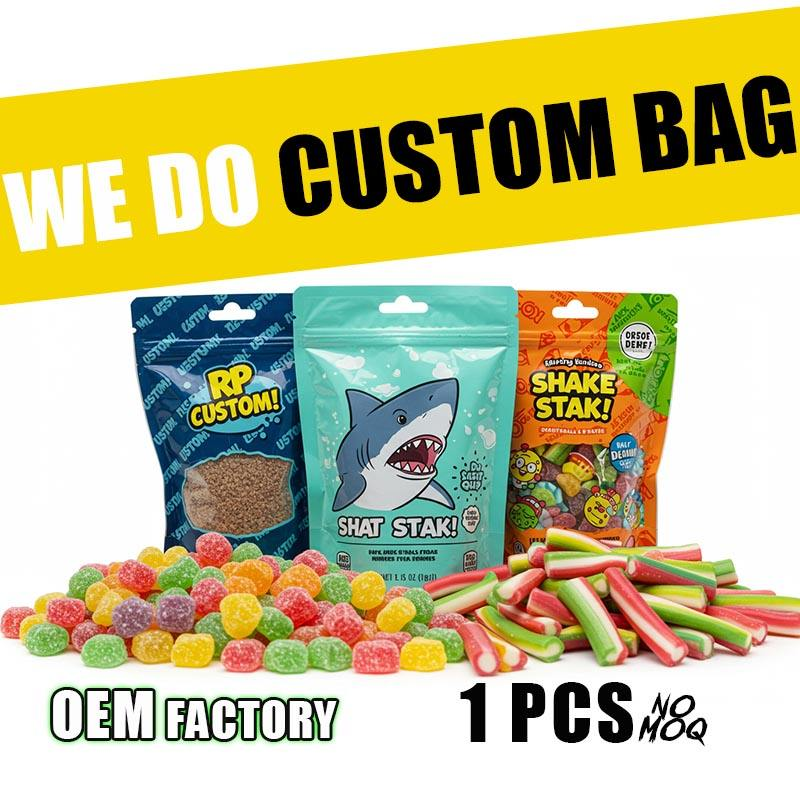
For private label multi-SKU cannabis pouches, use one controlled artwork system for flavor colors, net-weight statements, warning panels, and variable product information. Confirm whether all SKUs share one pouch size and laminate or require separate die lines. Matte, gloss, metallic, holographic, or kraft-style appearances may be considered conditionally, but a visual finish does not by itself establish barrier performance or food-contact suitability.
Compliance and Food-Contact Questions
Cannabis edible packaging requirements vary by jurisdiction and product type. Before ordering, the buyer should verify child-resistant packaging rules, tamper-evident expectations, opacity restrictions, warning symbols, label language, net-content declarations, serving information, and any restrictions on graphics that may appeal to children. Food-contact requirements for the complete film, inks, adhesives, and coatings should also be included in the specification request.
Do not treat a generic child-resistant description as proof that a finished package meets every market’s rules. Compliance depends on the exact closure, final construction, supporting documentation, filled-product use, labeling, and destination. A wholesale cannabis packaging supplier should be given the applicable market and documentation requirements before quoting.
Key Procurement Trade-Off
A thicker or more rigid laminate may improve handling, shape retention, and puncture resistance, but it can increase material use and change folding, opening, and sealing behavior. A softer structure may conform more closely around cookies or candy but provide less presentation stiffness. Similarly, a strong barrier structure can support product protection, while a window improves visibility. The preferred balance should be decided using the actual edible, distribution conditions, shelf-life objective, and filling process.
Frequently Asked Questions
Does the 3.5g–28g range define the bag dimensions?
No. The 3.5g–28g range identifies fill weight, not one fixed pouch size. Final dimensions depend on product density, piece count, physical dimensions, headspace, and filling method.
Is a resealable zipper automatically child-resistant?
No. An ordinary resealable zipper is not automatically child-resistant. Confirm the specific closure mechanism, opening sequence, intended use, test standard, and supporting documentation for the destination market.
Are these bags guaranteed to be smell proof?
No absolute odor claim should be inferred. A suitable laminate and properly made seals can help contain aroma, but performance depends on the complete structure, zipper, heat seals, storage conditions, and repeated opening.
Can the bags be custom printed for several edible SKUs?
Custom printing and coordinated multi-SKU artwork may be configured subject to the selected printing process, pouch structure, order specification, and artwork review. Each size or die line should be confirmed separately.
What should be checked for cookies versus candy?
For cookies, review breakage risk, crumbs, product thickness, and moisture sensitivity. For candy, review piece count, oils or grease, humidity sensitivity, shape, and the possibility of product contact with the zipper or seal area.
Request a Product-Specific B2B Quote
For an RFQ, provide the edible type, target fill weight, piece count, actual product dimensions, preferred pouch dimensions, order quantity, number of artwork versions, desired pouch style, child-resistant closure requirements, laminate or barrier needs, finish, filling and heat-sealing method, and destination market. Include any food-contact, child-resistant, labeling, or documentation requirements that must be reviewed. These inputs allow the proposed bag structure and artwork layout to be evaluated against the real cookie or candy rather than weight alone.

Reviews
There are no reviews yet.