
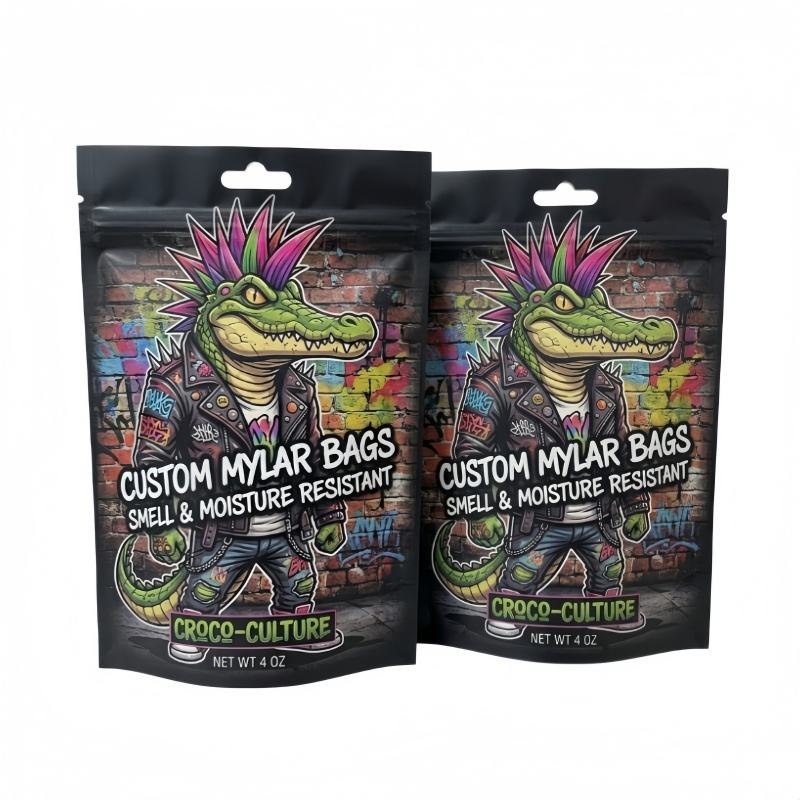
3.5g–28g Cali Mylar Bags for Cookies and Supplements
3.5g–28g Cali Mylar bags are flexible packaging pouches intended for cookies, supplements, and related multi-SKU product lines. The stated weight range supports several pack formats, while the actual pouch dimensions, laminate, closure, and barrier level must be matched to the contents. These bags are relevant to cannabis brands, supplement companies, distributors, wholesalers, private-label buyers, and importers sourcing coordinated packaging in bulk.
Product Specifications
| Product type | Cali-style flexible Mylar bags |
|---|---|
| Stated fill-weight range | 3.5g–28g; final pouch size must be confirmed for the actual product |
| Intended contents | Cookies and supplements |
| Material | Described as Mylar; exact film and multilayer laminate structure require confirmation |
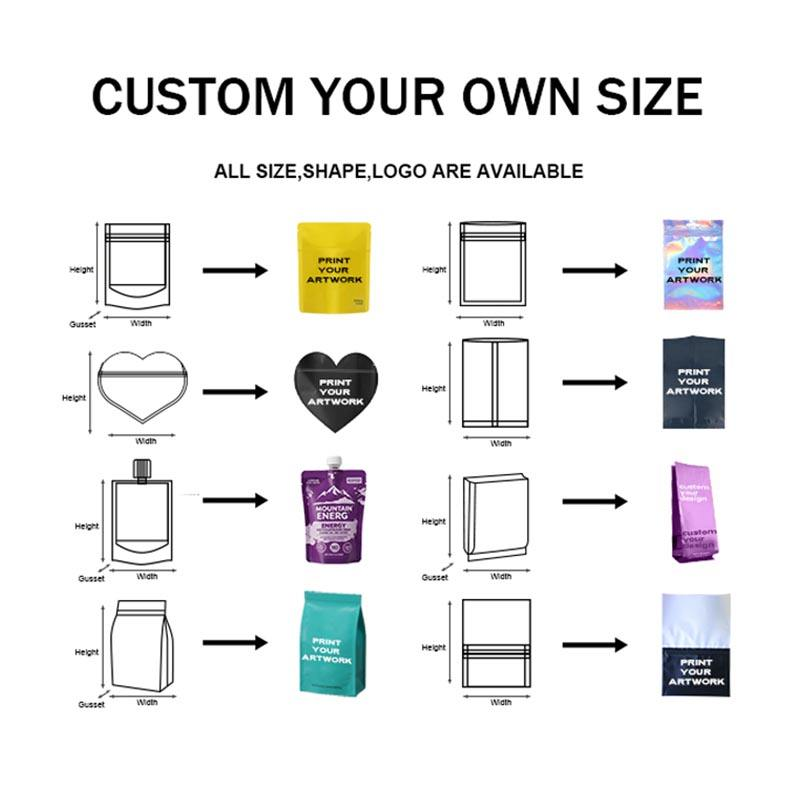
| Pouch dimensions | To be specified according to product volume, density, headspace, and filling method |
| Pouch style | Final format, gusset configuration, and seal geometry require confirmation |
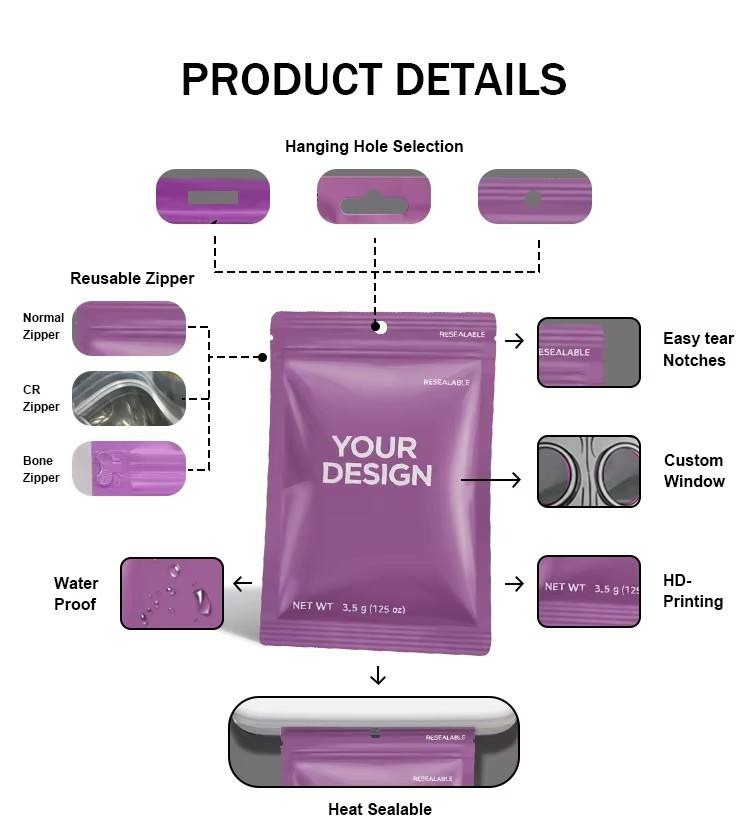
| Closure | Zipper, heat-seal area, tear notch, or child-resistant system may be configured subject to the final specification |
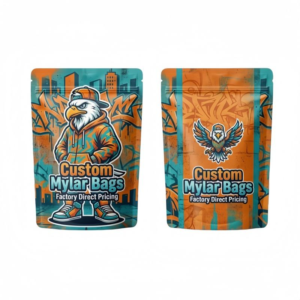
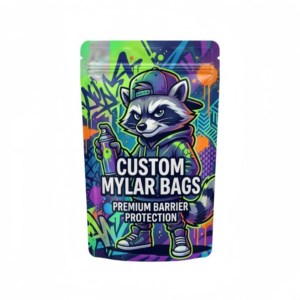
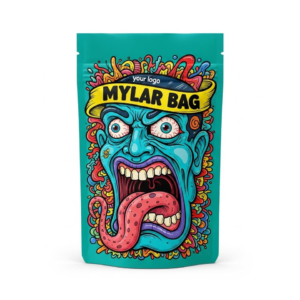
| Printing | Custom artwork and multi-SKU printing may be specified |
| Finish | Matte, gloss, metallic, or other appearance options may be available depending on the substrate and print process |
| Buyer type | Brands, distributors, wholesalers, OEM/ODM programs, private-label buyers, importers, and multi-SKU purchasers |
Match Each Weight to Product Volume
A 3.5g or 28g label does not establish one universal pouch size. Cookie dimensions, breakage sensitivity, supplement form, bulk density, and required headspace can produce very different volume requirements at the same net weight. A dense powdered supplement may occupy less space than lightweight pieces, while a cookie may require extra clearance to reduce edge damage during insertion and transport.
Buyers should provide the product’s actual length, width, thickness, or measured filled volume whenever possible. A physical filling trial is preferable when the product is irregular, fragile, or sensitive to compression. The selected pouch must also leave sufficient top-seal space above the contents. Excessive headspace increases material use and pack movement, but insufficient headspace can interfere with zipper operation and heat sealing.
Laminate and Barrier Decisions
The term “Mylar bag” is commonly used for flexible barrier packaging, but it does not by itself confirm the complete laminate. Multilayer Cali flexible pouches can be configured with printable outer film, barrier layers, and a heat-sealable inner layer, depending on the required use. The complete structure affects stiffness, puncture resistance, moisture and oxygen transmission, aroma retention, light protection, and seal performance.
For aromatic contents, a suitable laminate and correctly formed seals can help contain aroma and provide smell-resistant performance. This should not be treated as a permanent smell-proof guarantee. Barrier results depend on film selection, zipper design, heat-seal settings, storage conditions, and whether the pouch is repeatedly opened. Cookies may also require consideration of moisture and grease exposure, while supplements may have different sensitivity to humidity, oxygen, or light.
Opaque or metallized structures can improve light shielding, depending on the complete laminate. A clear window improves product visibility but creates a trade-off by reducing light protection in the window area. Higher-barrier structures can also be stiffer and more expensive than simpler films, so the specification should reflect the product’s actual shelf-life and distribution needs rather than appearance alone.
Pouch Format, Filling, and Closure
The desired pouch style should be confirmed at quotation. A gusseted format can provide more usable volume and may stand for display when its proportions and contents support it. A flat pouch can reduce material and shipping volume but may provide less depth for thick cookies or bulky supplement formats. Seal width, opening position, gusset depth, and zipper placement all affect filling efficiency and usable artwork area.
A resealable zipper provides consumer convenience after opening, while the area above the zipper may be heat sealed to create initial pack closure. A tear notch can guide opening when positioned correctly relative to the zipper and artwork. An ordinary press-to-close zipper is not automatically child-resistant. If child-resistant packaging is required, buyers must request a specific closure system and confirm applicable testing and documentation for the destination market.
Custom Printing and Multi-SKU Control
Custom printed Cali bags can carry product names, flavor or strain identifiers, ingredient information, warnings, directions, batch fields, and brand artwork, subject to the approved dieline and local labeling rules. Print feasibility depends on pouch dimensions, seal zones, gussets, zipper placement, substrate, finish, and printing process. Fine text, metallic effects, heavy ink coverage, and variable artwork should be reviewed before production.
Private-label multi-SKU Mylar pouches benefit from a controlled visual system. Buyers can keep logos, warning locations, finish, and structural specifications consistent while changing colors and product identifiers between SKUs. The RFQ should state the total order quantity and quantity per artwork version. This allows a wholesale Cali bag supplier to evaluate whether all variants can use one pouch structure and dieline without implying that print setup or order requirements are identical for every project.
Food, Supplement, and Cannabis Market Requirements
Packaging requirements depend on the contents and destination market. For cookies or other ingestible products, buyers should identify any food-contact, allergen-labeling, grease-resistance, tamper-evidence, or serving-information needs. Supplement packaging may require room for ingredients, directions, warnings, lot coding, and expiration information. Cannabis-related applications can introduce additional rules for child resistance, opacity, universal symbols, resealability, and state or national warnings.
No material description or Cali-style appearance establishes regulatory compliance. Buyers should confirm the required material documentation, migration or food-contact evidence, child-resistant test basis, labeling layout, and local packaging rules before approving production. Final compliance remains dependent on the complete package, contents, closure, printed information, and destination jurisdiction.
Frequently Asked Questions
Does the 3.5g–28g range determine the bag dimensions?
No. Net weight alone does not determine pouch dimensions because cookies and supplements vary in density, shape, thickness, and required headspace. Confirm the size through product measurements or a filling trial.
Are these bags guaranteed to be smell proof?
No absolute smell-proof guarantee should be inferred. A suitable laminate, zipper, and heat seal can help contain aroma when properly sealed, but performance depends on the complete structure, sealing conditions, storage, and repeated opening.
Can these Cali bags be custom printed for multiple products?
Custom printing and multiple artwork versions may be specified. Provide the artwork count, quantity per version, shared design elements, finish, and required variable information so print feasibility can be reviewed.
Is a resealable zipper the same as a child-resistant closure?
No. A standard resealable zipper provides reclosure but is not automatically child-resistant. Request a specific child-resistant system and confirm its testing and suitability for the destination market when required.
What should be checked for cookies and supplements?
Check product dimensions, density, breakage risk, grease or moisture exposure, required barrier, seal integrity, labeling space, food-contact documentation needs, and the regulations applicable to the destination market.
Request a Product-Specific B2B Quotation
For an accurate RFQ, provide the contents, target fill weight, actual product dimensions or volume, desired pouch dimensions, total quantity, quantity per artwork version, preferred pouch style, laminate or barrier needs, zipper or child-resistant closure requirement, finish, filling method, destination market, and applicable documentation or compliance needs. These inputs allow the 3.5g, 7g, 14g, and 28g formats to be evaluated as distinct packs rather than assuming one structure or dimension fits the full range.
Reviews
There are no reviews yet.