
Custom Printed Cali Mylar Bags for Cannabis and Food Products
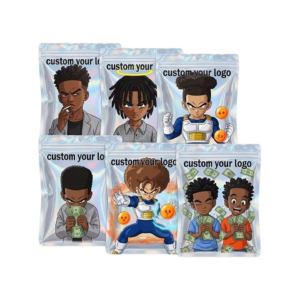
Custom printed Cali Mylar bags are food-grade resealable pouches for cannabis products, edibles, snacks, and other packaged goods that require branded presentation and a practical reclosure. They are a relevant B2B format for cannabis brands, private-label programs, distributors, wholesalers, importers, and multi-SKU buyers that need coordinated packaging across several products. The product name confirms custom printing, a food-grade positioning, a resealable format, and a Cali bag style; final dimensions, laminate, barrier level, finish, closure specification, and market requirements should be confirmed before quotation.
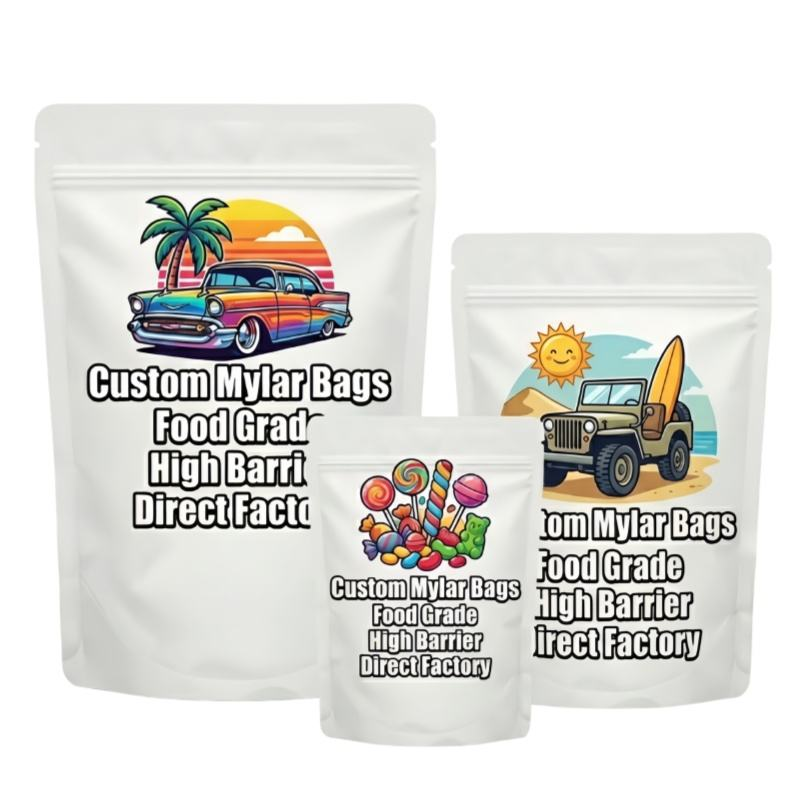
Product Specifications
| Product type | Custom printed Cali Mylar bags |
|---|---|
| Packaging format | Resealable bag or pouch; final pouch geometry requires confirmation |
| Material positioning | Mylar-style flexible packaging; the complete laminate structure is subject to final specification |
| Food-contact positioning | Described as food-grade in the product name; destination-market documentation and applicable food-contact requirements must be confirmed |
| Printing | Custom printed graphics, with artwork coverage and print limitations to be confirmed |
| Closure | Resealable closure; zipper construction and any separate heat-seal option require confirmation |
| Size and capacity | Not specified; select based on product dimensions, density, fill weight, headspace, and filling method |
| Finish | Not specified; matte, gloss, metallic, or other finishes may be available depending on the selected structure |
Material, Barrier, and Product Protection
“Mylar” is commonly used in search language for flexible barrier bags, but appearance alone does not identify the complete film structure. A buyer should request the proposed laminate and confirm how it supports the intended contents. Depending on that structure and the quality of the seals, the bag may help limit exposure to moisture, oxygen, light, and outside odors. A properly closed resealable pouch can help contain aroma, but the phrase “smell resistant” should not be treated as a permanent or absolute performance guarantee.
The material choice creates trade-offs. A higher-barrier opaque structure may provide stronger protection from light and help preserve sensitive contents, while a clear window can improve product visibility but may reduce light protection in that area. A thicker or stiffer structure can improve handling and puncture resistance, yet it may affect folding, filling behavior, seal settings, and cost. Confirm the required barrier target, puncture expectations, heat-seal conditions, and compatibility with the filling line rather than selecting a finish based only on appearance.
Size, Fill Weight, and Headspace Planning
There is no universal pouch size for every cannabis flower, edible, or food product. The same stated fill weight can occupy different volumes because product density, shape, moisture, and settling vary. For flower, provide the actual product dimensions or a representative sample, expected fill weight, density or volume estimate, and desired headspace. Excess headspace can reduce presentation quality and allow movement; insufficient headspace can interfere with filling, zipper engagement, or heat sealing.
For irregular edibles, snacks, or other food products, include the largest product dimension, thickness, grease or moisture characteristics, and whether the contents must remain separated. If the pouch is intended to stand, confirm the bottom construction and gusset requirements. A gusset can improve filling and display stability, but it also changes the usable front area, seal geometry, and artwork layout.
Resealable Closure and Sealing Decisions
The stated resealable function is useful for products that may be opened and closed during use or distribution. An ordinary zipper should be specified separately from a tested child-resistant closure. A resealable zipper does not by itself establish child resistance, regulatory acceptance, or tamper evidence. If the destination market requires child-resistant packaging, ask for the applicable closure construction, test documentation, and market-specific requirements before approving the bag.
For additional protection, a heat seal may be considered above the zipper, depending on the final construction and production process. The buyer should confirm whether the bag will be filled and sealed manually or by equipment, then align the seal width, opening position, tear-notch request, zipper location, and sealing temperature with that method. A tear notch can make opening easier, but it should not be assumed to provide tamper evidence unless the final design is specifically configured and verified for that purpose.
Custom Printing, Artwork, and Multi-SKU Control
Custom printing lets a brand coordinate product names, strain or flavor identifiers, warning space, instructions, lot or batch areas, and other approved information across a pouch family. Before artwork is released, confirm the printable panel, seal exclusions, zipper position, gusset folds, tear-notch location, barcode quiet zones, and any required variable-data area. Metallic, matte, holographic, kraft-look, or other visual effects may depend on the film and ink system; a surface appearance does not prove a particular barrier level.
For private-label buyers and multi-SKU programs, establish a master dieline and a controlled artwork schedule. Verify that every version uses the same approved dimensions, closure position, color references, legal copy, and variable information rules. If different strains, flavors, or fill weights will share one bag family, test the largest and most demanding product configuration first. This helps reduce mismatched headspace, inconsistent shelf presentation, and filling problems between SKUs.
Destination-Market and Food-Contact Checks
“Food-grade” in the product name should be treated as a starting specification, not as a substitute for destination-market review. Confirm the intended contents, food-contact requirements, cannabis packaging rules, labeling area, warning language, child-resistant expectations, recycling or disposal obligations, and any documentation required by the importing or selling market. Cannabis and marijuana regulations differ by jurisdiction, and the packaging format must be reviewed against the applicable product category and sales channel.
Buyer Questions Before an RFQ
Use the following questions to narrow the specification for these food-grade resealable Mylar pouches:
Can these bags be used for cannabis flower?
They can be evaluated for cannabis flower when the selected size, laminate, closure, seal, artwork, and destination-market requirements fit the application. Provide fill weight, product dimensions or density, aroma expectations, and headspace requirements for a meaningful specification.
Are the resealable bags automatically child resistant?
No. A resealable zipper should be distinguished from a tested child-resistant closure. If child resistance is required, specify it separately and request the relevant construction and documentation for the destination market.
Does the Cali bag appearance define the barrier performance?
No. Visual style, color, or finish does not establish the complete laminate or barrier level. Confirm the film structure and sealing system, especially when moisture, oxygen, aroma, light, or puncture protection matters.
Can one pouch format support several SKUs?
Potentially, if the products have compatible dimensions, fill volumes, closure positions, and artwork requirements. Compare the largest and smallest products, expected headspace, filling method, and variable artwork before approving a shared format.
What information should a buyer send for a quotation?
Send the contents, fill weight or actual product dimensions, desired pouch dimensions, quantity, number of artwork versions, required material or barrier, closure and finish preferences, filling method, destination market, and compliance needs.
Request a B2B Packaging Specification
To request a quotation for these custom printed weed baggies, provide the contents, fill weight or actual product dimensions, target pouch dimensions, order quantity, artwork versions, preferred material or barrier, zipper or heat-seal requirements, finish, filling method, destination market, and compliance needs. Those details allow the manufacturer or wholesale supplier to review fit, artwork feasibility, closure selection, and the appropriate specification before an RFQ is finalized.
Reviews
There are no reviews yet.