
Custom Printed 1lb Child-Resistant Mylar Herb Bags for B2B Packaging
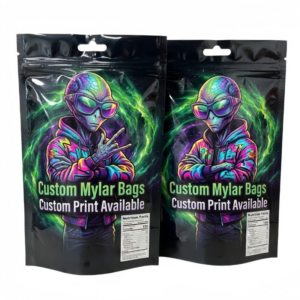
These custom printed 1lb child-resistant Mylar herb bags are flexible packaging for businesses filling approximately 454g to 1lb of dried herb, including cannabis flower where permitted. The product combines a stated 454g-1lb size designation, Mylar packaging, child-resistant functionality, and custom printing for cannabis brands, distributors, wholesalers, private-label operators, OEM/ODM buyers, and multi-SKU programs. Actual pouch dimensions, usable volume, closure construction, barrier specification, and filling performance must be confirmed against the product density and destination-market requirements before an RFQ is finalized.
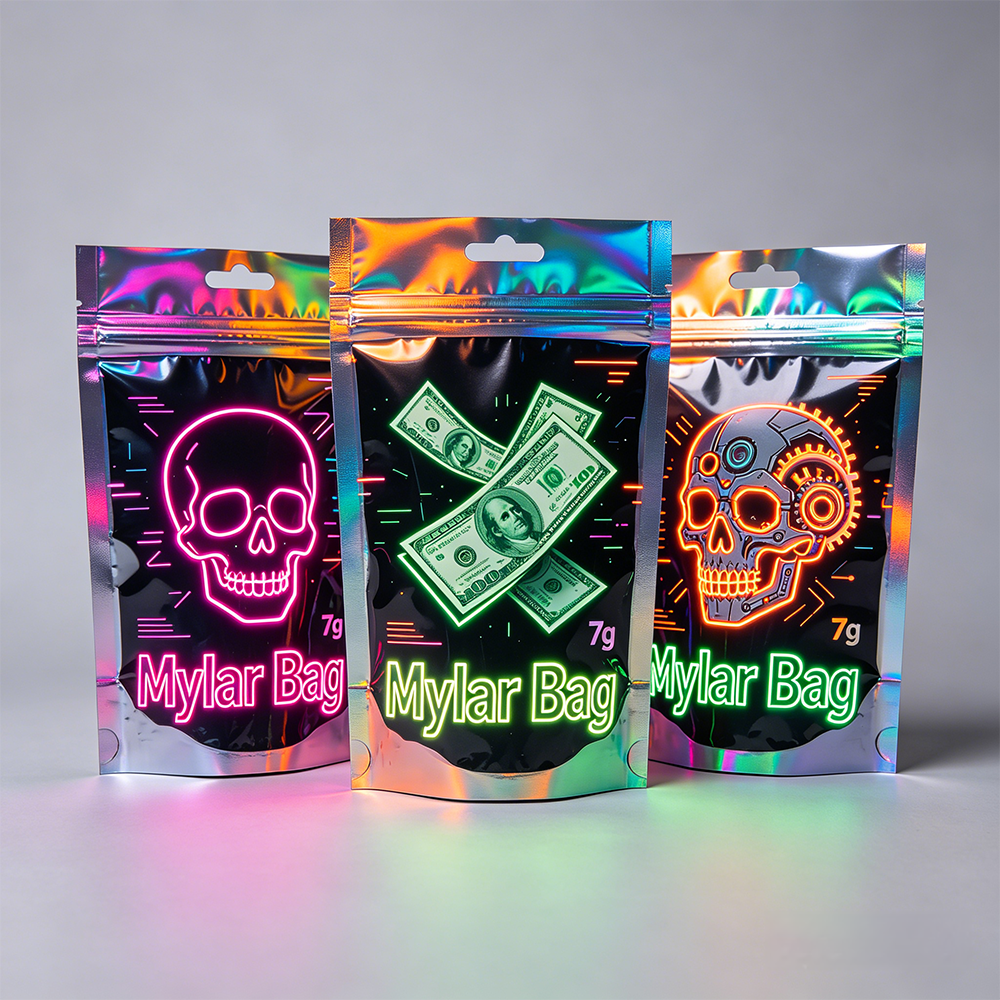
Product Specifications
| Product type | Custom printed herb packaging bag |
|---|---|
| Stated size designation | 454g-1lb |
| Named material | Mylar; complete laminate or film structure to be confirmed |
| Closure function | Child-resistant; exact closure construction and testing documentation to be confirmed |
| Printing | Custom printed; artwork process, printable area, colors, and print limitations to be confirmed |
| Intended contents | Herb, including cannabis flower where legally permitted and suitably specified |
| Pouch dimensions and style | To be confirmed based on product density, fill method, gusset, headspace, and seal geometry |
| Barrier performance | Dependent on the complete material structure, seals, and closure; confirm aroma, moisture, oxygen, and light requirements |
Fit the Bag to Herb Density and Filling Volume
A 454g-1lb label does not establish one universal pouch dimension. Dried herb can occupy different volumes depending on density, particle size, moisture condition, compression, and how it is loaded. A buyer should provide the actual product weight and, where possible, the filled volume or product dimensions. The packaging supplier can then review usable internal space, seal clearance, headspace, and opening geometry.
Headspace affects more than appearance. Excess space can allow the contents to move during handling and may increase the air volume inside the package. Too little space can interfere with filling, zipper engagement, heat sealing, or consistent presentation. For a multi-SKU cannabis program, test the densest and loosest relevant flower or herb formats rather than approving a pouch from only one representative sample.
Mylar Structure and Protective Performance
Mylar identifies the named packaging material, but appearance alone does not define the complete barrier system. Depending on the selected structure, the bag can be configured with film layers intended to help protect herb from moisture, oxygen, light, puncture, and aroma transfer. The causal performance depends on the entire laminate, layer thicknesses, seal design, closure, and handling conditions.
For aromatic cannabis flower, a suitable structure and properly sealed opening may help contain aroma and provide smell-resistant performance. This should not be treated as a permanent or absolute odor-proof guarantee. Ask for the proposed laminate, sealing method, and any available technical documentation relevant to the target market and product. If light-sensitive contents are involved, confirm whether the selected structure is opaque or includes any visibility feature; a printed or metallic appearance does not by itself prove a specific light barrier.
Barrier improvement can involve trade-offs. A heavier or more protective laminate may increase stiffness and puncture resistance, but it can affect fold behavior, seal settings, print appearance, and material cost. A thinner or more flexible structure may run efficiently on a filling line while providing a different protection profile. The correct choice should follow the herb’s aroma, moisture, oxygen, light, and handling risks rather than appearance alone.
Child-Resistant Closure and Seal Review
The product is identified as child-resistant, but an ordinary resealable zipper should not automatically be treated as a tested child-resistant closure. Confirm the specific opening mechanism, operating instructions, closure construction, and documentation applicable to the destination market. A child-resistant feature can change how quickly staff fill, close, inspect, and reopen the bag, so it should be evaluated on the intended production line.
Ask whether the design also uses a heat seal above the closure. A heat seal can provide tamper evidence or an additional barrier after filling, while the child-resistant feature supports controlled access after opening. These functions are not interchangeable. Confirm the seal width, sealing window, tear-notch position, opening direction, and whether the final packed product can be closed consistently without contaminating the seal area.
Custom Printing for Strains and Private-Label Programs
Custom printing allows a cannabis brand or herb supplier to separate strains, cultivars, flavors, harvest lots, or customer programs through coordinated artwork. Before approving files, confirm the printable panel, safe margins, seal exclusion zones, opening position, gusset visibility, color expectations, and whether variable information will be added during production or supplied as a separate label.
Finish selection should be reviewed with the substrate and artwork together. Matte, gloss, metallic, holographic, or kraft-style effects describe an appearance or finish option and do not independently establish the barrier structure. Artwork should also leave room for the information required by the destination market, such as product identification, net contents, warnings, batch details, or other required disclosures. The buyer remains responsible for confirming the applicable legal and labeling requirements.
Consistency Across Multi-SKU Orders
For private-label, OEM, and wholesale programs, define the common packaging platform before creating every SKU. Confirm whether all varieties will use the same dimensions, laminate, closure, finish, and seal geometry. A shared structure can simplify filling and inventory planning, while different artwork versions preserve strain or customer differentiation. However, large differences in product density or fill volume may require separate dimensions even when the visual identity is shared.
Request a proof or sample review that checks artwork registration, color, readable text, closure operation, internal capacity, headspace, and seal placement. Test representative filled bags through normal handling, stacking, transport simulation, and opening cycles appropriate to the program. Do not approve a full multi-SKU specification solely from a flat artwork proof.
Questions Buyers Should Confirm Before an RFQ
Is this bag suitable for 1lb of cannabis flower?
It is identified for a 454g-1lb herb size range, but suitability for a specific cannabis flower depends on density, fill volume, headspace, pouch dimensions, and closure clearance. Provide a filled sample or measured volume for confirmation.
Does Mylar automatically make the bag smell proof?
No. Mylar is the named material, while aroma containment depends on the complete laminate, closure, and seals. A properly specified and sealed structure may help contain aroma, but buyers should confirm the proposed construction rather than assume absolute odor-proof performance.
Is the child-resistant feature the same as a normal zipper?
No. An ordinary resealable zipper should not be assumed to be child-resistant. Confirm the specific child-resistant mechanism, operating instructions, and destination-market documentation before approval.
Can the bags use different strain artwork?
Yes, the product is identified as custom printed, so multiple artwork versions can be discussed for a multi-SKU program. Confirm the printable area, artwork limits, finish, color expectations, and any variable information requirements.
What information should be supplied for a quotation?
Provide the contents, fill weight or actual product dimensions, desired pouch dimensions, quantity, artwork versions, material or barrier preference, closure, finish, filling method, destination market, and compliance needs.
Request a B2B Packaging Specification
For an accurate RFQ, send the herb type, target fill weight, measured product volume or dimensions, preferred pouch dimensions, estimated quantity, artwork count, desired laminate or barrier priorities, child-resistant closure requirements, finish, filling method, destination market, and compliance documentation needs. A packaging specialist can then review the 454g-1lb format, usable volume, headspace, seal geometry, print area, and multi-SKU consistency before final specification.
Reviews
There are no reviews yet.