
Custom Printed 3.5g Cali Mylar Bags for Cannabis Brands
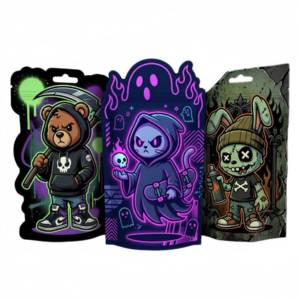
Custom printed 3.5g Cali Mylar bags are heavy-duty stand-up pouches intended for cannabis brands, distributors, wholesalers, and private-label or OEM buyers specifying a compact bag for a target 3.5g fill. The stand-up format supports organized filling and shelf presentation, while the Mylar-based packaging format can be configured around the required barrier, seal, artwork, and closure specification. A stated 3.5g fill does not establish one universal pouch size, because flower density, nug size, headspace, and filling equipment affect the required dimensions.
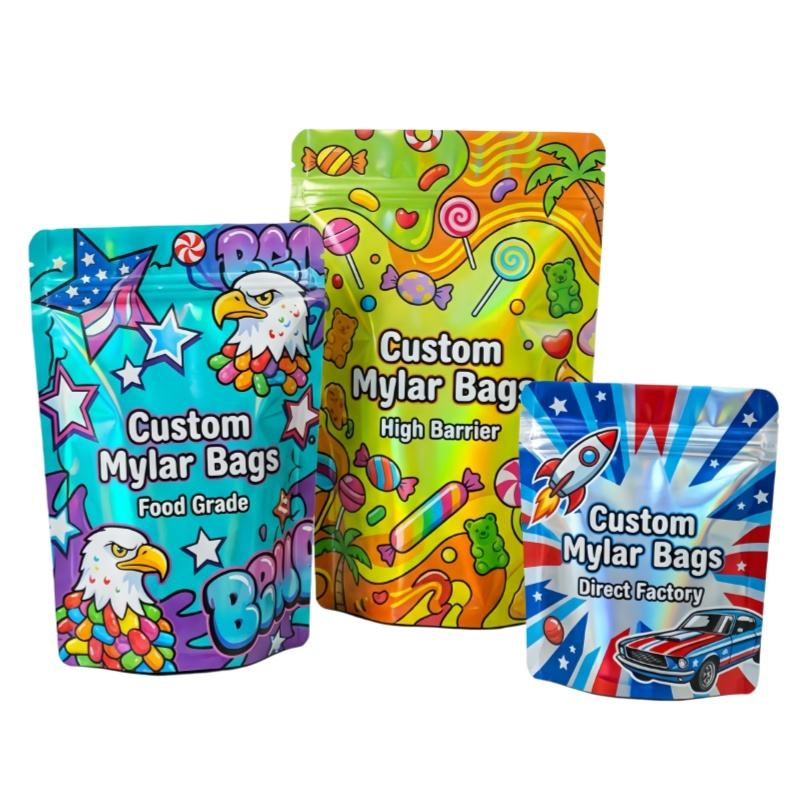
Product Specifications
| Product type | Stand-up Mylar bag for cannabis packaging |
|---|---|
| Target fill reference | 3.5g; final usable volume and dimensions require confirmation |
| Format | Stand-up pouch with a bottom gusset |
| Construction | Heavy-duty Mylar-based structure; complete laminate and barrier specification to be confirmed |
| Printing | Custom printing; artwork, print area, colors, and substrate limits require confirmation |
| Closure | Closure configuration to be selected, such as a resealable zipper and/or heat-seal area |
| Intended buyer | Cannabis brands, wholesalers, distributors, private-label, OEM, and multi-SKU purchasers |
| Destination market | Market-specific packaging and labeling requirements require buyer confirmation |
Barrier Selection for Flower, Aroma, and Moisture
For cannabis flower, the complete laminate and sealing system influence how the pouch handles aroma, moisture, oxygen, light, and puncture exposure. A heavy-duty Mylar structure may support stiffness and handling durability, but the product name alone does not establish a specific foil layer, metallized layer, polymer combination, or laboratory barrier rating. Barrier performance depends on the complete structure, the seal design, and production conditions.
If aroma containment is a priority, ask for a structure that helps contain aroma when properly sealed and confirm the intended seal method. A properly selected barrier may also help limit unwanted moisture and oxygen transfer, but the required balance depends on the flower, storage conditions, and destination-market expectations. A metallic or opaque appearance can help reduce light exposure, while a clear window would improve product visibility but may trade away some light protection. Appearance should not be treated as proof of a particular barrier level.
3.5g Fill, Density, Headspace, and Gusset Behavior
The 3.5g reference describes the planned fill weight rather than a guaranteed physical capacity. Dense, compact flower can occupy less space than large, airy buds at the same weight. Ask the supplier to evaluate the actual product dimensions, typical density, nug size, and preferred headspace before approving the final pouch size. Excessive headspace can affect presentation and allow more product movement; insufficient headspace can make filling, sealing, and closure operation more difficult.
The stand-up format uses a bottom gusset to help the bag sit upright after filling. The gusset also influences how the pouch opens during manual or automated filling. Buyers should confirm the flat dimensions, finished dimensions, gusset depth, opening width, seal area, and filling method. These details are more reliable for production planning than the 3.5g label alone. If larger flower pieces must remain intact, include that requirement in the specification so the opening and usable volume can be reviewed together.
Closure, Heat Sealing, and Opening Requirements
A standard resealable zipper can support repeated opening and closing, which is useful when the end user accesses the contents over time. It is not the same as a tested child-resistant closure. If the destination market requires child-resistant packaging, state that requirement separately and request the applicable design, testing, documentation, and labeling review rather than assuming an ordinary zipper satisfies it.
A heat-seal area can provide a tamper-evident presentation when the selected pouch and sealing process are correctly specified. Confirm the intended sealing temperature, dwell time, equipment, seal width, and whether the zipper must remain outside the seal zone. A tear notch may make opening easier, but its position should be coordinated with the zipper, printed artwork, top seal, and required warning or product information. The final seal quality depends on the pouch structure and the actual production setup.
Custom Printing and Cali Bag Branding
Custom printing allows a cannabis brand to create a consistent Cali bag appearance across strains, cultivars, or product lines. Before artwork approval, confirm the printable area, front and back panels, gusset coverage, zipper and seal exclusions, die-line format, color references, and whether the selected finish changes color appearance. Artwork should leave practical space for the product name, net contents, batch or lot information, warnings, barcode, and other destination-market information where required.
Matte, gloss, metallic, holographic, or other visual effects may be available depending on the selected substrate and print process, but an appearance option does not by itself define the underlying barrier. Ask for a physical or digital proof that shows small text, dark colors, gradients, registration, and the relationship between the artwork and the finished pouch shape. For strain families, use a controlled master artwork system so names, colors, and variable information remain consistent across multiple versions.
Multi-SKU and Private-Label Procurement
Private-label and multi-SKU programs should define what remains common and what changes. A buyer may use one pouch format across several strains while changing the front-panel artwork, color system, or variable product information. Keeping the material structure, zipper position, gusset, and seal geometry consistent can simplify filling and operator training. However, unusually different flower sizes or densities may require a packaging review rather than automatic reuse of the same format.
For wholesale or OEM purchasing, prepare an SKU matrix showing each artwork version, target fill, required quantity, finish, closure, and destination market. Confirm whether the bags will be filled manually, with a semi-automatic system, or on automated equipment. The filling method affects opening behavior, headspace control, dust management, and the practical seal specification. A consolidated technical brief helps reduce artwork and production misunderstandings during quotation.
Destination-Market and Compliance Review
Packaging requirements vary by destination market and by the product category being packed. Confirm the required warning statements, net-content presentation, cannabis or product identifiers, barcode space, lot or batch information, child-resistance expectations, tamper-evident needs, recycling or disposal marks, and any food-contact or product-contact requirements that apply to the contents. Do not treat this general bag description as evidence of regulatory approval or compliance.
The buyer should provide the destination jurisdiction and the intended contents so the packaging specification can be reviewed against the applicable rules. If the bag will be used for cannabis flower, confirm whether the market distinguishes primary packaging, secondary packaging, child-resistant packaging, or tamper-evident packaging. Any required testing, declarations, or documentation should be requested and reviewed before committing to a production specification.
Buyer Questions Before an RFQ
Is this bag sized for exactly 3.5g of flower?
The product is identified for a 3.5g target fill, but exact sizing depends on flower density, nug dimensions, headspace, and filling method. Confirm the actual product dimensions and desired finished pouch dimensions before approval.
Does heavy-duty Mylar automatically mean odor-proof packaging?
No. The complete laminate, seal geometry, closure, and sealing process determine aroma containment. The selected structure may help contain aroma when properly sealed, but no absolute performance claim should be made without a defined specification or test.
Can the bags use a child-resistant zipper?
A standard resealable zipper is not automatically child-resistant. If child resistance is required, request a suitable closure configuration and confirm the testing and documentation needed for the destination market.
Can one pouch format support several cannabis strains?
It may support multiple SKUs when the flower dimensions, density, headspace, and filling process are compatible. Confirm each SKU in the artwork and fill plan instead of relying only on the shared 3.5g reference.
What should be supplied for custom printing?
Provide the desired bag dimensions, artwork versions, panel requirements, finish, color references, variable information, barcode needs, and any areas reserved for seals, zippers, warnings, or regulatory text. A die line and proof should be reviewed before production.
Request a Product-Specific B2B Quote
To request an RFQ for these custom printed 3.5g Cali Mylar bags, send the contents, target fill weight, actual product dimensions, desired pouch dimensions, estimated quantity, number of artwork versions, material or barrier preference, closure requirement, finish, filling method, destination market, and applicable compliance needs. Those details allow the supplier to review usable volume, headspace, gusset behavior, print layout, sealing requirements, and multi-SKU consistency before confirming the final specification.
Reviews
There are no reviews yet.