
3.5g Aluminum Cali Mylar Bags for Custom Cannabis Packaging
3.5g aluminum Cali Mylar bags are custom-printed cannabis packaging bags specified for brands, distributors, wholesalers, and private-label buyers that need a small-format pack for an approximately 3.5 g fill. The aluminum-based structure is intended to support odor and light barrier performance, while the final smell-resistant result depends on the complete laminate, seal design, closure, and filling process. These bags can be evaluated for cannabis flower or another compatible product only after the actual contents, density, dimensions, and destination-market requirements are confirmed.
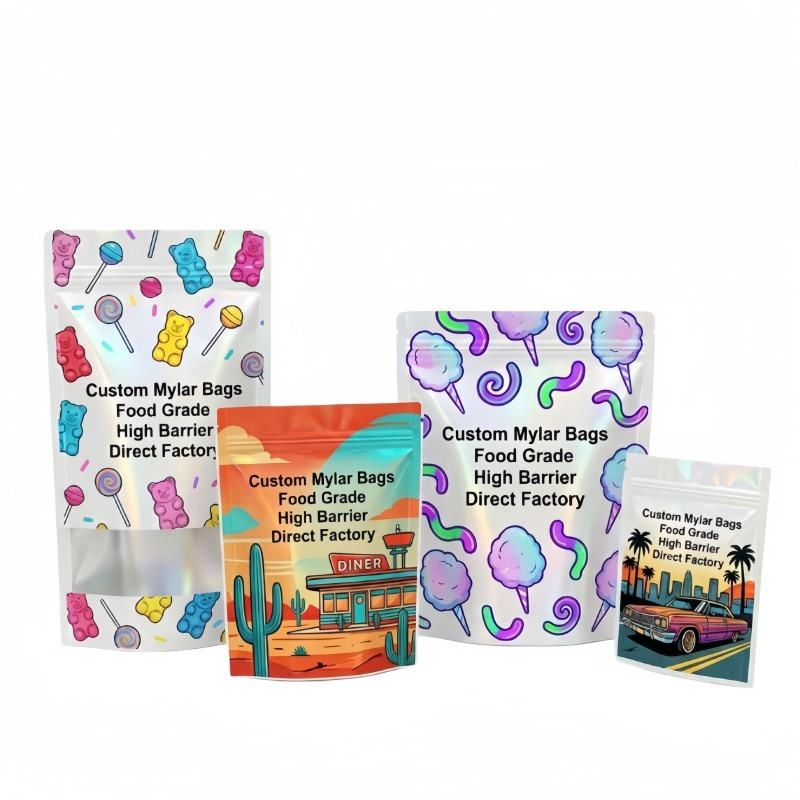
Product Specifications
| Product type | Custom printed Cali Mylar bag for cannabis packaging |
|---|---|
| Nominal fill reference | 3.5 g; actual usable volume depends on product density, particle form, and headspace |
| Stated material | Aluminum-based Mylar packaging; the complete laminate structure requires confirmation |
| Odor function | Smell-resistant or aroma-containment performance may be configured; confirm testing, seal construction, and target standard |
| Printing | Custom printing is part of the product specification; artwork process, print method, and printable area require confirmation |
| Dimensions | Not stated; confirm finished width, height, gusset if applicable, seal area, and opening position |
| Closure | Not stated; confirm zipper, heat-seal-only format, tear notch, or other selected opening system |
| Compliance | Destination-market, labeling, child-resistance, and product-contact requirements must be confirmed for the final specification |
Barrier Structure and Odor Containment
Aluminum in a flexible packaging laminate can contribute to light and aroma barrier performance, but the word “aluminum” alone does not define the complete bag. Buyers should request the proposed layer structure, thickness, sealant layer, and any available barrier data before approving production. A smell-resistant bag helps contain aroma when the laminate, zipper or heat seal, top seal, and handling process work together. It should not be treated as an absolute or permanent odor-proof guarantee without product-specific testing.
The selected structure also affects moisture protection, oxygen exposure, puncture resistance, stiffness, folding behavior, and heat sealability. A stronger barrier may improve protection from light and external aroma transfer, while a stiffer structure can influence how easily the bag fills and sits on equipment. The final sealing window should be checked against the customer’s filling line, temperature controls, dwell time, and seal pressure. If the contents are aromatic cannabis flower, buyers should evaluate aroma containment after filling rather than relying only on an empty-bag sample.
Fill Weight, Density, and Usable Volume
The 3.5 g reference does not establish one universal pouch size. Flower density, moisture condition, trim, nug size, and acceptable headspace can all change the required internal volume. A low-density fill may need a larger bag than a compact product with the same stated weight. Excess headspace can increase movement and affect presentation; insufficient headspace can interfere with closing, sealing, or protecting the contents from compression.
For an accurate quotation, provide the actual product dimensions or a representative sample specification, not only the target weight. Confirm whether the bag must accommodate whole flower, smaller pieces, or another cannabis format. The supplier should then review finished dimensions, usable fill area, seal clearance, and any gusset requirement. The selected dimensions should be validated with a filled sample before multi-SKU production.
Closure, Opening, and Filling Decisions
The input does not specify a zipper, tear notch, heat seal, stand-up format, flat format, or child-resistant closure. These options should be treated as separate specification decisions. An ordinary resealable zipper can support repeated access, but it is not automatically a tested child-resistant closure. If child-resistant packaging is required in the destination market, request the applicable design, test evidence, and approval pathway for the exact finished pack rather than assuming that a standard zipper satisfies the requirement.
For a heat-sealed format, confirm whether the bag will be filled and sealed manually or on automated equipment. The top seal needs enough clean film area to avoid product contamination in the seal path. A tear notch can improve opening convenience, but its position should not compromise the seal or printed warnings. If a gusset or stand-up feature is requested, confirm how it affects filling stability, display orientation, internal volume, and headspace.
Custom Printing and Cali Bag Artwork
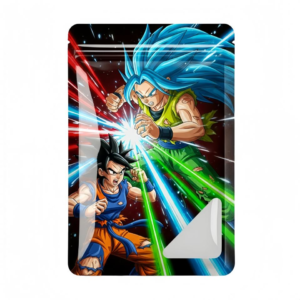
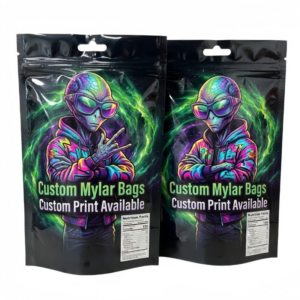
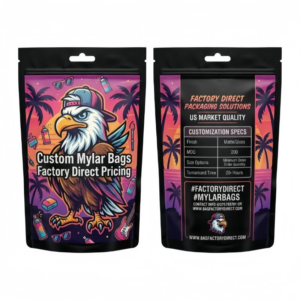
Custom printing allows a cannabis brand to identify a strain, product line, weight reference, and SKU consistently across a packaging program. Artwork should be reviewed against the actual die line, seal zones, zipper position, tear notch, gusset folds, and any required label or warning area. The printable area and color result depend on the selected substrate, surface treatment, print process, and finish. Metallic or aluminum appearance does not by itself describe the barrier structure, and a visual effect should not be used as proof of performance.
Before approving artwork, supply the number of versions, color requirements, variable-data needs, barcode or identifier requirements, and whether the same design must be adapted across multiple strains. Keep important text away from folds, seals, and opening features. Ask for a digital proof and, where appearance or registration is critical, a physical printed sample. “Cali” may describe the requested bag style or market language; it does not by itself establish California origin, legal status, or destination-market compliance.
Multi-SKU and Private-Label Procurement
For private-label, OEM, ODM, distributor, and wholesale programs, the main procurement challenge is keeping every version consistent while preserving clear SKU identification. Confirm whether all SKUs will use the same finished dimensions, laminate, closure, finish, and seal geometry. If only the artwork changes, a common structural specification can simplify validation. If strains have materially different density or product dimensions, one bag size may not provide the same headspace or filling behavior for every SKU.
Prepare an artwork matrix that links each design to its product name, nominal fill, market, barcode or identifier, and approved revision. Ask the supplier to distinguish structural approval from artwork approval. This reduces the risk of producing a correctly printed bag with the wrong closure, barrier, dimensions, or regulatory copy. Quantities, version counts, sampling needs, and packaging format should be discussed directly in the RFQ because they are not stated for this product.
Destination-Market and Quality Checks
Compliance requirements vary by destination and intended contents. Confirm required labeling, warning language, net-weight presentation, child-resistant packaging rules, product-contact expectations, recycling or disposal statements, and any testing or documentation requested by the buyer or authority. No certification or compliance status is established by the product name alone.
A practical approval sequence is to confirm the laminate and closure, review the dimensional drawing, approve artwork on the correct die line, inspect a physical sample where appropriate, and conduct a filled-pack check. The filled evaluation should consider aroma containment, seal integrity, opening behavior, print durability, product movement, and actual fit. Any performance claim should be tied to the final material and sealing configuration rather than a generic bag description.
Frequently Asked Questions
Are these bags suitable for a 3.5 g cannabis flower fill?
They are specified with a 3.5 g fill reference, but suitability depends on flower density, product form, dimensions, and required headspace. Confirm the actual product and desired pouch dimensions before approval.
Does the aluminum structure make the bag completely odor-proof?
No absolute performance should be assumed. The aluminum-based laminate may help with aroma and light barrier performance, while actual containment depends on the complete structure, closure, seal quality, and filling process.
Is a child-resistant zipper included?
A closure is not stated in the product input. Confirm whether an ordinary zipper, heat seal, tear notch, or tested child-resistant closure is required for the destination market.
Can the Cali bags carry different strain designs?
Custom printing supports a multi-SKU artwork discussion, but the number of versions and structural consistency must be confirmed. Provide the SKU list, artwork files, variable information, and required dimensions for review.
What should be included in a quotation request?
Include the contents, fill weight, actual product dimensions, desired bag dimensions, quantity, artwork versions, laminate or barrier target, closure, finish, filling method, destination market, and compliance needs.
Request a Product-Specific RFQ
For a quotation on these custom printed 3.5g aluminum Cali Mylar bags, send the intended contents, fill weight, actual product dimensions, preferred pouch dimensions, quantity, number of artwork versions, material or barrier preference, closure, finish, filling method, destination market, and compliance requirements. Those details allow the supplier to review fit, headspace, seal geometry, artwork placement, and the appropriate final specification before production discussion.

Reviews
There are no reviews yet.