
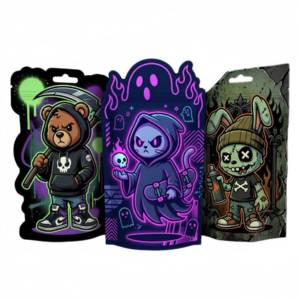
Custom Printed 3.5g and 7g Cali Mylar Bags for Cannabis Flower
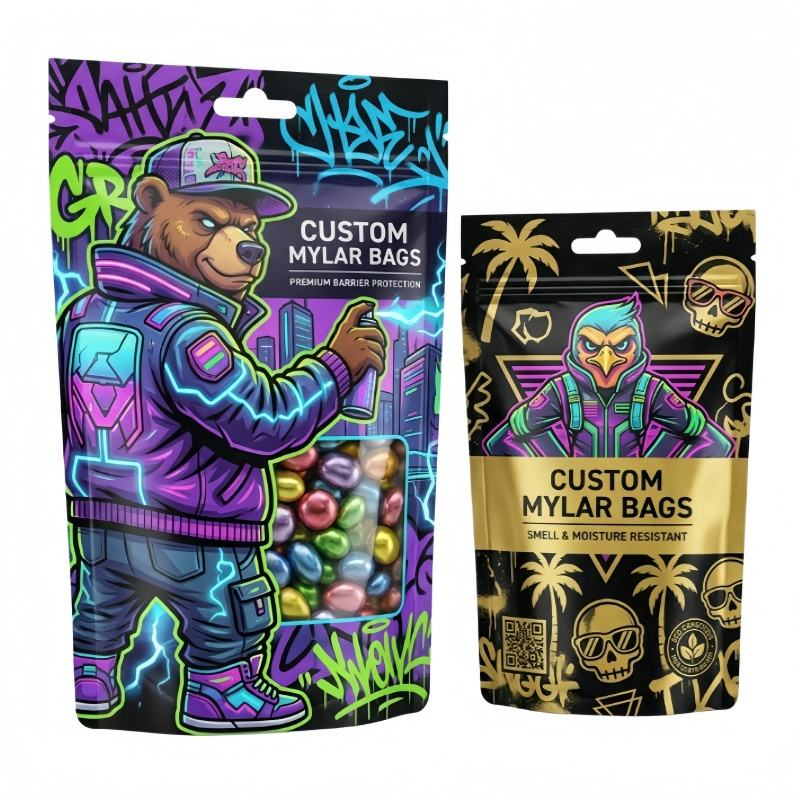
Custom printed 3.5g and 7g Cali Mylar bags are reusable flexible pouches specified for portioned cannabis packaging, typically cannabis flower, where a brand needs a Cali-style presentation, printed artwork, and an airtight format when properly sealed. They are suited to cannabis brands, distributors, wholesalers, private-label and OEM buyers, importers, and multi-SKU purchasing teams that need to compare pouch construction, closure, artwork, and destination-market requirements before requesting a quotation.
Product Specifications
| Product type | Custom printed reusable cannabis Mylar bag |
|---|---|
| Stated fill formats | 3.5g and 7g options; final usable volume depends on product density, pouch dimensions, and headspace |
| Intended contents | Typically cannabis flower; confirm the actual product, density, and filling requirements before production |
| Packaging format | Flexible pouch; exact flat, gusseted, or shaped construction requires confirmation |
| Material | Mylar-style barrier structure; complete laminate and sealant layers require confirmation |
| Closure | Reusable closure is stated; zipper, heat seal, tear notch, and any child-resistant configuration must be specified |
| Printing | Custom printed; artwork method, print coverage, color requirements, and substrate limits require confirmation |
| Finish | Final matte, gloss, metallic, holographic, or other finish is subject to the selected structure |
| Commercial use | B2B cannabis brand, wholesale, private-label, OEM, ODM, distributor, and multi-SKU procurement |
Barrier Structure and Product Protection
“Mylar” commonly describes the appearance or a polyester-based layer associated with flexible barrier packaging, but it does not identify the complete laminate. Odor containment, aroma retention, moisture resistance, oxygen resistance, light protection, stiffness, puncture resistance, and heat sealability depend on the entire structure, sealant layer, closure, and sealing process. Ask for the proposed layer structure and any available technical data rather than treating the product name as a performance specification.
For cannabis flower, a suitable barrier can help protect aroma and reduce exposure to moisture, oxygen, and light. The airtight positioning of this product should be evaluated in relation to the actual zipper, heat seal, pouch geometry, and filling process. A reusable zipper can support repeated opening and closing, while a properly applied heat seal can provide an additional tamper-evident or transport seal if included in the specification. Neither should be assumed without confirmation.
A clear window can improve product visibility but may reduce light protection in that area. Metallic or opaque structures may support stronger light blocking, while a matte, holographic, or kraft appearance primarily describes visual presentation and does not by itself prove a particular barrier level.
3.5g and 7g Fill Planning
A stated 3.5g or 7g fill weight does not establish one universal pouch size. Flower density, moisture condition, trim, particle size, desired presentation, and headspace all affect the usable volume. Excessive compression can affect flower appearance and create filling or sealing problems; too much headspace can allow movement inside the pouch and change the retail presentation. Confirm the actual product dimensions, density range, target fill weight, and preferred headspace with the packaging supplier.
If the pouch uses a bottom or side gusset, the gusset can improve standing behavior and filling access, but it also changes the effective volume and artwork geometry. A flat pouch may offer a different visual layout and seal arrangement. Before approving a production drawing, review the finished dimensions, seal widths, opening position, zipper location, die line, and the area available for regulatory or market-specific information.
Reusable Closure and Seal Decisions
Reusable does not automatically mean child-resistant. A standard resealable zipper may be appropriate for a packaging concept that does not require a tested child-resistant closure, but it should not be described as child-resistant unless the selected configuration has been evaluated to the requirements of the destination market. Confirm whether the order needs a zipper only, a heat seal above the zipper, a tear notch, or a child-resistant format.
These choices involve trade-offs. A zipper improves consumer access and resealability, while an additional heat seal may improve initial package integrity but adds a sealing step and may affect opening behavior. A child-resistant closure may support a specific compliance objective but can change usability, cost, tooling, and lead-time assumptions. Select the closure after identifying the destination market and the applicable cannabis packaging rules.
Custom Printing for Brand and Strain Programs
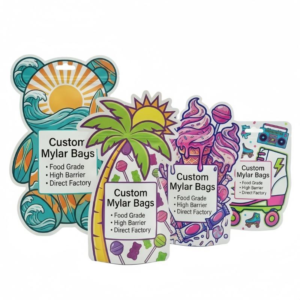
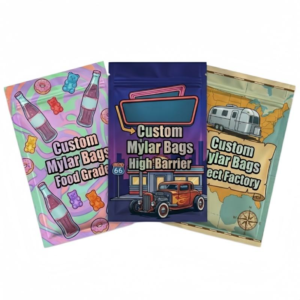
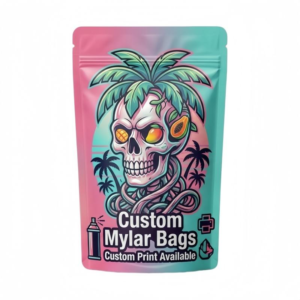
Custom printing lets a cannabis brand coordinate strain names, cultivar information, product identifiers, warning space, and visual artwork across 3.5g and 7g formats. For private-label and multi-SKU programs, confirm whether the same base pouch will use several artwork versions or whether different dimensions, finishes, or structures are required. Consistent seal geometry and print registration can simplify filling and quality checks across a product range.
Request the printable area, safe margins, bleed and die-line files, color reference requirements, minimum text size, barcode placement, and any restrictions caused by the zipper, gusset, seal, or viewing window. Printing coverage and finish may depend on the selected substrate and laminate. A digital proof or production sample should be reviewed for artwork position, opening direction, readable text, and the relationship between the printed design and the final pouch shape.
Market and Procurement Checks
Destination-market requirements can affect warning statements, symbols, child-resistant packaging, labeling space, material declarations, testing, and the use of terms such as “airtight” or “odor-resistant.” The buyer should identify the selling market and obtain the applicable compliance guidance before final artwork approval. Do not assume that a Cali-style design, Mylar construction, zipper, or printed cannabis pouch meets every jurisdiction’s packaging rules.
For an efficient RFQ, provide the contents, actual fill weight, product dimensions or density range, desired pouch dimensions, 3.5g and 7g quantity split, artwork versions, preferred laminate or barrier objective, closure type, finish, filling method, destination market, and compliance needs. Also identify whether the program is private label, OEM, ODM, wholesale, or a recurring multi-SKU purchase. These details allow the proposed structure and sample to be assessed against the real filling and sealing process.
Frequently Asked Questions
Are these bags intended for 3.5g and 7g cannabis flower?
The product is presented in 3.5g and 7g formats and is typically specified for cannabis flower. Confirm the actual contents, density, target headspace, and final pouch dimensions before approval because fill weight alone does not determine usable volume.
Does the Mylar material guarantee odor-free or airtight performance?
No. The complete laminate, closure, sealant, pouch geometry, and sealing process determine barrier performance. The bag can be evaluated for aroma and airtight objectives, but avoid absolute performance claims until the final structure and sealing method are confirmed.
Can the bags be reused?
Reusable packaging is stated for this product. Confirm the specific zipper or closure configuration and the intended opening and resealing behavior, particularly if a heat seal or tear notch is also required.
Are the reusable bags child-resistant?
Not automatically. A standard resealable zipper is different from a tested child-resistant closure. If child resistance is required, specify the destination market and request the appropriate configuration and supporting documentation.
Can one order include several strain or SKU designs?
Custom printing can be planned for multiple artwork versions, including strain or SKU programs. Confirm the artwork count, dimensions, print coverage, finish, and quantity allocation for each version in the RFQ.
What information should a buyer provide for a quotation?
Provide the contents, fill weight or actual product dimensions, desired pouch dimensions, quantities, artwork versions, material or barrier objective, closure, finish, filling method, destination market, and compliance requirements. These inputs help define the sample and production specification.
Request a B2B Packaging Specification
To request a quotation for these custom printed 3.5g and 7g Cali Mylar bags, send the intended contents, fill weight or product dimensions, desired pouch dimensions, quantity by size and artwork version, material or barrier preference, closure, finish, filling method, destination market, and compliance needs. The final RFQ should confirm the laminate, pouch style, seal geometry, printable area, closure configuration, and any required sample or technical review before production.
Reviews
There are no reviews yet.