
Custom Printed Cali Mylar Bags for Cannabis Packaging
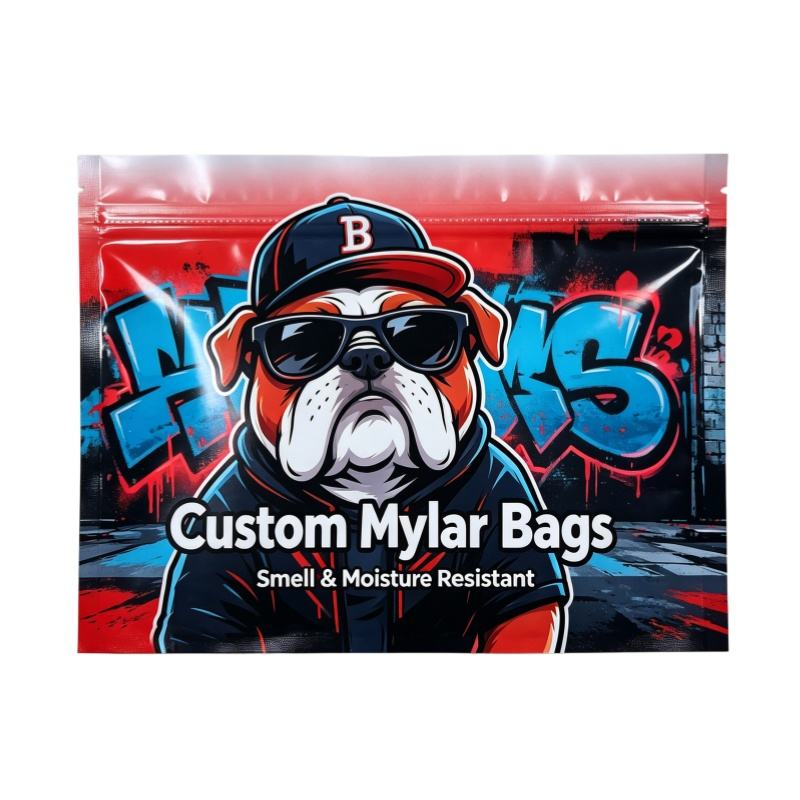
Custom printed Cali Mylar bags are three-side-seal Mylar bags intended for cannabis packaging programs that need a distinctive Cali-style presentation, controlled filling, and customized graphics. They are relevant to cannabis brands, distributors, wholesalers, private-label and OEM buyers, and purchasing teams managing multiple SKUs. The smell-proof positioning indicates a focus on helping contain aroma when the selected laminate, seal geometry, and closure are properly specified and used; it should not be treated as an unconditional performance guarantee.
Product Specifications
| Product type | Custom printed Cali Mylar bag |
|---|---|
| Pouch construction | Three-side seal format |
| Material | Mylar material is stated; confirm the complete laminate structure and barrier layers before production |
| Printing | Custom printing, subject to artwork, color, substrate, and production specifications |
| Odor positioning | Smell-proof product positioning; confirm the required odor-containment performance and test method |
| Dimensions and capacity | Not provided; confirm finished dimensions, usable fill area, product density, and target fill |
| Closure | Not specified; confirm zipper, heat seal, tear notch, or other required opening system |
| Primary buyers | Cannabis brands, distributors, wholesalers, private-label/OEM buyers, and multi-SKU purchasers |
Three-Side Seal Construction and Intended Use
A three-side-seal bag is formed with sealed edges on three sides and an open side for filling and final closure. This format can provide a broad printable face and a straightforward filling path, making it useful for cannabis brands that need consistent front-panel branding across a product range. The exact usable area depends on the finished dimensions, seal width, opening position, artwork safe zones, and any zipper or tear-notch placement.
The product name identifies Cali Mylar bags and smell-proof positioning, but it does not establish a universal internal volume or a single suitable fill weight. Cannabis flower varies in density, trim, moisture condition, and physical size. A bag that works for one flower weight may not provide the same headspace or presentation for another. Buyers should confirm the actual product dimensions, target fill weight or volume, desired headspace, and whether the pack must remain flat or accommodate expansion during filling.
Material, Aroma, and Barrier Decisions
Mylar provides the stated material reference, but the complete packaging behavior depends on the full laminate structure rather than the material name alone. The selected layers and seal system can influence aroma containment, moisture transmission, oxygen exposure, light protection, stiffness, puncture resistance, and heat-seal performance. For cannabis flower, a suitable structure may help protect aroma and product condition when properly sealed, but the required barrier level should be matched to the product, storage conditions, filling process, and destination-market requirements.
“Smell-proof” is useful search and product language, but buyers should define what they need it to mean operationally. Ask whether odor containment is required after heat sealing, after opening and reclosing, or throughout expected handling. Also confirm the laminate, seal width, seal temperature window, dwell time, and any available test method before treating the bag as suitable for a specific odor-control requirement. A resealable zipper may support repeated access, while a final heat seal can provide a different level of closure control; neither should be assumed to be child-resistant.
Size, Filling, and Headspace Planning
Before requesting a quotation, measure the actual product rather than selecting a pouch from fill weight alone. For flower, record the packed product’s approximate length, width, height, density, and expected settling behavior. These inputs help determine the usable pouch dimensions and headspace. Excess headspace can reduce shelf presentation and allow product movement, while insufficient headspace can stress seals, distort artwork, or make filling difficult.
Confirm how the three-side-seal bag will be filled: manually, with a scale, through a funnel, or with a production line. Filling equipment can affect opening width, bag stiffness, seal alignment, and throughput. If the buyer needs a zipper, tear notch, or final heat seal, each feature should be included in the dimensional drawing and filling review. An ordinary zipper is not the same as a tested child-resistant closure, so any child-resistant requirement must be specified separately and verified for the intended market.
Custom Printing and Multi-SKU Control
Custom printing allows a cannabis brand to define the Cali-style visual system, strain or product naming, warning space, batch references, and other market-specific information. Artwork should be prepared against an approved dieline that shows seal areas, opening direction, zipper position if applicable, and the safe boundary for important text. Keep critical copy away from folds and seals, where distortion or loss of printable area may affect legibility.
For multiple strains or product variants, establish a master specification before artwork production. Control the bag dimensions, laminate, seal construction, color references, finish, barcode placement, and version naming across every SKU. A matte, metallic, holographic, or other visual treatment may be available depending on the selected substrate and printing process, but appearance alone does not prove a particular barrier structure. Confirm substrate limits, print method, color expectations, proof approval, and acceptable variation with the supplier.
Trade-Off: Resealability Versus Closure and Compliance Requirements
A resealable zipper can make repeated access more convenient, but it adds construction, dimensional, and artwork considerations and does not automatically provide child resistance or a hermetic final seal. A heat-sealed format can prioritize controlled closure after filling, while a tear notch can improve opening convenience but may affect the opening design and tamper-evident approach. The right choice depends on whether the product is intended for repeated use, single opening, additional outer packaging, or a destination market with specific cannabis packaging rules.
Destination-Market Review and RFQ Preparation
Packaging requirements vary by destination market and product category. Before production, the buyer should confirm applicable rules for cannabis labeling, warnings, child resistance, tamper evidence, opacity, material contact, recyclability claims, and required package information. The bag itself should not be described as compliant or certified unless the relevant documentation and testing have been reviewed for the exact construction, closure, contents, and market.
For a useful quotation, provide the contents, actual fill weight or product dimensions, desired finished bag dimensions, quantity, number of artwork versions, material or barrier target, closure preference, finish, filling method, destination market, and compliance needs. Request confirmation of the proposed laminate, seal construction, printable area, closure details, proofing process, and any applicable test documentation. This reduces ambiguity when comparing offers from a wholesale Cali Mylar bag manufacturer or other packaging supplier.
Frequently Asked Questions
Are these bags suitable for cannabis flower?
They are positioned for cannabis packaging, and their three-side-seal format can suit flower programs when the dimensions, headspace, laminate, seal, and closure are matched to the actual product. Confirm the intended contents and performance requirements before production.
Does “smell-proof” guarantee complete odor elimination?
No. The smell-proof positioning should be understood as an aim to help contain aroma when the selected structure is properly sealed. Actual performance depends on the laminate, seal geometry, closure, handling, and any required test method.
Can the bags include a zipper or child-resistant closure?
The input does not specify a closure. A zipper, heat seal, tear notch, or other option may be configurable, but an ordinary resealable zipper is not the same as a tested child-resistant closure. Specify and verify the required closure separately.
What information is needed to select a size?
Provide the actual product dimensions, target fill weight or volume, density, desired headspace, and filling method. Fill weight alone does not establish one universal bag size for cannabis flower.
What should a multi-SKU buyer confirm before approving artwork?
Confirm the master dimensions, laminate, seal layout, finish, color references, artwork safe zones, barcode placement, version control, and destination-market information across all SKUs.
Request a B2B Specification Review
To request an RFQ for these custom printed Cali Mylar bags, send the contents, fill weight or actual product dimensions, desired pouch dimensions, quantity, artwork versions, material or barrier target, closure, finish, filling method, destination market, and compliance needs. These details allow the proposed three-side-seal structure and printed artwork to be reviewed against your cannabis packaging application.
Reviews
There are no reviews yet.