
Custom Glossy 3-Side Seal Mylar Sachets for Cookies and Herbs
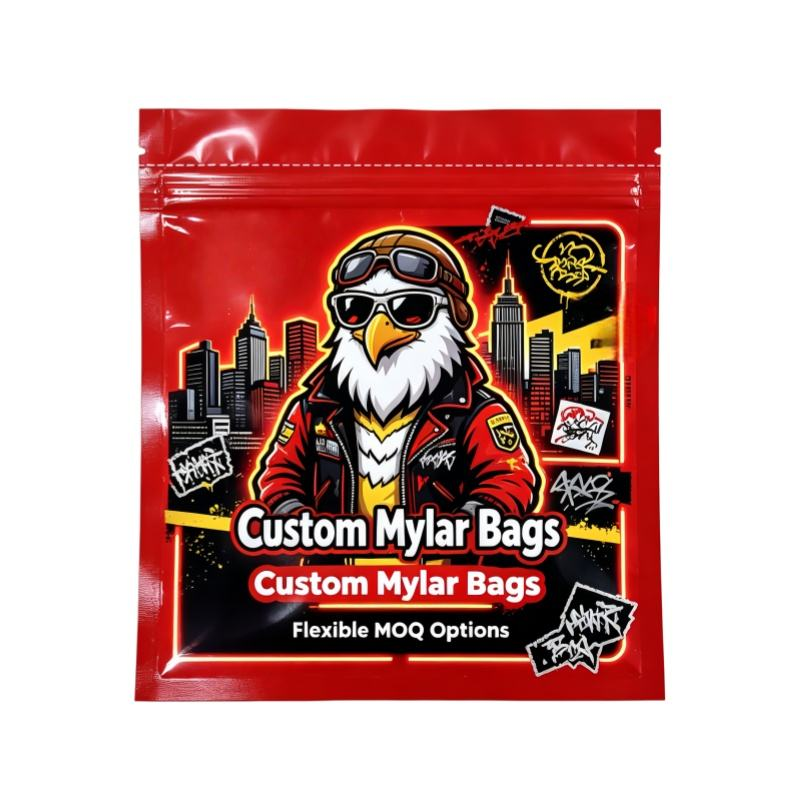
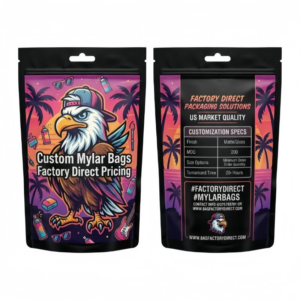
Custom glossy 3-side seal Mylar sachets are flat flexible pouches made for packaging cookies, herbs, and similar dry products. Their three sealed edges create a defined fill area, while the glossy outer appearance provides a clean surface for brand artwork. This format is relevant to cannabis brands, herbal product companies, cookie and edible manufacturers, distributors, wholesalers, and private-label buyers managing one or multiple SKUs.
Product Specifications
| Product type | Flat 3-side seal Mylar sachet |
|---|---|
| Visible finish | Glossy |
| Intended contents | Cookies and herbs; confirm the final product characteristics before specification |
| Customization | Custom format and artwork configuration, subject to final dieline and production specification |
| Material structure | Mylar-based flexible structure; exact laminate and barrier layers require confirmation |
| Closure | Not stated in the product input; confirm whether the pack will use a heat seal, zipper, or another opening format |
| Dimensions and fill volume | Not stated; determine from the product dimensions, fill weight, density, and required headspace |
How the 3-Side Seal Format Fits the Product
A flat sachet is useful when the package should remain compact and present a broad printable face. The bottom and side seals define the usable interior, while the open edge is used for filling and final closure. This geometry can suit cookies, small dry snacks, herbs, or portioned products, but the correct dimensions cannot be selected from fill weight alone. Cookie shape, thickness, breakage risk, herb density, and the desired headspace all affect the specification.
For cookies, the internal width and height should allow loading without excessive compression. For herbs, confirm the product’s bulk density and whether the contents need room to settle without pressing against the seal area. A production sample or actual product dimensions can help verify the opening, seal clearance, and filling behavior before artwork is finalized.
Material, Barrier, and Seal Decisions
“Mylar” identifies the requested flexible packaging format, but the complete laminate determines the final balance of barrier protection, stiffness, puncture resistance, and heat sealability. The exact film combination should therefore be confirmed for the contents and destination market. A suitable structure may help limit exposure to moisture, oxygen, light, and external odors, depending on the selected layers and how the sachet is sealed.
For herbs, aroma containment is a specification question rather than an automatic claim. An appropriate laminate and properly formed seal can help contain aroma, but performance depends on the complete structure, seal quality, opening design, and handling conditions. For cookies, moisture and grease considerations may be more important than aroma. If the cookies are soft, oily, filled, or especially fragile, request the appropriate food-contact and barrier documentation for the selected structure rather than assuming that a glossy appearance proves suitability.
The glossy surface is an appearance attribute, not proof of a particular barrier level. It can support strong shelf presentation and may make printed colors appear vivid, while a different surface or laminate may be preferred for tactile branding or scuff management. The final trade-off is between appearance, barrier requirements, stiffness, sealability, and the intended filling process.
Opening, Filling, and Closure Configuration
The product input confirms a 3-side seal sachet but does not specify a zipper, tear notch, or child-resistant closure. Buyers should identify how the pack will be opened and closed. A plain heat-sealed sachet can support tamper-evident presentation and controlled single-use access, while a zipper can support resealing when the structure and seal geometry are designed for it. A zipper should not be described as child-resistant unless the selected closure has been separately tested and documented for the relevant market.
Ask the packaging supplier to confirm the top opening width, seal width, filling direction, and compatible sealing conditions. For automated or semi-automated filling, the sachet should be reviewed for registration, feeding, alignment, and seal contamination risk. If herbs can migrate into the seal zone, the design may need additional clearance or a filling method that keeps product away from the seal. Cookies may require a larger opening or gentler handling to reduce cracking during insertion.
Custom Printing and Multi-SKU Control
Custom printed sachets for cookies and herbs can give each flavor, strain, variety, or private-label line a distinct front-panel identity. Before quotation, confirm the printable panel, artwork orientation, seal exclusion areas, opening position, barcode placement, and any transparent or reserved areas. The final artwork should be checked against the approved dieline because the sealing margins are not available for uninterrupted graphics.
For multi-SKU programs, define which elements remain consistent across every version: sachet dimensions, laminate, finish, closure, seal layout, and mandatory information zones. Then identify which elements change, such as product name, flavor, strain, net contents, batch field, or color coding. This approach helps reduce avoidable variation between SKUs. Ask for a digital proof and, where needed, a physical sample before approving a large packaging run.
Compliance and Destination-Market Review
Packaging requirements vary by product category and destination. Cannabis, herbal, and edible applications may have different rules for warnings, ingredient statements, net quantity, lot identification, child-resistant packaging, tamper evidence, recycling marks, and food-contact documentation. The sachet itself should not be treated as automatically approved or compliant. Provide the destination market, product category, intended use, and required statements so the selected structure, artwork, and closure can be reviewed against the applicable requirements.
If the package is intended for regulated cannabis products, confirm whether the market requires a tested child-resistant package or permits this sachet as an inner or outer component. If it is used for cookies, confirm the applicable food-contact expectations and whether grease or moisture resistance must be documented. These checks should happen before final artwork and purchase-order approval.
Buyer Questions Before Requesting a Quote
A useful RFQ should include the actual contents, fill weight or product dimensions, target sachet dimensions, expected headspace, quantity by SKU, number of artwork versions, desired Mylar or laminate structure, gloss requirement, closure preference, filling method, and destination market. Include product photographs or a physical sample when density, thickness, shape, or fragility affects the fit.
Also ask the supplier to confirm the usable fill area, seal width, opening size, artwork limitations, sample process, selected barrier construction, heat-sealing requirements, and documentation available for the intended application. This creates a clearer comparison between quotes and reduces the risk of selecting a visually attractive pouch that does not run well on the filling line.
Frequently Asked Questions
Are these sachets suitable for both cookies and herbs?
They are specified for cookies and herbs, but the final size, laminate, opening, and closure should be selected according to the product’s dimensions, density, moisture, grease, aroma, and handling requirements.
Does a glossy finish confirm the barrier performance?
No. Gloss describes the visible finish. Barrier performance depends on the complete laminate and sealing system, so the required moisture, oxygen, light, and aroma protection should be confirmed for the selected structure.
Can the sachets be made with custom printing?
Yes, the product is intended as a custom packaging format. Confirm the artwork area, seal exclusion zones, dieline, number of versions, and any required information before approving print production.
Do the sachets include a zipper or child-resistant closure?
The product input does not state a zipper or child-resistant closure. Confirm the required opening format, and request separate testing or documentation if child-resistant packaging is required.
How should I choose the sachet size?
Choose the size from the actual product dimensions, fill weight, density, shape, filling method, and required headspace. A stated fill weight alone does not establish one universal sachet size.
Request a B2B specification review for these custom glossy 3-side seal Mylar sachets. Send the contents, fill weight or actual product dimensions, desired sachet dimensions, quantity, artwork versions, material or barrier preference, closure, finish, filling method, destination market, and compliance needs so the configuration can be evaluated accurately.
Reviews
There are no reviews yet.