
Custom Stand-Up Herb Mylar Pouches for 3.5g–28g Fills
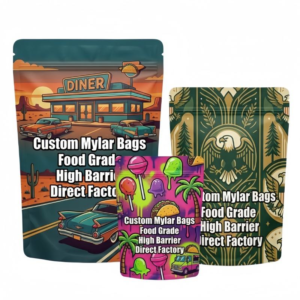
Custom stand-up herb Mylar pouches are flexible, upright bags configured for dry herb fills from 3.5g to 28g, including cannabis flower where permitted by the destination market. Their stand-up format supports shelf presentation and filling, while the final pouch size, laminate, closure, seal design, and artwork must be matched to the actual product and procurement requirements. They are intended for cannabis brands, distributors, wholesalers, private-label programs, OEM/ODM buyers, and purchasers managing multiple strains or SKUs.
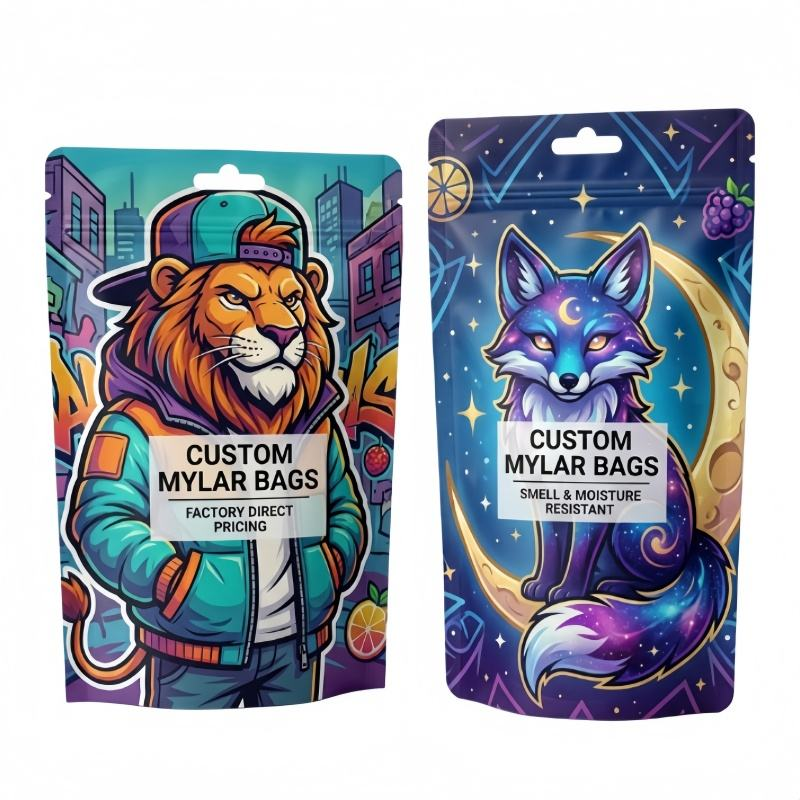
Product Specifications
| Product type | Custom stand-up pouch for dry herb packaging |
|---|---|
| Stated fill range | 3.5g–28g; actual usable volume depends on herb density, particle structure, pouch dimensions, and headspace |
| Material | Mylar pouch construction; the complete laminate or barrier structure requires confirmation |
| Format | Stand-up pouch with a bottom gusset; final gusset geometry requires confirmation |
| Closure | Closure configuration requires confirmation, such as a resealable zipper, heat seal, tear notch, or a combination |
| Printing | Custom artwork and print specifications require confirmation |
| Finish | Selected finish and visual effects require confirmation |
| Compliance | Destination-market packaging, labeling, child-resistance, and testing requirements must be confirmed by the buyer |
Match the Pouch to Herb Density and Headspace
A stated 3.5g–28g range does not identify one universal pouch dimension. Dry herb density can vary by strain, trim, moisture condition, particle size, and handling. Two products with the same net weight may occupy different volumes. Buyers should therefore provide the actual filled product dimensions or a representative sample when selecting a pouch. The filling target should leave enough headspace for clean sealing without excessive movement, compression, or a visibly underfilled package.
The bottom gusset allows the pouch to stand after filling, but it also affects how the package opens, settles, and occupies carton or case space. A wider gusset may improve stability and filling access, while a narrower structure can reduce material use or alter the shelf footprint. Confirm the flat pouch dimensions, finished dimensions, opening width, gusset depth, seal area, and required headspace before approving production artwork or tooling.
Material Structure and Barrier Decisions
“Mylar” describes the pouch material terminology used for this product, but appearance alone does not establish the complete barrier structure. The selected laminate and sealing system influence how the package helps protect dry herb from moisture exchange, oxygen exposure, light, puncture, and aroma release. Barrier performance depends on the complete film combination, seal geometry, and sealing conditions, not simply on a metallic or matte appearance.
For aromatic cannabis flower, a suitable structure can help contain aroma when properly sealed, subject to the selected laminate and closure. A stronger barrier may support light and moisture protection, while a softer or thinner structure may change stiffness, puncture resistance, folding behavior, and cost. Buyers should request confirmation of the proposed material layers and any available technical data rather than treating “smell proof” as a permanent or absolute performance claim.
A metallic appearance may help limit light transmission, but a clear window trades product visibility against light protection and changes the printed design area. If aroma retention, moisture control, oxygen exposure, or long storage is important, specify the intended shelf conditions and destination market during the RFQ.
Closure, Sealing, and Filling Workflow
Ordinary resealable zipper packaging and tested child-resistant packaging are not the same product. A zipper can support repeated opening and closing, but it should not be described as child-resistant unless the selected construction has the required testing and documentation for the relevant market. A heat seal can provide a tamper-evident or sealed presentation when correctly specified, while a tear notch can make the first opening easier. The final combination may include a zipper, heat seal, tear notch, or another confirmed opening system.
Filling equipment and manual packing methods also affect the specification. Confirm whether the pouch will be filled by hand, through a weigh-and-fill system, or on automated equipment. The opening width, gusset behavior, zipper position, seal clearance, and product settling should be checked with production samples. Excess herb in the top seal area can create contamination or seal-quality problems, so the filling method and headspace are relevant procurement inputs.
Custom Printing for Strains and Multiple SKUs
Custom printed cannabis pouches can carry strain names, net weight, brand identity, product artwork, warnings, batch fields, and other market-specific information, subject to the destination rules and the final print specification. Artwork should be prepared around the usable front and back panels, gusset transitions, zipper or tear-notch position, seal exclusion zones, and any required quiet areas. The printable area may be smaller than the apparent outside surface.
For multi-SKU or private-label programs, define which elements remain consistent across every pouch and which change by strain, potency, flavor, cultivar, or package size. A shared layout with controlled variable information can reduce artwork errors and improve visual consistency across a product family. Confirm color references, print process, surface finish, proofing method, version control, and whether special effects or transparent areas are needed. Matte, gloss, metallic, holographic, or other effects should be treated as finish selections, not as proof of a particular barrier.
Trade-Off: Visibility, Barrier, and Shelf Presentation
One important design trade-off is between product visibility and protection from light. A clear window can let buyers see the herb and may support visual merchandising, but it can reduce the opaque printed or light-blocking area. A fully opaque structure offers more controlled presentation and may support light management, but it removes direct product visibility. The right choice depends on the product’s storage conditions, brand positioning, destination-market rules, and the barrier structure selected for the pouch.
Buyer Confirmation Checklist
Before requesting a quotation, prepare the facts that determine whether this stand-up format is suitable:
- Actual herb type, target fill weight, bulk density, and filled-product dimensions.
- Preferred finished pouch dimensions, gusset depth, opening width, headspace, and case-packing limits.
- Required laminate or barrier priorities for aroma, moisture, oxygen, light, stiffness, and puncture resistance.
- Closure preference, including resealable zipper, heat seal, tear notch, or a separately specified child-resistant construction.
- Number of artwork versions, SKU or strain changes, print coverage, colors, finish, and any window requirement.
- Filling method, sealing equipment, quantity, sample needs, destination market, labeling rules, and compliance documentation requirements.
Frequently Asked Questions
Can these pouches package both 3.5g and 28g of herb?
The stated product range is 3.5g–28g, but one universal pouch size should not be assumed. Herb density, fill dimensions, headspace, and pouch geometry determine the suitable finished size for each weight.
Are these stand-up pouches automatically smell proof?
No absolute odor-retention claim should be assumed. The selected laminate, closure, and seal quality can help contain aroma when properly specified and sealed, but performance depends on the complete packaging system.
Can I use a regular zipper for regulated cannabis packaging?
A regular resealable zipper is different from a tested child-resistant closure. If child resistance is required, confirm the applicable market standard, construction, testing, and documentation before selecting the closure.
Can each cannabis strain have different artwork?
Yes, the pouch can be planned for multiple artwork versions, subject to the final printing specification and buyer confirmation. Provide the number of SKUs, variable information, print coverage, colors, and destination-market requirements.
What information is needed for an accurate RFQ?
Provide the contents, fill weight, actual product dimensions or density, desired pouch dimensions, quantity, artwork versions, material or barrier priorities, closure, finish, filling method, destination market, and compliance needs.
Request a Product-Specific RFQ
To evaluate these custom 3.5g–28g stand-up herb pouches, send the contents, target fill weight, actual product dimensions or sample details, desired pouch dimensions, quantity, artwork versions, material or barrier requirements, closure preference, finish, filling method, destination market, and compliance needs. These inputs allow the pouch structure, usable volume, headspace, printing area, and sealing approach to be reviewed before quotation and production approval.
Reviews
There are no reviews yet.