
3.5g Cali Mylar Pouches for Cannabis Packaging
3.5g Cali Mylar pouches are flexible cannabis bags intended for products sold in a 3.5g format, commonly evaluated for cannabis flower. Their defining feature is a heat-seal smell barrier that can help contain aroma when the pouch uses a suitable barrier structure and is properly sealed. This format is relevant to cannabis brands, distributors, wholesalers, private-label buyers, OEM and ODM programs, and importers managing multiple strain or SKU versions.
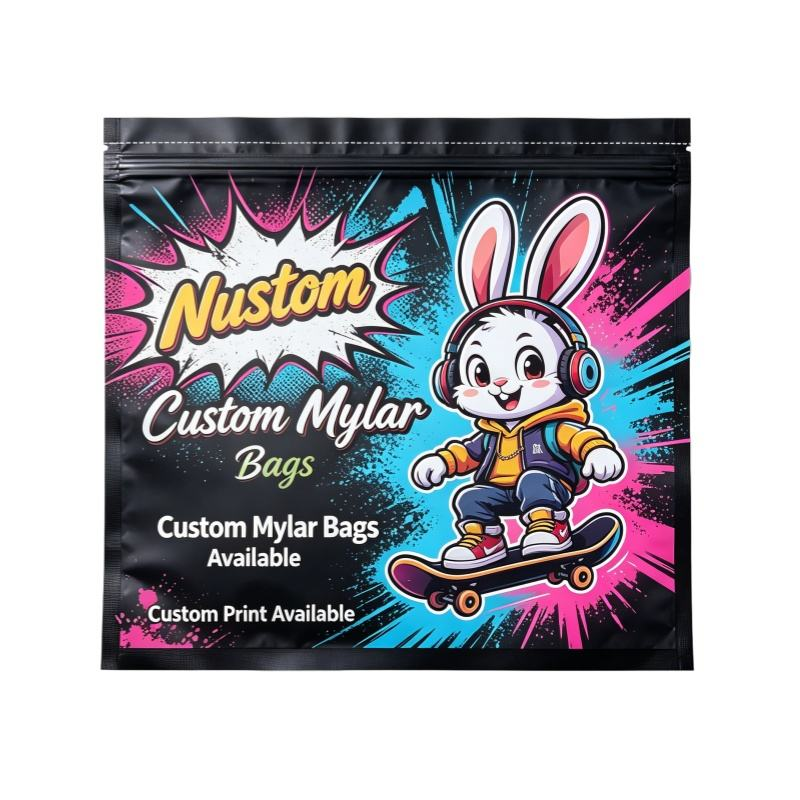
Product Specifications
| Product type | Flexible Mylar cannabis pouch |
|---|---|
| Nominal fill format | 3.5g product format; actual fit depends on product density and pouch dimensions |
| Barrier function | Heat-seal smell barrier; aroma containment depends on the complete laminate and seal quality |
| Intended packaging use | Products sold in a 3.5g cannabis format, subject to buyer confirmation |
| Closure | Heat seal is stated; zipper or child-resistant closure is not confirmed and must be specified |
| Printing and finish | To be confirmed for the selected artwork, substrate, laminate, and finish |
| Dimensions and order quantity | Not stated; confirm desired pouch size, quantity, and SKU count before quotation |
How the Heat-Seal Smell Barrier Works
The smell-barrier function is created by the interaction of the pouch laminate, seal geometry, sealing temperature, dwell time, pressure, and filling process. A Mylar-based flexible structure may be configured with barrier layers that help reduce aroma transmission and protect contents from selected external conditions. The product name confirms a heat-seal smell barrier, but it does not establish one universal oxygen transmission rate, moisture transmission rate, or laboratory performance result.
For aromatic cannabis flower, the complete structure and the final seal are especially important. Fine particles, flower stems, dust, or an uneven fill can interfere with the seal area. A clean, continuous seal can improve aroma containment, while a pouch that is overfilled or sealed across product residue may perform differently. Confirm the intended laminate, barrier target, seal width, sealing equipment, and validation method during procurement.
Fit, Fill Weight, Density, and Headspace
A stated 3.5g format does not establish one universal pouch size. Flower density, nug size, trim, moisture condition, and acceptable headspace all affect the usable volume. A dense product may fit in a smaller footprint than large, light flower even at the same weight. Excessive compression can affect presentation and product condition, while too much empty headspace can increase movement and make the pack appear underfilled.
Before selecting a production dimension, provide the actual product dimensions or a representative sample, target fill weight, expected density range, and preferred headspace. If the bag will be filled manually, semi-automatically, or on a packing line, explain the filling method. The supplier can then review opening width, seal area, usable internal volume, and whether a flat or gusseted construction is appropriate.
Closure and Seal Decisions
These pouches have a stated heat-seal function. A heat seal can provide a more controlled initial closure than relying only on a resealable zipper, particularly when aroma containment is a priority. However, a heat-sealed pouch may require a tool or process to open and is not automatically resealable.
If repeated consumer access is required, ask whether an ordinary zipper can be added beneath the heat seal. A zipper supports resealing but should not be described as child-resistant unless the selected closure has been specifically tested and documented for the destination market. Tear notches, opening position, seal width, and easy-open behavior should also be confirmed because each choice affects filling, opening, and package integrity.
Material, Appearance, and Printing Configuration
“Mylar” identifies the requested pouch material terminology, but appearance alone does not define the complete barrier structure. Metallic, matte, glossy, holographic, kraft-look, or transparent effects may be available depending on the selected substrate, laminate, ink system, and manufacturing process. A clear window can improve product visibility but may reduce light protection in that area, so it should be evaluated against the contents and destination-market requirements.
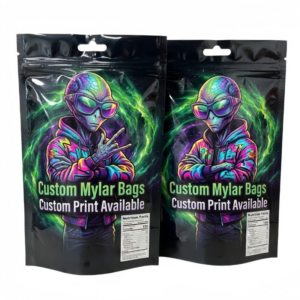
For custom printed Mylar weed bags, confirm the finished pouch dimensions, printable panels, safe zones, seal exclusion areas, artwork versions, color expectations, barcode placement, variable strain information, and whether a proof is required. Artwork should account for gussets, rounded corners, tear notches, zipper tracks, and the heat-seal zone. A multi-SKU program may use one structural format with different strain or flavor artwork, but color consistency and version control should be agreed before production.
Multi-SKU, Private-Label, and Wholesale Planning
Private-label cannabis programs often need consistent dimensions and barrier specifications across several SKUs. A shared pouch structure can simplify filling and storage, while separate printed artwork can distinguish strains, cultivars, varieties, or product lines. Confirm whether all SKUs use the same fill weight, whether product density varies, and whether any artwork includes destination-specific warnings or legal information.
Buyers searching for a Cali bag wholesale manufacturer should request a written specification rather than relying on appearance or a product name alone. Ask the supplier to identify the selected laminate, pouch style, closure, seal method, print process, finish, dimension tolerance, and packing configuration. MOQ, sampling, production timing, and delivery terms are not stated for this product and must be confirmed in the quotation.
Destination-Market and Compliance Review
Packaging obligations vary by destination market and by whether the contents are flower, pre-rolls, edibles, or another cannabis product. Confirm required warning space, label area, lot or batch information, child-resistant packaging rules, recyclability statements, food-contact considerations where relevant, and any restrictions on imagery or cannabis claims. This product description does not establish certification, approval, testing, or compliance status. The buyer and supplier should review the final structure and printed information against the applicable jurisdiction before production.
Buyer Questions Before an RFQ
Are these pouches suitable for 3.5g cannabis flower?
They are intended for a 3.5g product format and may be evaluated for cannabis flower, but actual fit depends on flower density, nug size, headspace, and the selected pouch dimensions. Provide a representative sample or product dimensions for confirmation.
Does the heat-seal smell barrier mean the pouch is completely odor-proof?
No absolute odor-proof claim should be assumed. The barrier function depends on the complete laminate, clean seal area, sealing process, and final package integrity. Confirm the required aroma-containment specification and any available test method.
Is a zipper or child-resistant closure included?
A heat-seal function is stated, but a zipper and child-resistant closure are not confirmed. Specify whether resealability is needed and request documentation if child-resistant packaging is required for the destination market.
Can the pouches be custom printed for multiple strains?
Custom printing and multiple artwork versions should be treated as configurable requirements, subject to the selected substrate, laminate, printable area, finish, and production specification. Confirm artwork files, color expectations, and SKU quantities before quotation.
Request a Product-Specific B2B Quote
To request an RFQ for these 3.5g Cali Mylar pouches, send the contents, fill weight, actual product dimensions or sample, desired pouch dimensions, estimated quantity, number of artwork versions, required material or barrier, closure preference, finish, filling method, destination market, and applicable compliance needs. Also ask for the proposed laminate, seal configuration, print specification, sample process, MOQ, production timing, and delivery terms so the quotation can be compared accurately.
Reviews
There are no reviews yet.