
Printed Aluminum Cannabis Bags for 3.5g–7g Product Programs
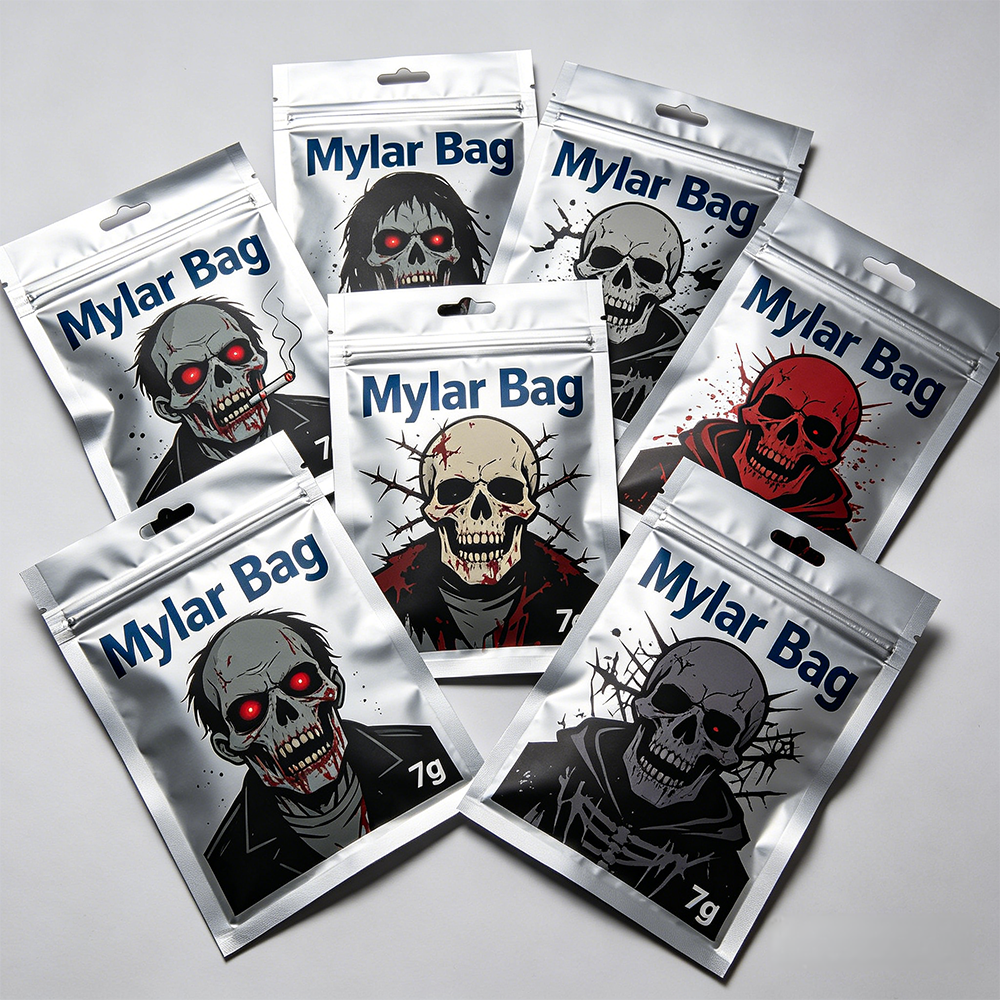
Printed aluminum cannabis bags are flexible aroma-barrier bags intended for cannabis packaging programs with stated fill targets from 3.5g to 7g. The aluminum-based format is designed to help contain product aroma and provide a protective package for cannabis brands, distributors, wholesalers, private-label buyers, and multi-SKU purchasing teams. The fill-weight range does not establish one universal bag size, so the final dimensions, internal volume, closure, laminate structure, and sealing method should be confirmed against the actual product.
Product Specifications
| Product type | Printed flexible cannabis packaging bags |
|---|---|
| Stated fill range | 3.5g–7g; final usable volume depends on product density and pack dimensions |
| Material | Aluminum-based packaging; complete laminate structure requires confirmation |
| Barrier function | Aroma-barrier format intended to help contain smell when properly sealed |
| Printing | Printed exterior; artwork process, print coverage, and color requirements require confirmation |
| Closure | Closure type and whether a separate heat seal is required must be confirmed |
| Finish and format | Final finish, pouch geometry, dimensions, and seal layout require confirmation |
| Commercial use | Cannabis brand, wholesale, distributor, private-label, OEM, and multi-SKU packaging programs |
How the Aluminum Aroma-Barrier Format Works
The aluminum component can contribute to a more protective barrier than a simple uncoated film, but performance depends on the complete laminate, seams, closure, and sealing process. A properly selected structure may help limit aroma transfer and reduce exposure to light, moisture, and oxygen compared with a less protective package. The bag should therefore be evaluated as a complete packaging system rather than by its metallic appearance alone.
Aluminum-based structures can also influence stiffness, folding behavior, puncture resistance, and heat-seal requirements. A thicker or more protective structure may improve barrier potential while making the bag less flexible or more demanding to run on a filling line. Conversely, a lighter structure may improve handling or material efficiency but may not provide the same protection. Ask the supplier for the proposed structure and sealing recommendation before approving production.
Fill Weight, Density, and Headspace
A 3.5g to 7g target describes the amount of product, not the required external dimensions. Cannabis flower density, grind or whole-flower format, moisture condition, and desired presentation all affect how much space the contents occupy. Two products with the same weight can require different usable volumes. Excessive headspace may allow movement and reduce presentation quality, while insufficient headspace can stress the seal or make filling inconsistent.
For an accurate specification, provide the actual product dimensions or a representative sample, the target fill weight, whether the material is whole flower or another dry cannabis product, and the preferred final bag dimensions. If the product will be filled by hand, semi-automatically, or on an automated line, include that information as well. Filling behavior should be checked with the selected pouch geometry, opening size, and seal area.
Closure and Sealing Decisions
The product input identifies an aroma-barrier bag but does not establish a zipper, tear notch, heat seal, or child-resistant closure. These choices should not be treated as interchangeable. A resealable zipper can support repeated opening and closing, but an ordinary zipper is not the same as a tested child-resistant system. A heat seal can provide a tamper-evident presentation when properly specified, but it affects opening instructions and filling-line setup.
Confirm whether the package needs a zipper for consumer resealing, a tear notch for controlled opening, a permanent heat seal, or a combination. If the destination market requires child-resistant packaging, identify the applicable requirement and request the appropriate testing or documentation from the supplier. Do not infer child resistance from the presence of a zipper or from the bag’s smell-resistant positioning.
Custom Printing and Multi-SKU Control
Printed artwork allows a cannabis brand to separate strains, product variants, and channel-specific packaging while keeping the bag format consistent. Before artwork approval, confirm the printable area, safe zones, seal exclusions, opening position, registration expectations, and any limitations created by the selected aluminum-based laminate. Metallic or reflective effects may influence color appearance, and a matte, gloss, or other finish must be evaluated with the actual substrate rather than assumed from a product image.
For a multi-SKU program, prepare a controlled artwork matrix listing each strain or product name, fill weight, regulatory panel, lot or batch area, barcode position if required, and language version. Consistent dimensions and seal geometry can simplify filling, but different artwork versions still require proofing. Ask whether variable information is printed during production or applied later, and confirm which elements must remain editable for destination-market requirements.
Trade-Off: Barrier Protection Versus Flexibility
The main product-specific trade-off is protection versus handling. A more substantial aluminum barrier structure may better support aroma containment and light protection, but it can feel stiffer, require different folding behavior, and need a carefully controlled heat-sealing window. A more flexible bag may be easier to fill and pack into cases, but the final barrier and puncture performance depend on the selected layers and construction. The correct balance depends on the product’s aroma intensity, storage conditions, filling equipment, transport method, and required shelf presentation.
Destination-Market Review
Packaging requirements vary by destination and by the type of cannabis product being packed. Confirm whether the finished bag needs warning text, ingredient or product information, batch identification, net quantity, barcode space, language variants, tamper evidence, child-resistant features, or food-contact documentation. These bags should not be described as certified, approved, or compliant without reviewing the destination-market rules and obtaining the relevant supplier documentation. The final printed design must leave sufficient room for required information as well as brand graphics.
Questions Buyers Ask
Are these bags suitable for 3.5g and 7g cannabis flower?
They are specified for a 3.5g–7g packaging program, but one universal size should not be assumed. Flower density, format, headspace, and the desired presentation determine the required usable volume and final dimensions. Confirm the bag size using the actual product or a representative sample.
Are the bags completely smell-proof?
The bags use a stated smell-proof, aroma-barrier positioning intended to help contain aroma when properly sealed. Actual performance depends on the complete laminate, seal quality, closure design, product characteristics, and storage conditions, so absolute or permanent odor containment should not be assumed without product-specific testing.
Do the bags include a zipper or child-resistant closure?
The supplied product information does not confirm a specific closure. Ask the supplier to quote the required zipper, tear notch, heat seal, or child-resistant option separately. An ordinary resealable zipper should not be treated as a tested child-resistant closure.
Can each cannabis strain have different printed artwork?
Printed artwork can be planned for multiple SKUs, subject to the selected print process, printable area, substrate limits, artwork approval process, and order requirements. Provide the number of versions and identify which information changes between SKUs.
What should be supplied for an accurate quotation?
Provide the contents, fill weight, actual product dimensions, desired bag dimensions, quantity, artwork versions, material or barrier preference, closure, finish, filling method, destination market, and compliance needs. These details allow the supplier to assess fit, construction, printing, and documentation requirements.
Request a B2B Specification Review
For an RFQ, send the intended contents, 3.5g or 7g fill target, product dimensions or sample, desired pouch dimensions, quantity, number of artwork versions, aluminum-based barrier preference, closure and sealing requirements, finish, filling method, destination market, and compliance needs. A packaging specialist can then confirm the proposed structure, usable volume, print area, seal geometry, and any open technical questions before quotation and sampling.
Reviews
There are no reviews yet.